Siccar Point follows Intertoto’s 2023 debut album Thermal Shadow, alongside the heavy-hitting 12”, If I Take You Home, released on What About Never in 2025 and backed by two Michael J. Blood remixes.
The new album also lands via What About Never. Listeners drawn to that earlier 12” should pay close attention to the pre-order single “Condor Launch” – a compelling blend of dancefloor momentum and sonic experimentation. Driven by a 126 BPM micro-house groove, the track offsets its rhythmic core with granulated foreground elements pushed beyond recognition. It subtly echoes Sasu Ripatti’s work as Luomo, while stretching into terrain reminiscent of his Vladislav Delay alias. Like much of Siccar Point, its textures feel strikingly alive.
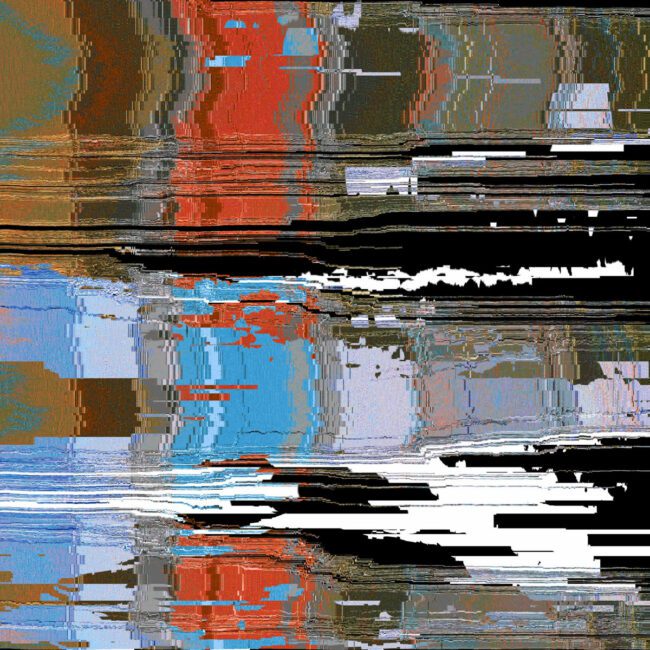
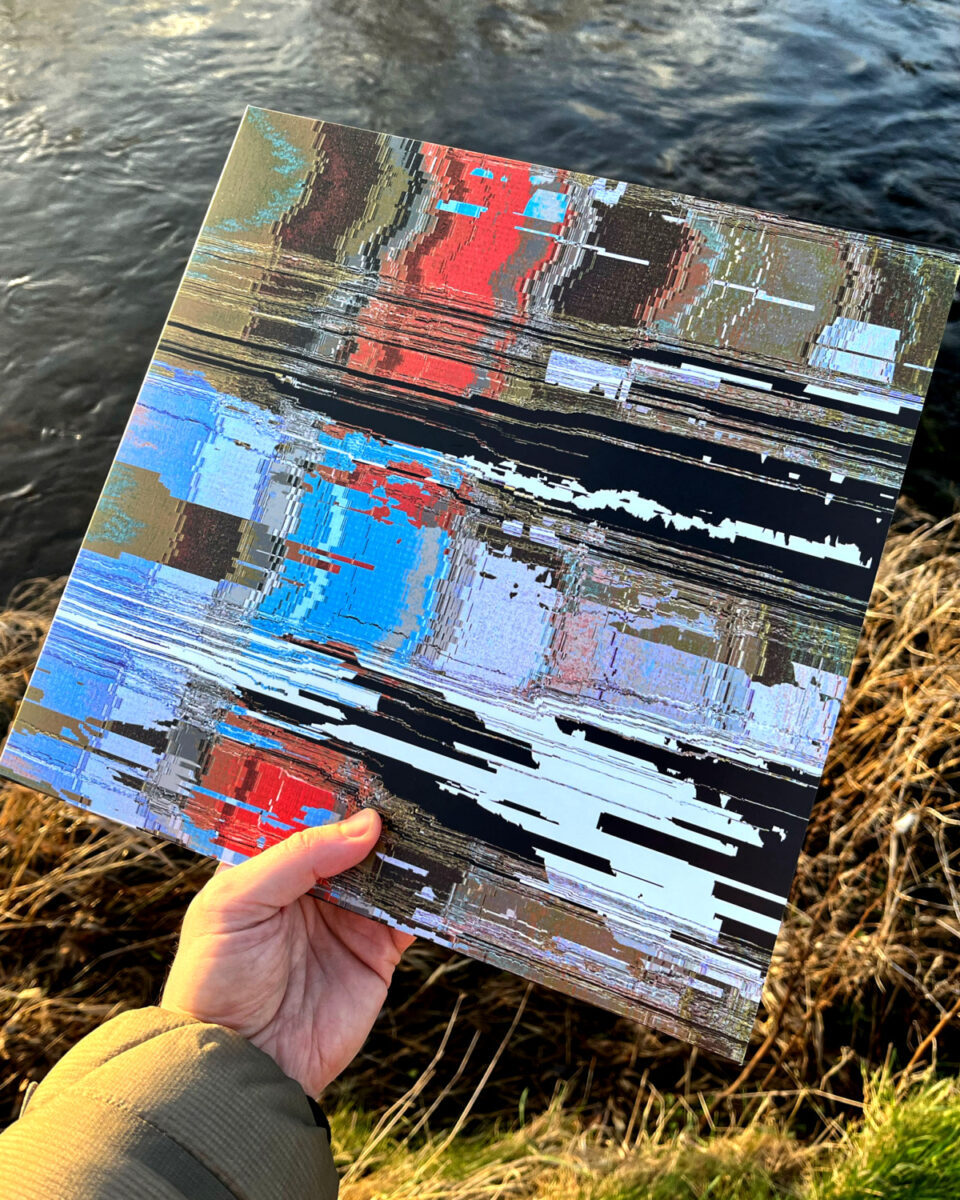
“Condor Launch” offers a first glimpse into Intertoto’s evolving vantage point, where the real and the fabricated dissolve into something altogether unfamiliar. Even the album artwork plays with this tension: what initially appears as a wet reflection resolves into bands of glitched-out colour. Across the record, unexpected forms emerge from stochastic processes — compositions that seem to walk and breathe despite their unusual construction.
Throughout the album, particularly on opener “Raw Lunar Concrete”, Intertoto demonstrates a masterful command of sound design. The piece conjures an imagined ecosystem: distant movements drift across the horizon while subtle rustling details animate the foreground.
Much of Siccar Point carries this sense of environmental immersion. Several tracks feel as though they were captured outdoors using an elaborate field recording setup in some uncharted habitat. It’s easy to forget that many of these details were meticulously sculpted in a studio turned laboratory. The result is music that feels both organic and deeply considered.
Like “Condor Launch”, “Cloud Chamber” delivers heady, exploratory dance music that would resonate equally with Autechre and Four Tet listeners. While these tracks generate forward motion, “Restore” gently disrupts any expectation of a linear journey. Here, Intertoto’s world-building instincts fully unfold – atonal yet controlled, chaotic yet intricately textured.
The album’s second half opens with “Fold”, a collaboration with Lablab. Dubby, skittering, and reflective, it functions as a half-time survey of the shifting landscape of Siccar Point. “Metallic Veins” shares the fractured glitch aesthetic of “Condor Launch”, but strips away the beat entirely. It stands among the album’s most experimental moments, like observing terrain through a lens repeatedly zooming in and out.
“Foraber” feels closest to dub techno, albeit inverted. The rhythmic anchor dissolves, leaving behind that unmistakable minor-key shimmer of chordal light. “Redox Dub” presses the ear to the earth. After so much attention to surface movement, Intertoto guides us underground toward the album’s final, subterranean resolution.
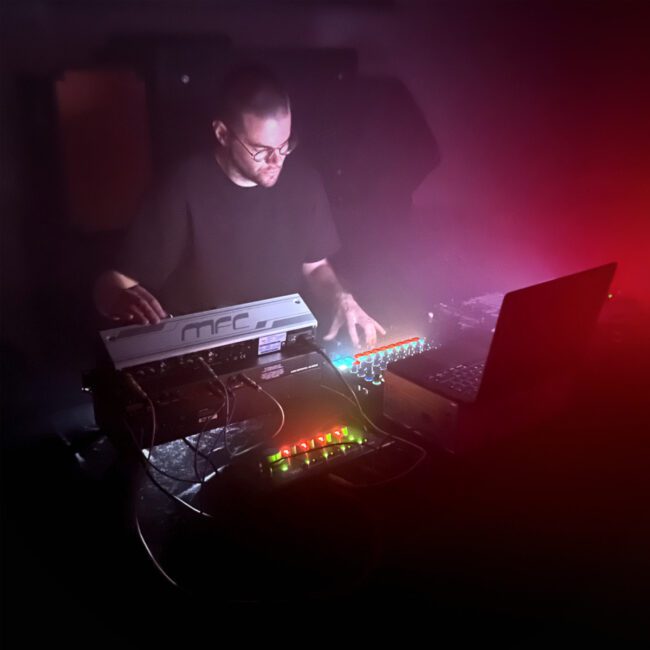
For IA MIX 398, Intertoto steps away from the traditional DJ format to deliver an exclusive live set composed of unreleased material and dubbed-out stems – a snapshot of a performance configuration currently taking shape. Immersed in a super dubby, murky atmosphere, the set gradually gives way to a handful of 4/4 excursions towards the closing stretch.
Keeping things deliberately minimal, the live setup centres around Ableton, recently expanded with Intech Studio MIDI controllers and coloured by a hands-on outboard effects chain. As Intertoto notes, even subtle shifts in processing can dramatically reshape the outcome – a philosophy that permeates the mix’s fluid, zoned-out energy. Recorded in the studio with headphones on, this is deep immersion: “some proper zoned out business…”
In our interview below, we speak with Intertoto about studio gear, the father of modern geology, the importance of texture, and the role of controlled randomness. Dive into the interview and IA MIX 398 – a fitting companion piece to Siccar Point.
Interview by Ryan Pivovar
"It’s that meeting point between old and new technology that I find so
fascinating and inspiring. The infinite places where you can go –
discovering new sounds within sounds."
Hello Jamie, thank you for taking the time to speak to us and for providing this live set. Please tell me about your mix.
I’ve been spending a bit of time working on a new Intertoto live set recently and thought this would be a nice platform to share a snapshot of where it’s currently at. It’s really a mix of unreleased tracks and dubbed-out stems. I’ve leaned into that super dubby, murky sound for a large portion of the set with a few 4/4 tracks that I’m really into at the end.
I like to keep my live sets relatively simple setup-wise, and I’ve recently purchased a couple of new MIDI controllers from Intech Studio (PO16, PBF4) and have been enjoying integrating them with Ableton.
Effects-wise I used my Bugbrand PTDelay and CrossOver Filter for some hands-on outboard gear. They have so much character and pair beautifully together. I’ve got them running into an ALM QuaidraVerb plugin for some extra sparkle. What I find really liberating about playing live is even a small change in your effects chain can drastically change the final outcome.
This one was recorded with headphones on in the studio (i.e. bedroom). Some proper zoned out business…
How has your process changed going from Thermal Shadow to your new album Siccar Point?
The process was fundamentally the same. I was conscious that the follow up to Thermal Shadow shouldn’t feel too different and a natural progression rather than a massive change in direction.
Gear wise, Thermal Shadow was made predominantly on my Ensoniq Mirage, while Siccar Point was primarily made using granular synthesis – specially Robert Henke’s Granulator II.
Can you tell me about Siccar Point, the place? Were you thinking about it even before you started work on the music? Did the music begin to remind you of Siccar Point while working on it? Sometimes I feel like making art about a place almost gives the artist a kind of responsibility to that place, like an acting representative of sorts.
That’s a nice take! In short, Siccar Point, on the East coast of Scotland, is the most important geological site in the world. The site was made famous by the father of modern geology James Hutton, as it proved conclusive evidence for the “enormity of geological time and the antiquity of planet Earth”.
In 1788, Hutton used Siccar Point to demonstrate the cycle of deposition – where fragments of rock, soil, and other materials are folded, eroded and layered to form something new.
These processes deeply resonate with me and articulate perfectly how this album was made – where fragments of audio are folded, eroded, and layered to form something new.
I’ve wanted to use Siccar Point as a reference in some way for a while but didn’t specifically have it as the title before I started the album. As the tracks started to take shape and a vision for the album started to form, it was clear it had to be called Siccar Point.
What gear/software felt important or particularly fruitful to you while working on this?
As I mentioned, Granulator II was a key part of many of the tracks. I used material I had previously recorded from my old DX100, K1R, and Polysix synths, and chucked it into the Granulator. It always surprises me that Granulator can take a relatively simple sound and spit out something absolutely wild. It can also work really well for drum and percussive elements as well, not just melodic ideas.
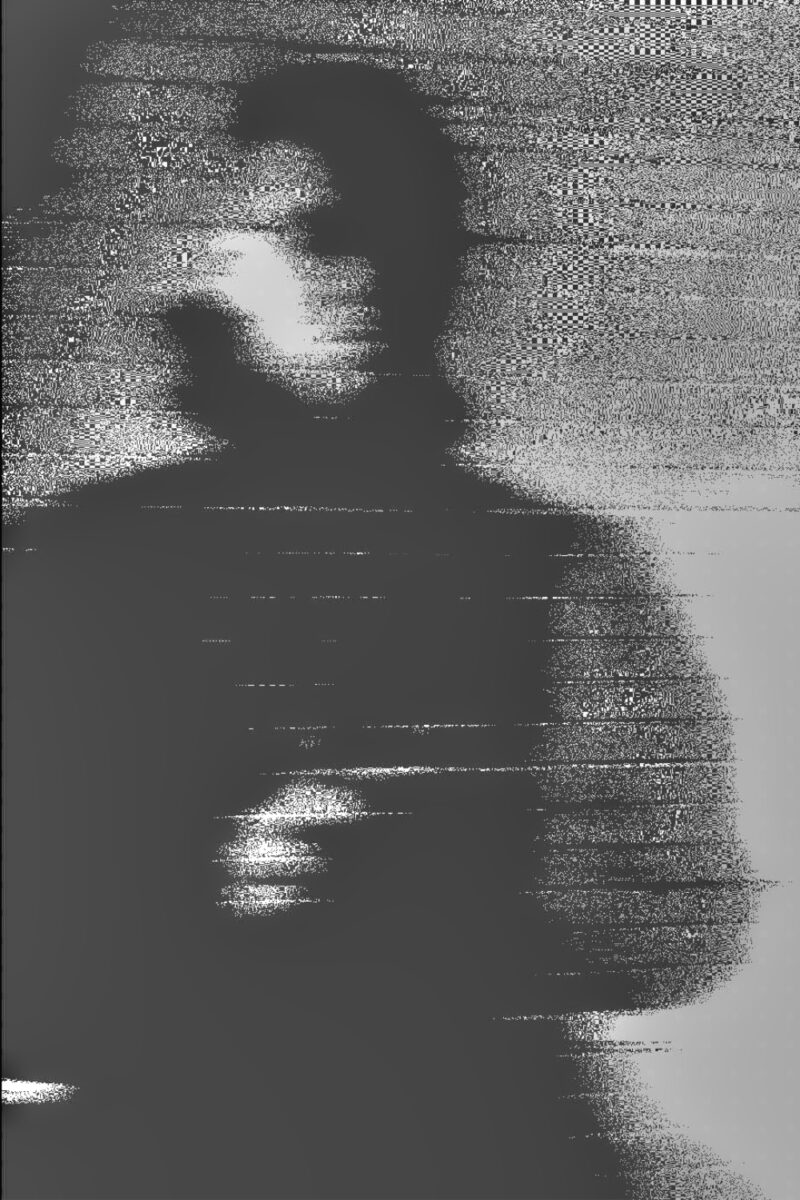
It’s that meeting point between old and new technology that I find so fascinating and inspiring. The infinite places where you can go – discovering new sounds within sounds.
Zynaptiq Morph was also fundamental to the sound of many of the tracks. It can be used super subtly to do things like add harmonics to percussive/textural elements, or used as a proper sonic weapon. It doesn’t always work, but when you find that sweet spot it can take you places where no standalone synth can.
It’s pricey but is reduced quite frequently and tbh I don’t mind paying for software that adds to your creativity, makes you more productive, and ultimately helps you to finish tracks.
We’ve all fallen down the rabbit hole of downloading a shit tonne of cracked software and that’s fine for trying stuff out or when skint, but when it’s time to focus I find it better to spend time on a few key bits of gear, learn them inside out, and squeeze the most out of them.
"There is a key relationship between how the artwork and the music were
created as well. That exploration of combining different layers and using
effects on those layers to create something new is infinitely inspiring to me.
I have this incessant drive to push and pull on something to see or hear
what happens next. It’s that exploration that keeps me going."
What was the schedule like in preparing for the physical release of If I Take You Home 12”, and did that have an effect on how you prepared for the release of the Siccar Point vinyl?
Yeah, it did affect things a little. We wanted to release the album quite soon after the single, but there were a few production issues with the album, so we decided to hold off until this year.
Honestly, being involved in releasing records really does make you appreciate all the different steps and hands the music needs to go through to make a physical record.
The label have a nice system of getting an interesting name (Krikor and Marco Passarani previously) to remix a 12″ before the release of an album, so it was a nice opportunity to work with Michael J. Blood for my single (s/o to Mark Mother for the link up!). I knew he’d be able to do something with my OG track, but I couldn’t believe when he messaged back with those two killer remixes.
There is something about your new album that reminds me of some of Vladislav Delay’s work. One of his albums, Kuopio, is another release named after a real place. I almost see something of a field scientist in Vladislav Delay and his work, and I feel like I get some of that on your new record as well.
Ah nice one – appreciate that. Vladislav Delay’s work is so alluring and often a place I go to when I’m not feeling very inspired. The depth and fluidity some of his tracks have is just ridiculous. I think it’s the non-standard arrangements that lead to this dream-like quality that makes his releases feel so elusive and alive.
Some of these tracks feel to me like a living, breathing organism. I feel like “Redox Dub” is a good example of this. I know it’s not easy to do. How do you arrive at this quality in the music? Is it something you’re consciously aiming for, or is it just the byproduct of other processes?
Hmm, it’s a tricky one. It’s a combination I think. I’ll often have a starting point, but I think it’s important to have the flexibility to let go of that, follow your instincts, and let the track tell you what should happen next. Then a lot of it comes down to taste and recognising when to stop rather than overcooking it.
What I’m often seeking out is that natural quality and vocal impression that synths can have. I just love sculpting and shaping audio, searching for sounds that feel like they came from the natural world, but actually don’t.
“Milk DX” by Autechre is one of my favourite examples of this. You know that bit that sounds like it’s a processed vocal sample? That’s just Sean fucking around with pitch bend on his DX100. So good! Check out his AMA on YouTube for a bit more detail.
How did the collaboration with Lablab come about on “Fold”? Was that an altogether different process as compared to the creation of the other pieces, or was it fairly similar?
We’ve talked about doing some kind of collab for a while, so I asked him to send me a bunch of tracks and stems. It was pretty much a similar process to a lot of the other tracks on the album as I resampled and rearranged his stems, as opposed to my own recordings.
Because his material had such a strong quality, things clicked into place pretty naturally. There weren’t tons of versions being passed back and forth or anything. It’s funny as well because we weren’t originally going to include that track on the album, but when I added it, it really felt like that last bit of jigsaw. He’s got a killer 12 coming out soon btw. Keep an eye out for that!
Texture feels like an important aspect to your music, and I hear a strong sense of texture come through in your mixes. I feel like it’s a dimension that can really make ambient music something special. There’s this spectrum of experimental music that makes texture the subject, going from the quietest ambient music all the way up to harsh noise. Is it something that you purposefully seek out in your music making? Are there any artists you feel like make really great use of texture in their work?
It’s something I have always been drawn to. There is a physical quality I feel texture can bring to music that just makes it feel alive and can help place it in the real world. One thing that is incredibly important for me is that texture is never an afterthought. It’s not like I’ve always got a layer of noise running in the background or that it’s plonked on top of a track at the end.
Where I find texture exciting to play with is if it’s imparted in the music while being recorded. That’s one of the main reasons why I enjoy working with audio rather than MIDI. My textures generally come from the gear itself, say, my old noisy Quad Reverb, or something recorded through my Mackie 1604 mixer. When you record the audio, pitch it around, then sculpt away at it with filters and EQ’s – that’s where the magic can happen.
I like to lean into all that noise and texture and feel like these types of imperfections should be embraced rather than edited out. All these imperfections are what makes music feel real and human rather than being too clean, clinical, and artificial.
I’ve been thinking quite deeply about noise and texture recently after the birth of my little boy. The womb isn’t a silent place and babies can actually hear quite a lot from pretty early on – the mother’s heartbeat, the noise of blood flowing through the body, and the gentle sound of the outside world, filtered through fluid and tissue.
Newborns are often advised to have a noise machine beside them to help comfort and help them sleep. So perhaps that’s one reason all this noise and texture we are drawn to as listeners is some deep-rooted trigger to help us relax and feel secure.
Artist-wise, there are many, but if I can narrow it down to a few:
Actress’ use of noise has always been so inspiring, in particular for percussive elements. His first album Hazyville still sounds as fresh and innovative as it did when it first came out. And for me, “Wee Bey” is peak Actress. That thump man, soo good! And it’s long enough to play in DJ set as well, haha!
Newworldaquarium’s music has always hit different. Specifically his album Strike. There is something so life-affirming about that album. That shit was so liberating to me when I first heard it and still is to this day. I can really feel his intuitional process in the production and all that distortion and texture adds such a beautiful kind of energy and character – my comfort blanket album.
And of course, we can’t talk about texture without talking about Basic Channel. I don’t really have any hot takes to add to the BC discourse but maybe I can use this as a chance to remind everybody to listen to Mutism if you haven’t for a while. It’s like a raw x-ray imprint of their effects return channels or something. Basic Channel at their most stripped back and experimental.
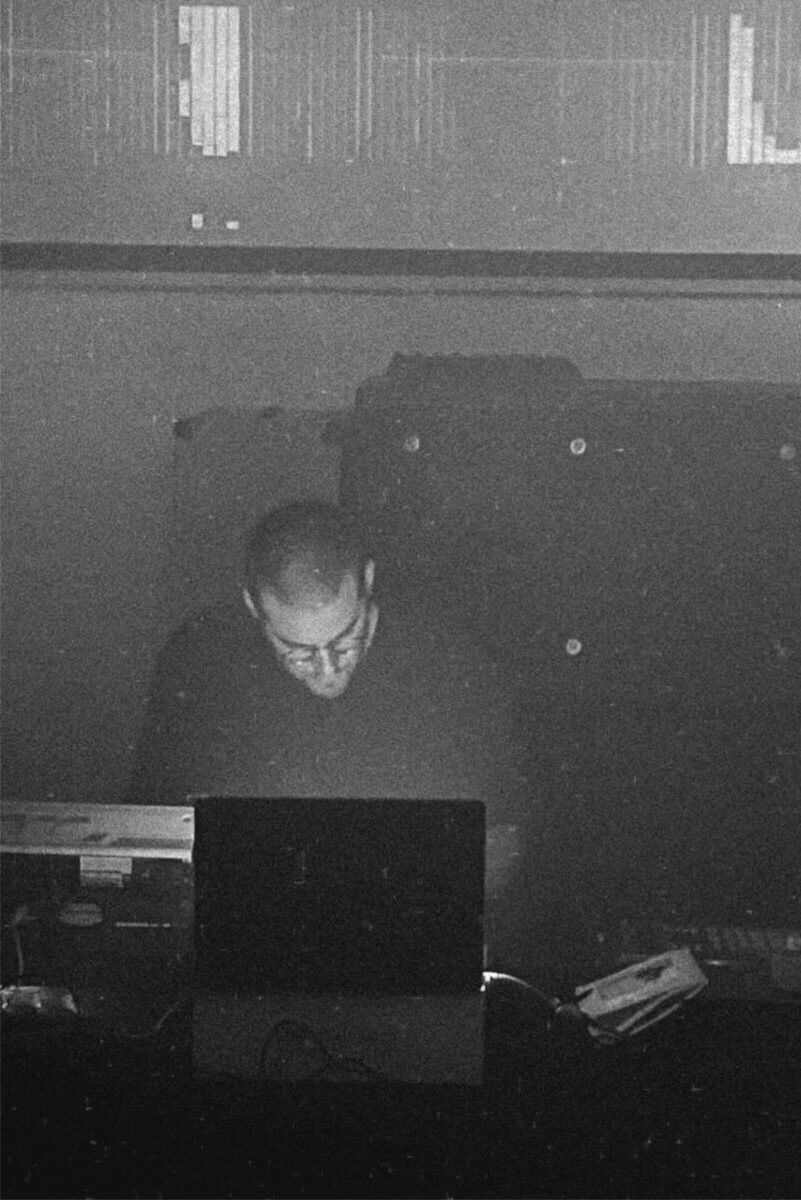
"I like to lean into all that noise and texture and feel like these types
of imperfections should be embraced rather than edited out. All these
imperfections are what makes music feel real and human rather than
being too clean, clinical, and artificial."
If I squint just enough while looking at the artwork for the album, I almost see what looks like a reflection on the sunlit surface of a body of water, even though it’s really this glitchy texture when seen clearly. Some of the tracks also carry this glitch quality, like something being stretched or clipped beyond comprehension. The “randomness” of this process weirdly seems to breathe life into it.
Yeah, nice! The relationship between the artwork and the music is incredibly important to me and I wanted to do something interesting with this album. I wanted to create a sleeve that naturally reflected the music as well as something you can look at/listen to at different times and see/hear something new each time. Something to chew over, you know? That’s what I look for in releases, so I wanted to pass on that feeling to somebody else.
There is a key relationship between how the artwork and the music were created as well. That exploration of combining different layers and using effects on those layers to create something new is infinitely inspiring to me. I have this incessant drive to push and pull on something to see or hear what happens next. It’s that exploration that keeps me going.
But you really need to see the sleeve IRL. That’s when the artwork comes into its own. When caught in the right light, the gold Pantone ink has a super nice sparkle to it. To me, that’s the importance of doing physical releases today. The artwork should add to the experience of the music and hit places where a 500×500 pixel JPEG just can’t.
Regarding randomness, it can be such a powerful and interesting tool. Within my own work, I often use what I’d describe as a “controlled randomness” as opposed to randomness purely for the sake of it. I really don’t like it when I’m not in some kind of control or when things become too unpredictable.
What art (music or otherwise) is inspiring you these days?
PloMan’s Drizzle.FM show on NTS has been my go-to for a while now. He’s somebody who’s been so consistent over the years, somebody who you can just trust isn’t going to play one or two dodgy tunes that can ruin a mix, haha.
It can feel a bit overwhelming trying to keep up to date with all the new music released. Record shops and DJs you trust are more vital than ever to act as a filter.
Artist wise, d. towärds is making some pretty otherworldly stuff – killer aesthetic as well. Other artists I recommend checking out would be Sagat, Jonnnah, Conna Haraway, Scott Gordon/Oto Hiax, JQ, Lighght/Mineral Stunting, and mixes by Rosa Methol, Scar, Tamus & Nusheen. Record label-wise: Short Span, Peak Oil, Sferic, Youth, Pin and Doo are all essential right now.
Siccar Point is out now via What About Never. Buy a vinyl copy from Inverted Audio Record Store and digital from Bandcamp.
TRACKLIST
1. Intertoto – warpB-7-EPS-03-7 [Forthcoming Lamassu]
2. Intertoto – Fold (feat. Lablab) (Version) [What About Never]
3. Intertoto – If I Take You Home (Version) [What About Never]
4. Intertoto – granular-follow-morf-04 [Unreleased]
5. Intertoto – Sage (Version) [Forthcoming Lamassu]
6. Intertoto – Redox Dub (Version) [What About Never]
7. Intertoto – Scanners (Version) [Self-released]
8. Intertoto – Cloud Chamber (Version) [What About Never]
9. Intertoto – Untitled (feat. Lablab) [Unreleased]
10. Intertoto – Shes-Got-Me-10-6 [Unreleased]
11. Intertoto – dxagain-EPS-130bpm-DIFF-1-1 [Unreleased]
12. Intertoto – fut-mus-sam03-2 [Unreleased]