"From first note to last, Graze the Bell showcases the meltingly-lush tone
of a “beastly” 1987 Hamburg Steinway Model D, as he winds his way through
the album in an organic, live session recorded at Oktaven Audio."
In the early pandemic years time seemed to loosen its grip. Routines collapsed, and attention was forced inward, the external world reduced to what we could see on our screens or our walk to the shop. It was during this period that David Moore, best known as the creative force behind Bing & Ruth, found himself living beside a mountain creek in Black Mountain, North Carolina, listening daily to the persistence of running water. That sound, constant and grounding, would later find its way into Graze the Bell, his first widely shared solo piano album which arrives courtesy of RVNG Intl.
Moore has taken a while to arrive at what feels like a pretty inevitable terminus in his musical journey. Across two decades, Bing & Ruth continually evolved: swelling at times into a fifteen-piece ensemble, later contracting into a trio, foregrounding Farfisa organ on Species before returning to solo piano interpretations of that same material. The general arc though has been on a trajectory of refinement, of paring away excess. Graze the Bell feels like it completes that arc. Here, the piano stands entirely alone, unadorned and unembellished.
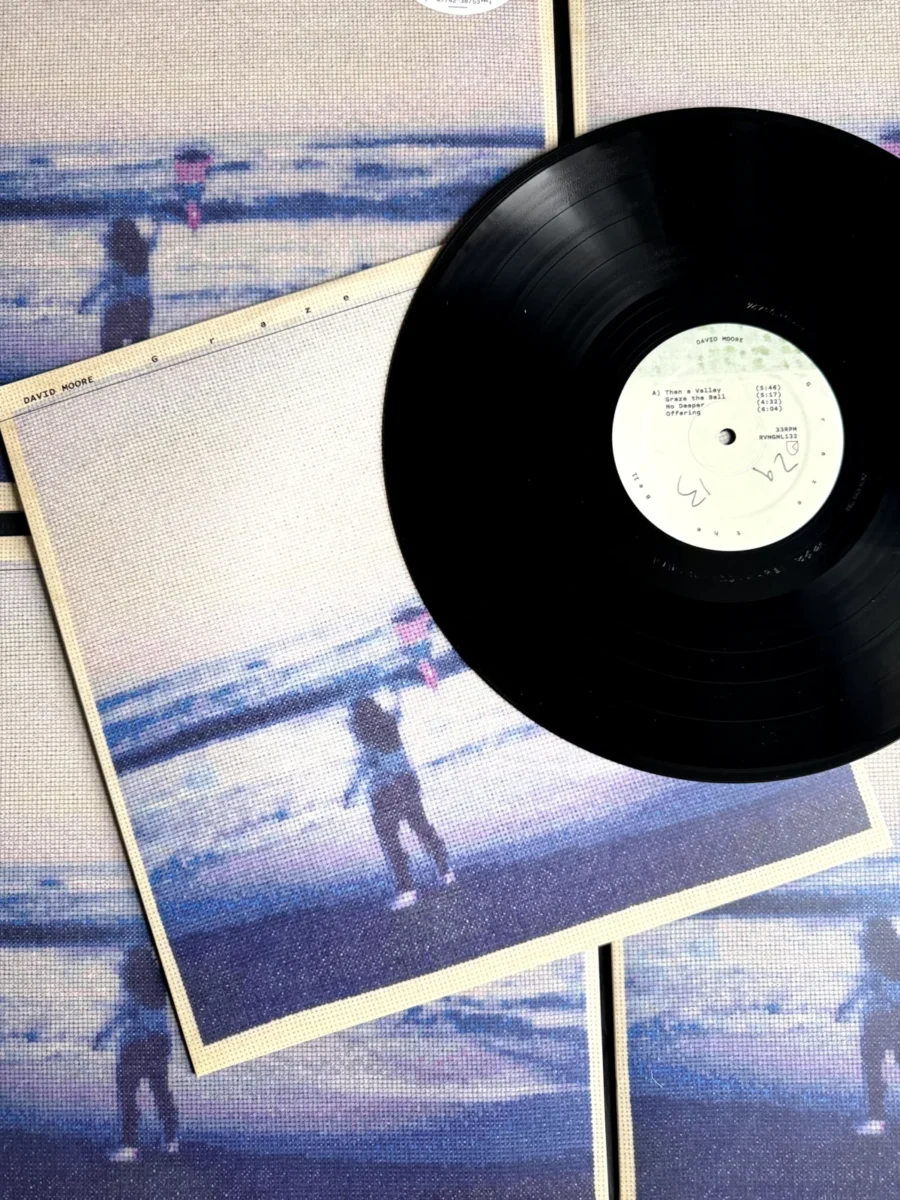
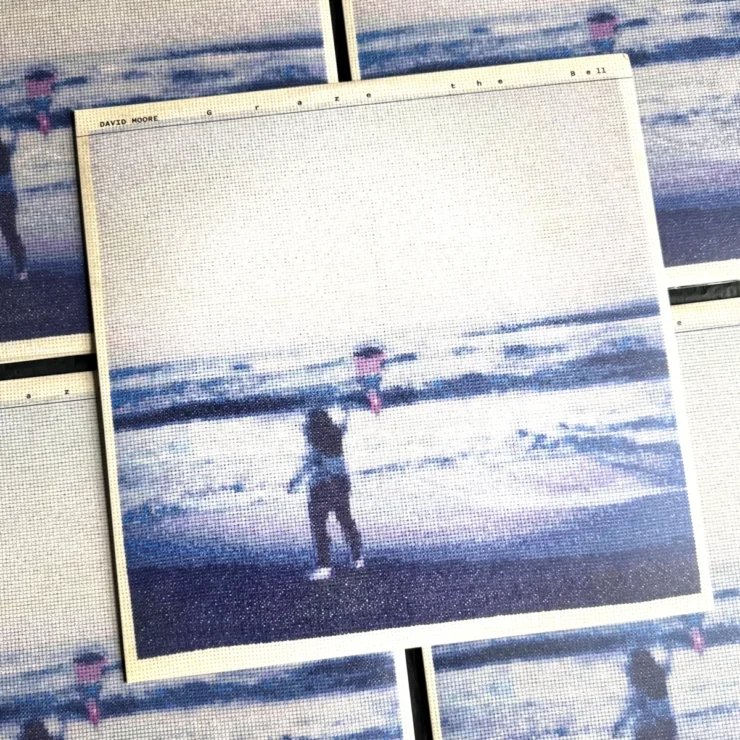
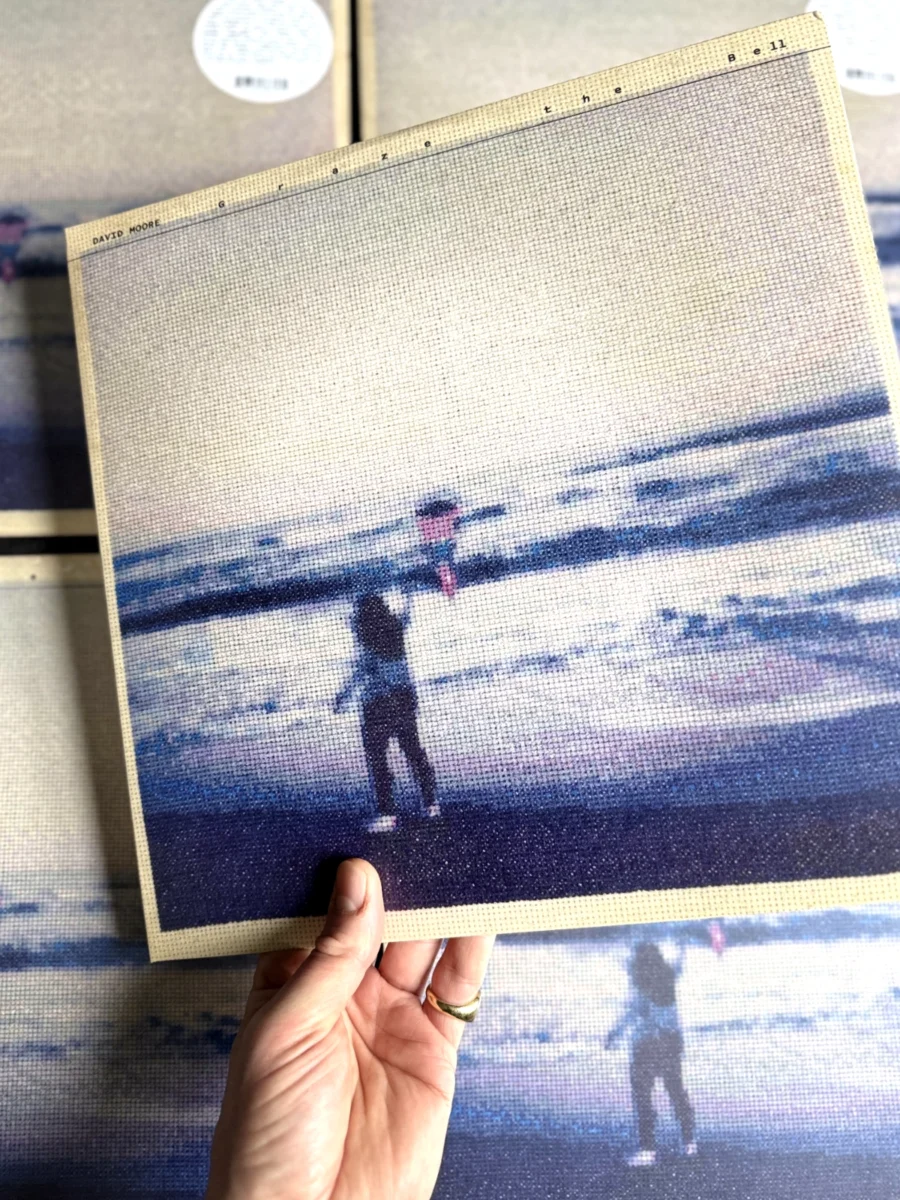
Like the album’s cover, a photograph embroidered by Moore’s own hand, the music attempts to transform personal experience into something we all shared in those odd months. The opening track, “Then a Valley,” sets the tone with deceptive calm. A slow, contemplative beginning (Joe Hisaishi vibes?) soon gives way to a sudden cascade of notes, tumbling like the inevitable simile of the waterfall. As the pace increases, bass chords swell and recede beneath the flow, adding drama without ever tipping into excess. Just as momentum builds, the piece withdraws, closing on a final, barely perceptible distorted note in the left channel, as if the sound itself has slipped out of view round the river bend.
The title track, “Graze the Bell,” follows with remarkable restraint. Simple, steady scales unfold over soft, supportive chords, neither overtly melancholic nor uplifting. Instead, the piece settles into a space of acceptance, a kind of emotional neutrality towards a weird kind of nostalgia that defined much of that early-lockdown mental state.
Elsewhere, Moore explores contrast with equal subtlety. “No Deeper” opens on a striking juxtaposition: high, luminous major chords set against a low, shadowed underbelly. The tension between light and dark remains throughout, never fully reconciled. As the track fades, attention shifts toward the low, rumbling chords, grounding the piece in a quiet, unresolved gravity.
“Offering” introduces a greater sense of motion. More fluid from the outset, it features increased fingerwork and an urgent, pulsing undercurrent, almost siren-like in its insistency, beneath the flowing upper register. The track builds patiently but insistently, lifting higher and higher without breaking focus. Layer upon layer of rushing scales cascade over the other, tension builds and falls away, effectively evoking Moore’s beloved mountain creek.
If Graze the Bell had to have an emotional nadir, it arrives with “Will We Be There.” Slow, heavy, and steeped in minor harmonies, the piece seems to search for uplift, briefly attempting to rise before sinking back into itself. The music limps rather than progresses, growing lower and more burdened as it unfolds. There’s something that tells me this piece was born out of one of the lower moments of that lockdown ennui.
“All This Has To Give” opens with more of that low, rumbling insistence. Higher notes enter hesitantly, as though testing the waters, but the bass dominates until the track finally softens into lush, plodding chords that fall quietly, considerately. A moment of calm serenity that somehow feels earned by all that bass clef rattling.
“Rush Creek,” the album’s first single, makes that influence of nature explicit. The piece flows quickly, its motion shaped by repetition, echoing the sound of running water and a simple melody that seems to speak of a love for a place, a landscape, a presence remembered through sound. The creek in question was later damaged by Hurricane Helene, which lends the track a poignancy that highlights an impermanence to something that must have seemed entirely permanent during those long days of quarantine.
Later pieces strip things back even further. “Being Flowers” opens on a single, high, pure note, followed by a delicate, minimal exploration of the scales that surround it. It’s slow, sparse, and almost icy, definitely one of the album’s most minimal movements. Bonus track “Pointe Nimbus” offers a gentle coda. Romantic, hopeful, it’s a warm footnote that acts as counterpart to the colder, more melancholy “Being Flowers”. Honestly, I don’t know which I prefer as a closer. They both work.
From first note to last, Graze the Bell showcases the meltingly-lush tone of a “beastly” 1987 Hamburg Steinway Model D, as he winds his way through the album in an organic, live session recorded at Oktaven Audio. Moore’s touch is finely attuned, allowing overtones and decay to emerge; often the listening is as much in the reverberations between the notes he physically plays. Under the guidance of Grammy Award–winning producer Ben Kane, with assistance from Owen Mulholland, pitch-correcting software was creatively misused to orchestrate the piano’s registers, shaping its tonal profile in unconventional ways.
The result is something endlessly listenable and steeped in emotion without feeling overwrought. I was looking for an ‘ideal moment’ in which to listen to this album, but to be honest, this is one to throw on at any time of the day you just need a moment to sit, be still, and listen to some really beautiful music.
‘Graze the Bell’ is out now via RVNG Intl. Order a vinyl copy from Inverted Audio Record Store and digital from Bandcamp.
TRACKLIST:
A1. Then a Valley
A2. Graze the Bell
A3. No Deeper
A4. Offering
A5. Will We Be There
B1. All This Has to Give
B2. Rush Creek
B3. Being Flowers