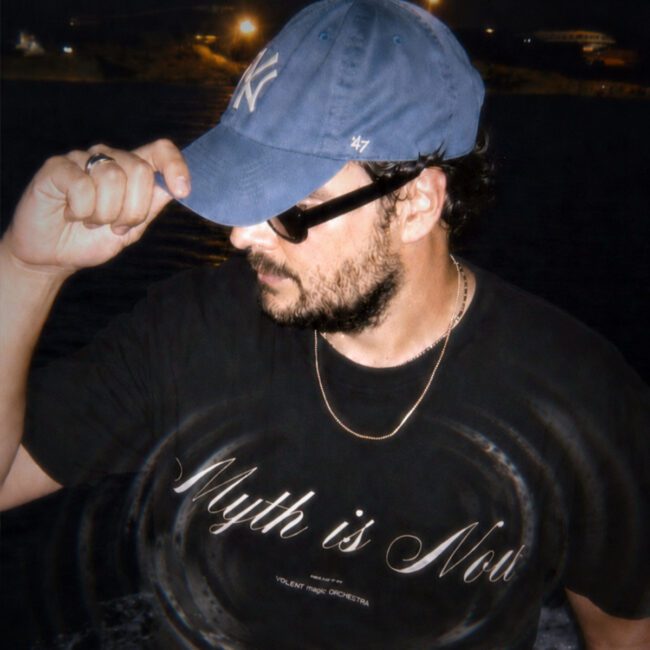
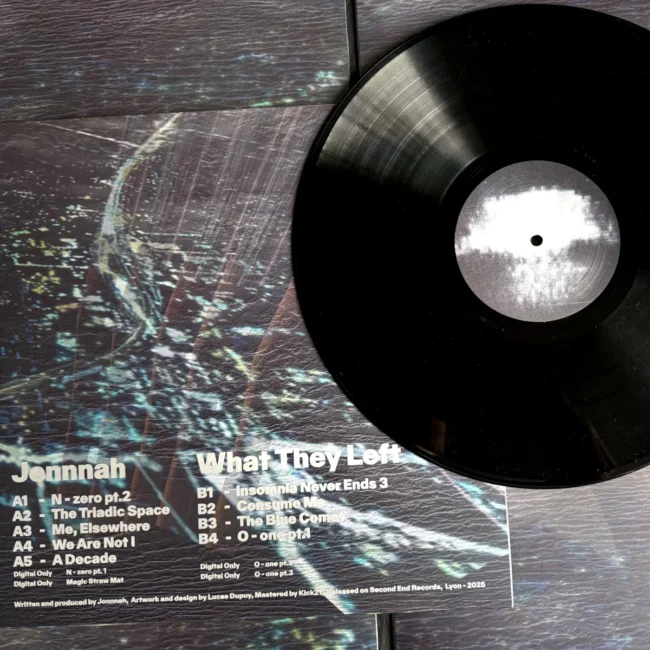
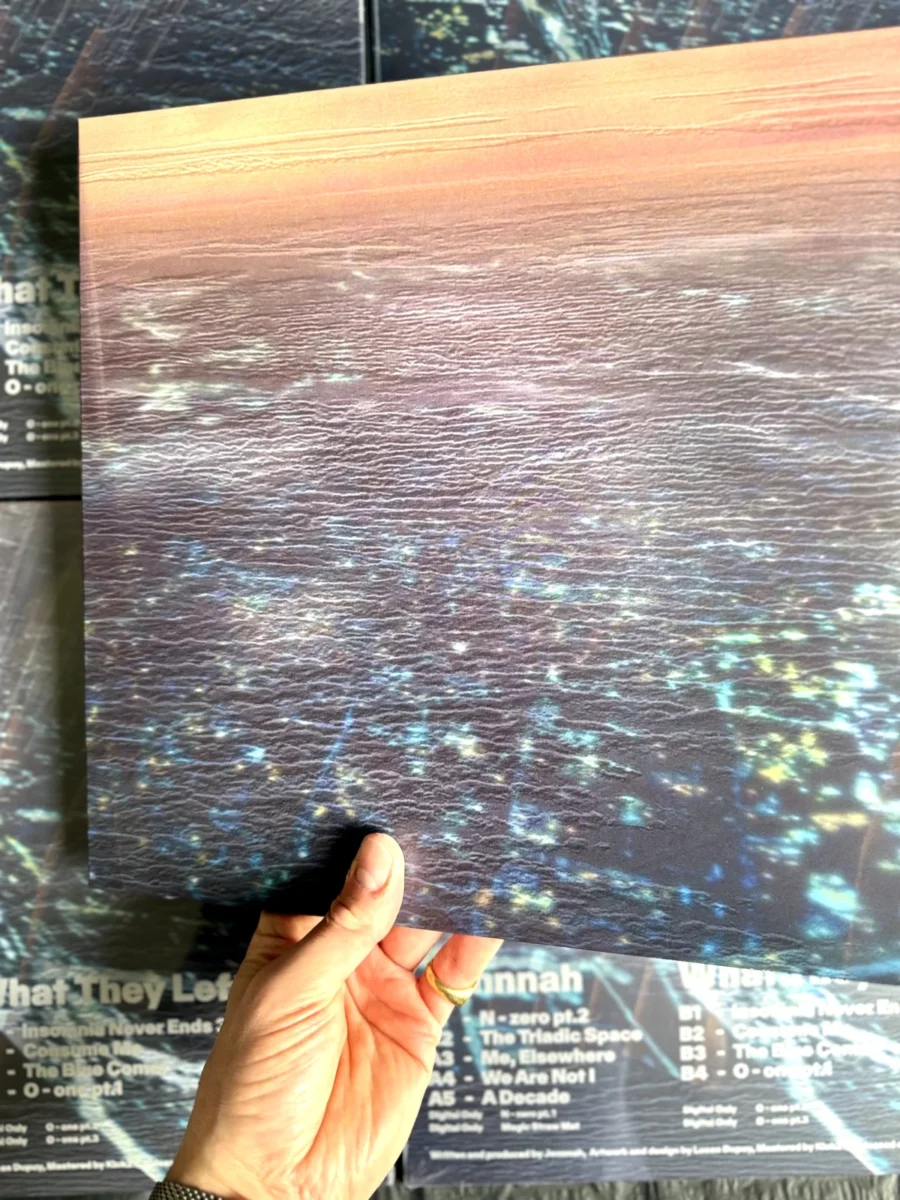
On his recent LP, What They Left, Lyon-based Jonnnah takes inspiration from ambient, bass music, and breakbeats, showcasing a thrilling synthesis of club-ready chill out sounds. Its warm production, “designed as much for solitary listening as for collective experience”, opens up and drifts like a cloud of smoke through the room, sending fractal bits of syrupy breaks over dense synth patterns. With his solo releases and V/A compilations on his Second End Records imprint, Pierre Paumier has his finger on the pulse of contemporary underground electronica, highlighting the best of the best of dub techno and ambient pop.
For the latest edition of the IA MIX Series, Jonnnah presents a fever dream of dubbed out breaks, lush techno, and tech house. It’s an excellent soundtrack to long summer nights, with thick pockets of humidity hanging in the air, and a full moon rising over the city. The mix can easily slide into either the 2am club slot or the near dawn train ride home.
Alongside the mix, we chatted with Pierre to learn more about the composition process for What They Left, connecting with Pavel Milyakov for a dizzying collaboration on his debut LP, and bringing together artists in France and across the world for Second End.
Interview by Jason Cabaniss
"I've always been curious about music in general. I love listening to it,
but I also love analysing it, understanding how it's built and why it creates
certain emotions. That curiosity naturally led me to explore a huge variety
of styles."
What are some of your earliest musical memories? Were there particular artists, records, or moments that made you want to start making music yourself?
I was lucky to have a very musical childhood. I started studying percussion at the conservatory at a young age and continued until I was around sixteen. It was an incredibly complete education, combining music theory, ear training, singing, orchestra practice and percussion. To be honest, I probably invested more energy into music than I did into school.
What I loved most was having access to so many different instruments. It gave me a lot of freedom to experiment, improvise and develop a very instinctive relationship with music. At the same time, my parents were always deeply interested in music. We talked about it constantly and sometimes even played together. Looking back, I think all of that shaped my relationship with music long before I started producing.
When did you first start producing electronically, and what did your early setup look like? How far is that from where you are now?
Like many people, I started with a computer and Ableton Live. Very quickly, I became fascinated by synthesizers. I fell in love with both their sound and the physical relationship you develop with a keyboard.
I still remember getting my first TR-8 and my first Moog Mother-32. I spent years with those machines. In fact, I only recently sold my Mother-32. Nowadays my relationship with gear is quite different. I buy things, test them, learn from them and sometimes sell them quickly. Back then I would spend years exploring a single machine. Today I’m probably less attached to equipment, but those first instruments played a huge role in shaping my sound.
Your work draws on a wide range of references — dub, ambient, techno, UK bass. How did you develop that breadth of listening, and are there any less obvious influences you’d point to?
I’ve always been curious about music in general. I love listening to it, but I also love analysing it, understanding how it’s built and why it creates certain emotions. That curiosity naturally led me to explore a huge variety of styles.
What has always attracted me are textures and emotions. In fact, my tastes haven’t changed that much over the years. I still regularly go back to tracks that deeply moved me more than ten years ago and they still have the same impact on me today. Artists like Basic Channel, Christopher Rau or Shinichi Atobe are perfect examples.
Recently, I’ve felt the need to bring more groove back into my music and reconnect with club-oriented forms. My goal today is to create emotion through harmony, rhythm and texture. That’s something I find in all the genres I love, whether it’s dub techno, deep house or more experimental music.
Take us through the inception of the Jonnnah project and its evolution to the present.
Jonnnah was born during the Covid period. I had always played in bands and collaborative projects, but my personal work had never really been released. When everything stopped, I felt the need to share some of the music I had been working on privately.
Shortly afterwards, Worst Records, the label associated with Positive Education Festival, offered me the opportunity to release an EP on vinyl. That was really the beginning of the project. I’ve changed a lot since then, but maybe not as much as I sometimes think. What has evolved the most is that I think that I’ve developed a recognisable sonic identity.
"The music I create often acts like a mirror. It helps me understand what
I'm feeling rather than illustrating something I've already identified.
The emotions tend to emerge naturally through the process itself.
In that sense, the music guides me more than any concept ever could."
What They Left was conceived partly as a form of therapy — a way of working through personal history and confronting your origins. How conscious are you of that emotional intention when you’re actually in the studio? Does the music lead, or does the concept?
I think the music always leads the process. I’ve always loved improvising, experimenting, finding new chords and exploring different modulations without necessarily knowing where they will take me.
The music I create often acts like a mirror. It helps me understand what I’m feeling rather than illustrating something I’ve already identified. The emotions tend to emerge naturally through the process itself. In that sense, the music guides me more than any concept ever could.
The album has a clear structural logic — two sides tracing an arc from uncertainty to resolution. Do you typically work with that kind of architecture in mind from the start, or does it emerge in the edit?
I think it mostly emerges during the final assembly of the record. I’ve never really wanted to intellectualise music too much. For me it’s more about instinct, feeling and intuition.
I usually write a lot of material and only later start to understand how the pieces connect to each other. The sequencing becomes a way of creating questions and emotions that continue to resonate after the music ends.
You seem to work across a wide dynamic range – pieces that function on a large sound system and pieces built for headphones at 5am. Do you approach those differently in production, or is it the same process and the context just reveals different things?
It’s really nice to hear that because I’m genuinely attracted to both listening situations. I love music that works on a powerful sound system, but I also love intimate moments of listening late at night.
I don’t necessarily approach them differently while producing. Instead, I try to create music that reveals different layers depending on the context. Some details are meant to be discovered through headphones, while other elements only fully come alive on a large sound system.
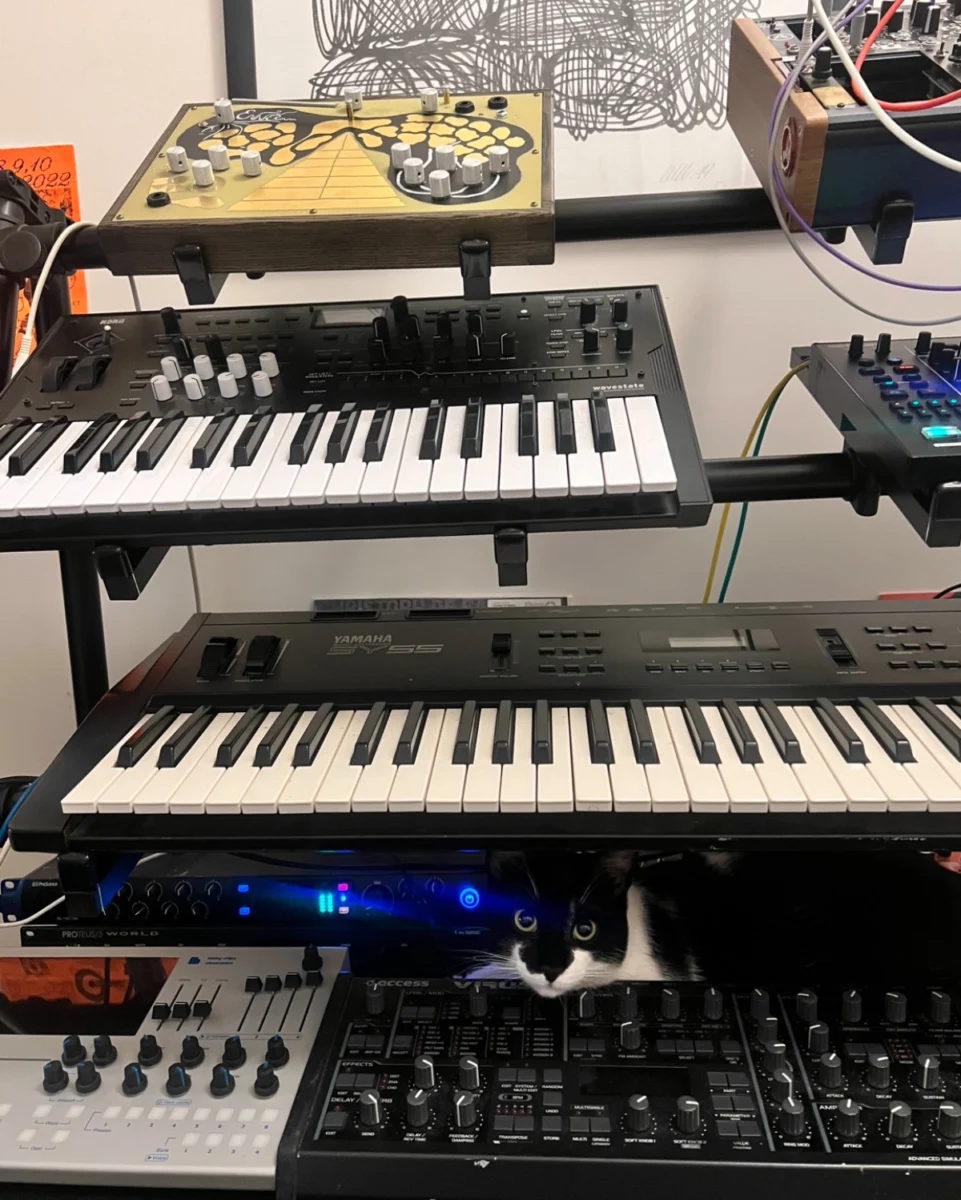
Tell us about your studio setup. What instruments and gear do you use to make music?
Ableton Live remains the centre of my studio. I use a lot of software instruments and plug-ins, including Serum, Life, the Arturia suite and various effects from Omnisphere.
On the hardware side, I’ve recently been enjoying the Torso S-4 for creating textures and more experimental sounds. I’ve also added drum machines like the RD-8 and RD-9 because I’ve been looking for more rhythm and groove in my recent productions.
"The artists I choose to work with are usually people whose music I listen
to regularly and who genuinely inspire me. They're artists who influence
my tastes and push me to keep evolving. I feel very fortunate to
be able to work with people whose music has accompanied me for years.
The label is built around admiration and genuine enthusiasm rather
than strategy."
How long did What They Left take to make from first ideas to finished master? Was there a particular moment when you knew it was done?
The album took roughly a year to complete, although some ideas and fragments are older than that. In many ways, it feels like a reflection of everything that happened in my life over the past year.
One of the advantages of running my own label is having complete freedom. I decide the tracklist, the artwork, the communication, the deadlines and the overall direction. There are no external rules. Everything is done according to what feels right for the project.
I never really had a single moment when I knew it was finished. At some point, it simply felt like it had said everything it needed to say.
You released Me, With You on Conna Haraway‘s co:clear label. Tell us about connecting with Conna, and about collaborating with Pavel Milyakov on the album’s opener.
Conna and I had been orbiting around each other’s work for a while because I think we share a lot of the same musical interests. When we eventually started working together, it felt completely natural. I had total trust in his artistic vision and in the direction of the label.
As for Pavel Milyakov, he’s genuinely a legend to me. I’ve followed his work for a very long time. When the idea of a collaboration came up, he was immediately the first person I thought of, even though I never imagined it would actually happen.
Pavel contributed guitar recordings specifically for the track and completely understood the emotional direction I wanted to take. His contribution brought something very special to the piece.
The Next Kingdom was the inaugural release on Second End Records, a label you founded. What inspired you to start it, and how has your vision for it developed since that first release?
The Next Kingdom was intended to introduce the label and showcase the range of sounds I wanted to explore through it. I wanted to attract listeners from different backgrounds, whether they were interested in ambient music, techno, club music or more introspective forms of listening.
I also wanted the record to reflect the kind of journey I try to create in my live performances: something contemplative, immersive and coherent from beginning to end.
In many ways, I approached What They Left with a similar mindset. Me, With You felt slightly different because the tracks were written over a much longer period of time, although I’m still very happy with how everything came together in the end.
How do you connect with artists you want to feature on the label? What are you looking for?
The artists I choose to work with are usually people whose music I listen to regularly and who genuinely inspire me. They’re artists who influence my tastes and push me to keep evolving. I feel very fortunate to be able to work with people whose music has accompanied me for years. The label is built around admiration and genuine enthusiasm rather than strategy.
"For this mix, I wanted to give people a glimpse of the project I'm
currently working on. It's more club-oriented than some of my
previous mixes and less focused on collage-like storytelling."
Can you shed any light on what’s coming next from Second End Records?
Running a label taught me that I wanted to enjoy curating music just as much as making my own. That’s one of the reasons why the Collage compilations have become such an important part of the label. They allow me to explore the artistic identity of Second End Records while introducing listeners to a wider range of artists and sounds.
Recently, I decided that the label would focus primarily on my solo projects and on compilations featuring artists I deeply admire. The next release will be a new project of my own, and it will be slightly different from what people might expect.
How do you translate your work to live shows? Is there a particular piece of gear you always bring on stage?
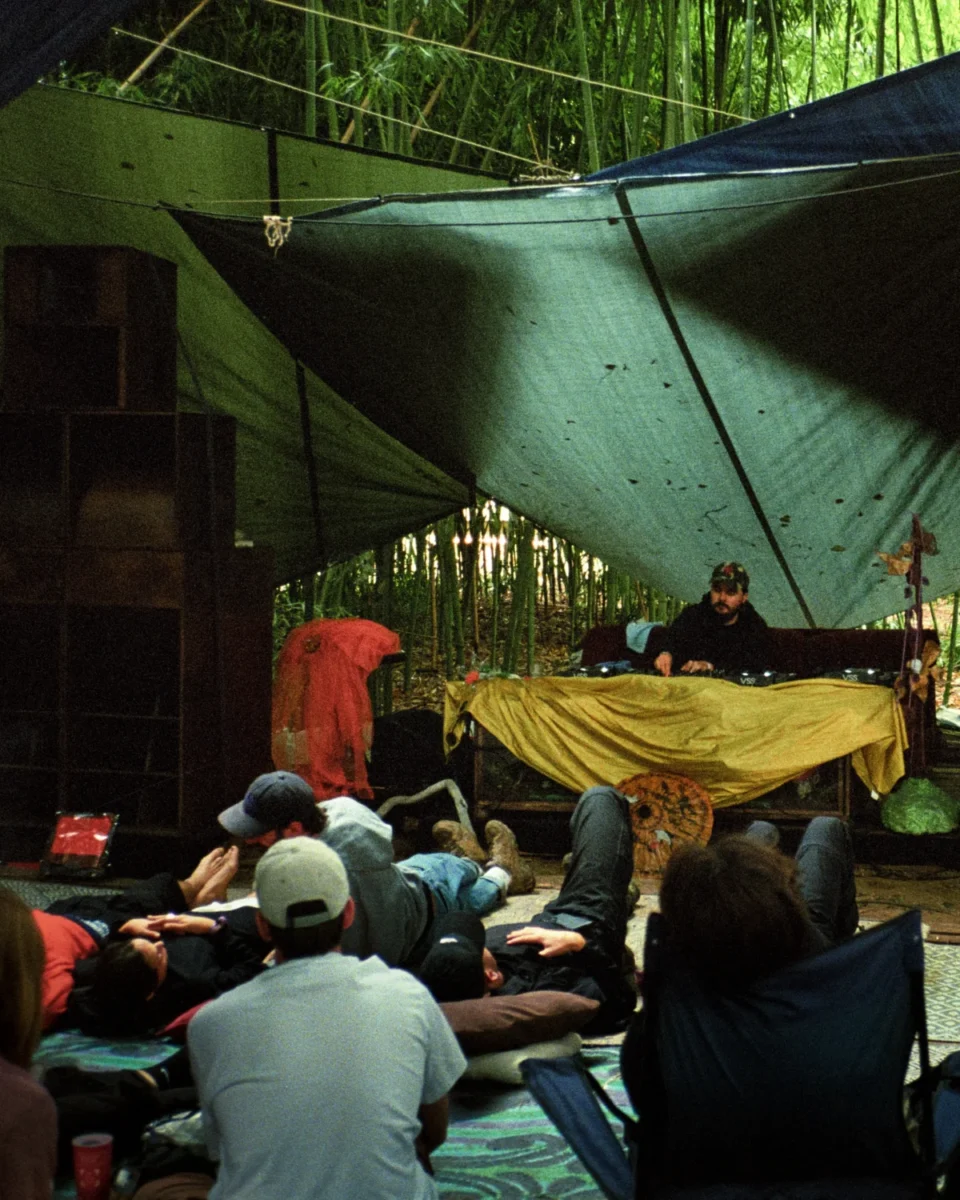
I love having a keyboard on stage because it allows me to improvise and react in the moment. I also enjoy building textured synth layers in real time.
At the moment I’m developing a new, more club-oriented live set involving drum machines and additional hardware. I’m interested in bringing more rhythm and spontaneity into my performances while keeping the atmospheric side of my music intact.
Tell us about Lyon. What’s the music scene like, and are there any essential venues or neighbourhoods you’d point our readers to?
Lyon is full of talented producers, labels and DJs, although there are probably fewer opportunities to perform than there should be. At the same time, the city has a strong musical history rooted in industrial music, rock and techno.
I sometimes feel like the scene moves in cycles. Right now I’m waiting for the next exciting chapter to emerge. I would definitely mention Le Transbordeur, an iconic concert venue where I also work. We also have Nuits Sonores, a festival that has played a huge role in promoting alternative music and has become influential far beyond France. You also have LYL Radio and Unité Centrale. And labels like Comic Sans Records and Bamboo Shows.
Tell us about the mix you’ve recorded for us.
For this mix, I wanted to give people a glimpse of the project I’m currently working on. It’s more club-oriented than some of my previous mixes and less focused on collage-like storytelling.
The upcoming music will be more techno-driven, and I wanted the mix to reflect that. At the same time, I still wanted to make something that could work equally well during a club warm-up or on a train journey. With this project, I’m trying to bring more emotion back into club culture.
"What interests me most isn't necessarily rhythmic mixing but creating
emotional continuity between tracks. Whether it's a mix or a live set,
I always think in terms of a beginning, a middle and an ending, like
telling a story."
How do you approach a mix differently from a live set?
There are many similarities between the two. In both cases, I spend a lot of time thinking about transitions and atmosphere. What interests me most isn’t necessarily rhythmic mixing but creating emotional continuity between tracks. Whether it’s a mix or a live set, I always think in terms of a beginning, a middle and an ending, like telling a story.
Are there any tracks in the mix that might surprise people who know your own music well?
There are two tracks by Polish producer a.sl in the mix. His music is probably one of the most exciting discoveries I’ve made recently. It’s minimal and highly textured, rooted in the fundamentals of techno while sounding incredibly modern and impactful.
I hear a similar approach in artists like Mammo or LB Honne. It may seem quite far from the music people usually associate with me, but I think listeners will still recognise certain aesthetic connections.
Is there anything else you’d like to share with us? Any new music or shows in the pipeline for the rest of the year?
I’m currently working on several new projects. One of them is an upcoming EP with my friend Salma Rosa, which I’m very excited about. I’ll also be playing a 1h 30min live set at Hors Sol this summer, and of course there is the new release coming on Second End Records. More generally, I’m looking forward to continuing to explore new directions while staying connected to the emotional core that has always driven my music.
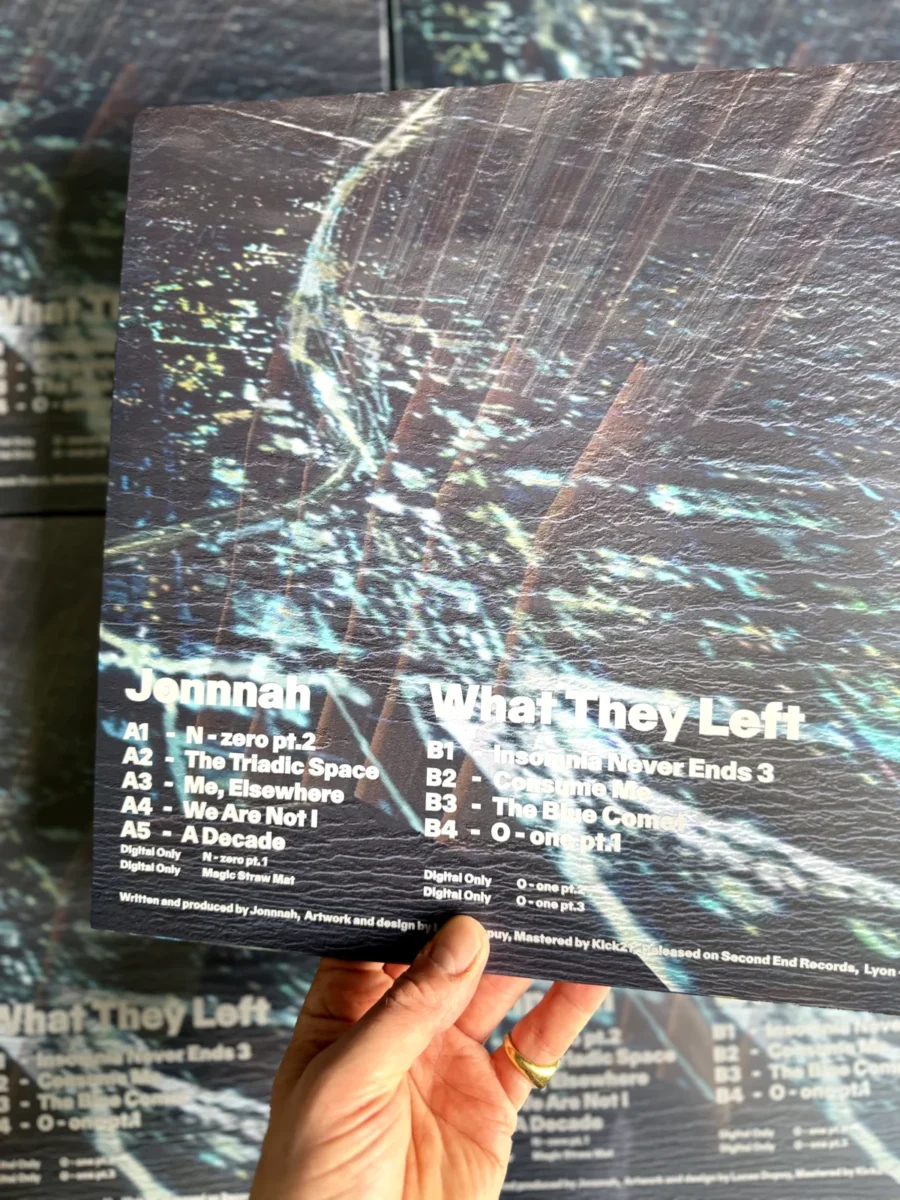
What They Left LP is out now via Second End Records. Listen and buy vinyl from Inverted Audio Record Store.
TRACKLIST
1. Jonnnah – Unreleased
2. Tren – the Rising and Setting of the Heaven
3. Ben Kaczor – Odsjaj (Lb Honne Remix)
4. Miris – Dose
5. Freund Der Familie – B
6. Arkajo – It’s Only You
7. A.sl – Curated Tenderness – Blue Moon
8. Freund Der Familie – Unreleased
9. Sub Basics – Discovery
10. Kristin Oppenheim – Behind a Cloud Sky
11. Balil – Choke and Fly
12. Model 500 – Starlight (Echospace Mix)
13. cv313 – Saraya
14. Anton Sl – Naïve Realism
15. Defiled – U.know