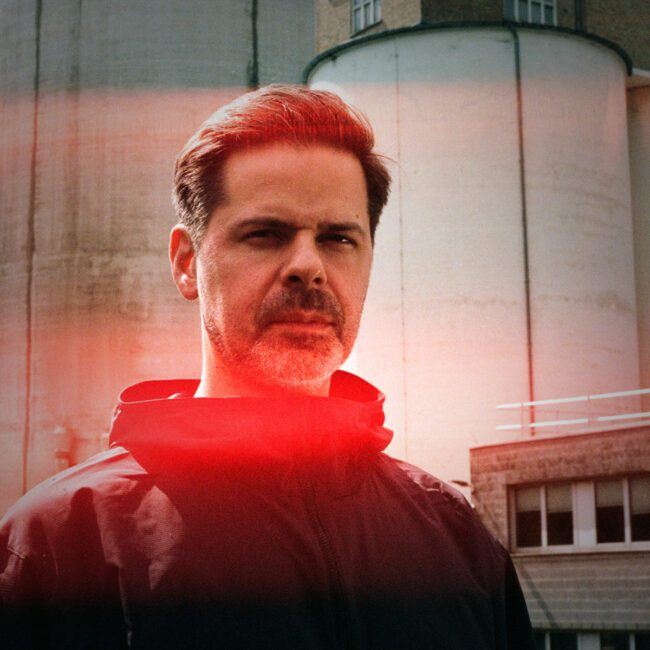
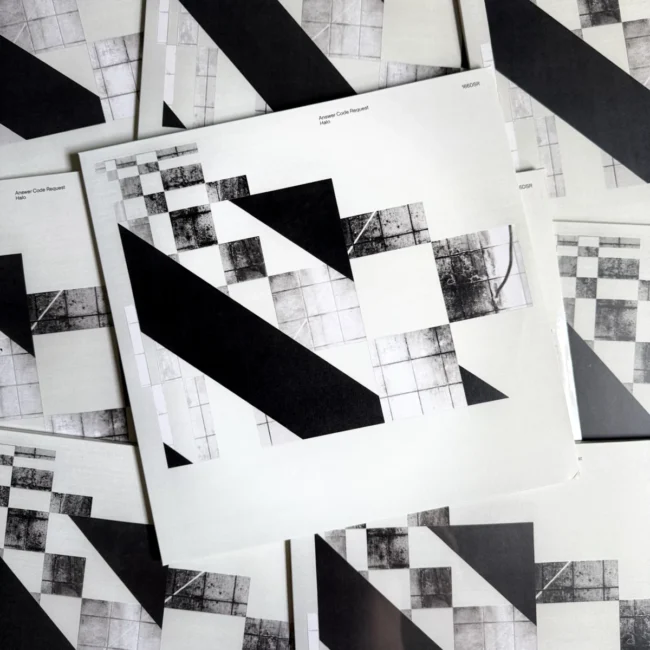
Eight years can seem a long time between albums in an electronic music scene that moves in ever more rapid cycles and spirals. In the period since Answer Code Request’s last full-length, Gens, the institutional landscape around Patrick Gräser has shifted considerably. Ostgut Ton has closed its doors (and reopened them), he’s moved on from his Berghain residency, and since first appearing on Delsin in 2022, his music has gradually begun to move beyond the steely, floor-focused techno with which his name became so closely associated.
Is, then, Halo the sound of an artist dramatically breaking with his past? Or is it something subtler, something like Gräser ‘rediscovering’ the freedom to follow his instincts. Speaking in the interview that accompanies this review, Gräser explains that the album helped him “find myself again” following the pandemic, reconnecting him with the reasons he loved making music in the first place and reiterates that his interests have always been broader than the particular sound and scene that came to define Answer Code Request.
Halo is the fruition of that outlook. Breakbeat, drum & bass, acid, ambient techno and straight 4/4 propulsion all surface at various points, but it never feels overblown or like an artist trying to ‘show off’ their range.
Opener Fading Shadows establishes that mood very nicely indeed. Hissing, ascending tones generate a gentle tension before loose, breaksy percussion begins swinging around the edges. A soft kick eventually settles underneath rising choral pads, while delayed synth stabs flicker through the surrounding haze. It is a restrained opening, but one that introduces the album’s central dynamic: hard, intricately programmed rhythms repeatedly softened by great washes of feeling.
That contrast becomes richer on Shine Deep, where metallic synth lines ping across elastic bands of delay while lush pads and warm bass pulses gather beneath a rushing breakbeat. Gräser’s touch feels engineered with high attention to detail without becoming sterile, its sharp edges offset by a tactile warmth.
Refraction pushes further into weirdness, its broken rhythms submerged in a swamp of warped synthesis and distortion. Rising pads again arrive to soften the impact, while a quietly panting synth motif lurks at the back of the mix. Dramatic and heady stuff.
When the familiar 4/4 thump finally arrives on the title track, it does so with real force. Halo is all heavy kicks, wriggling motifs and jittering stabs gradually ratcheting up in levels of urgency. Yet even here in the warehouse murk, distant pads echo faintly behind the machinery. Dissolution follows in similarly direct fashion, though its delayed kick and hats create a woozy, unstable momentum, with buzzing synths that melt into lightness whenever the track’s floating chords emerge.
It is on Instate Air, for me, that the album’s opposing aesthetics lock together most satisfyingly. Skittering snares and sharp kicks initially give the track a hard, jagged profile, joined by bass wobbles and small acid licks. Slowly, starry-eyed emotional pads, one choral, one kind of an orchestral swell, lift the piece out of its shoulder hunching funk. By the end, falling chimes transform a track that began with all those abrasive elements into something almost tender.
The shift into D-Fracture is quite a severe one then. Big snares and offbeat kicks push almost into the tangled vines of jungle territory, with waves of bass moving beneath coiling synths and clouds of hiss. A great example of the record’s rhythmic programming that obstinately refuses to sit still, beats stutter, elements pan and sequences subtly reconfigure themselves.
Bliphar is playful, heavy techno built from a pounding kick, bursts of static and tubular melodic notes, its percussion swinging and filtering around the stereo field. Sublith is more patient, a sort of moody, minimal slow-burner in which crackle and fidgeting textures orbit the kick while faint chords gradually accumulate. Its changes are precise enough to be almost imperceptible, the track delicately morphing and evolving, always something new to take from tracks like these.
Closer Silent Currents offers yet another glimpse of this creative freedom, as we stray into what could, maybe, depending on how fast and loose you play with genre, into housey territory. Tough 4/4 drums brush against this almost-house rhythm, alongside shrill synth bursts and clipped vocal fragments, before a set of wonderfully satisfying bass chords begins to rise through the track. Sharp and floaty, really good stuff.
Gräser says he tried to remove everything unnecessary and “keep only what really mattered”. The success of Halo is that this reduction has left room for pads to bloom around hard percussion, for rhythms to mutate, and for styles to coexist shoulder to shoulder, but all with that distinct, can’t-quite-put-your-finger-on Answer Code Request flourish. Atmospheric, tough, refined, and absolutely essential.
Interview by Will Patterson
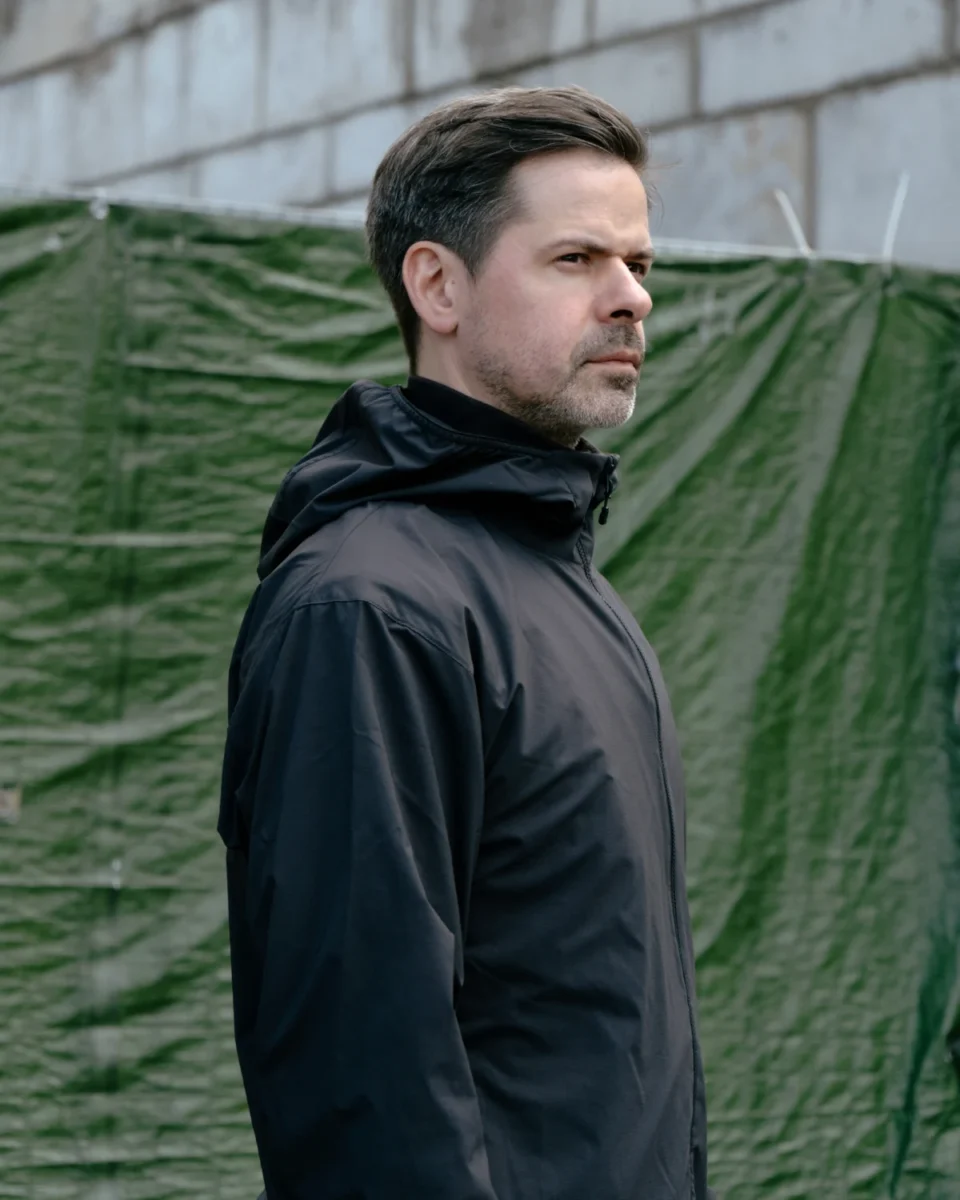
"With Halo, I wanted to make the music that felt honest to me at this
stage of my life. If that means some people are surprised by it, that's
completely fine. I'd rather make something personal."
Hi Patrick, thanks for taking the time to speak with us, and congratulations on Halo! Your first album in eight years, what made this the right moment for another full-length, and has anything changed for you creatively during that period?
Hello Will, thank you as well for having me, and thanks for the congratulations. I think I simply needed some time to find my way back to my old strength after the pandemic. To be honest, there was never really a “right” moment to make another album. I was also very busy, so it took me quite a while to finally finish it.
Creatively, not that much has changed. I basically picked up where I left off, and through making this record I felt like I found myself again. Working on the music reminded me why I love doing this, and it helped me reconnect with who I am as an artist.
You’ve described Halo as your most personal record, saying you tried to remove expectations and focus purely on the process. That’s interesting considering the fact that your music has become so closely associated with a particular sound and scene. Was letting go of that identity difficult? Do you think people inevitably project expectations onto Answer Code Request because of your links to Berghain and Ostgut Ton?
I don’t think I ever consciously tried to let go of that identity. It’s more that I stopped thinking about what people might expect from me. At some point you realise that if you keep trying to meet expectations, you’re no longer making music for yourself.
Of course, I understand why people associate Answer Code Request with Berghain and Ostgut Ton. Those places and that label have been a huge part of my journey, and I’m very grateful for that. But they don’t define everything I do as an artist. My musical interests have always been broader than one particular sound or scene.
With Halo, I wanted to make the music that felt honest to me at this stage of my life. If that means some people are surprised by it, that’s completely fine. I’d rather make something personal.
The record moves so naturally between different styles with your nods to breakbeat, d&b, techno, acid… Feels like a bit of a signature on your albums now, but none of it feels like genre-hopping for its own sake. Is that something you do consciously? Or is it just a case of organic growth during production that takes you in different directions?
Yes, I still love music in all its different forms, and that’s where I feel the most freedom creatively. I never set out to include different genres just for the sake of it. It’s really a reflection of how I’m feeling in the moment and what inspires me while I’m making music.
A lot of it happens naturally during the production process. Some days I’m drawn more towards techno, other times it’s breakbeat, drum & bass, or acid. I don’t try to force everything into one specific sound. I just follow whatever feels right at that moment, and I think that’s why the tracks end up being so different from one another while still feeling like part of the same record.
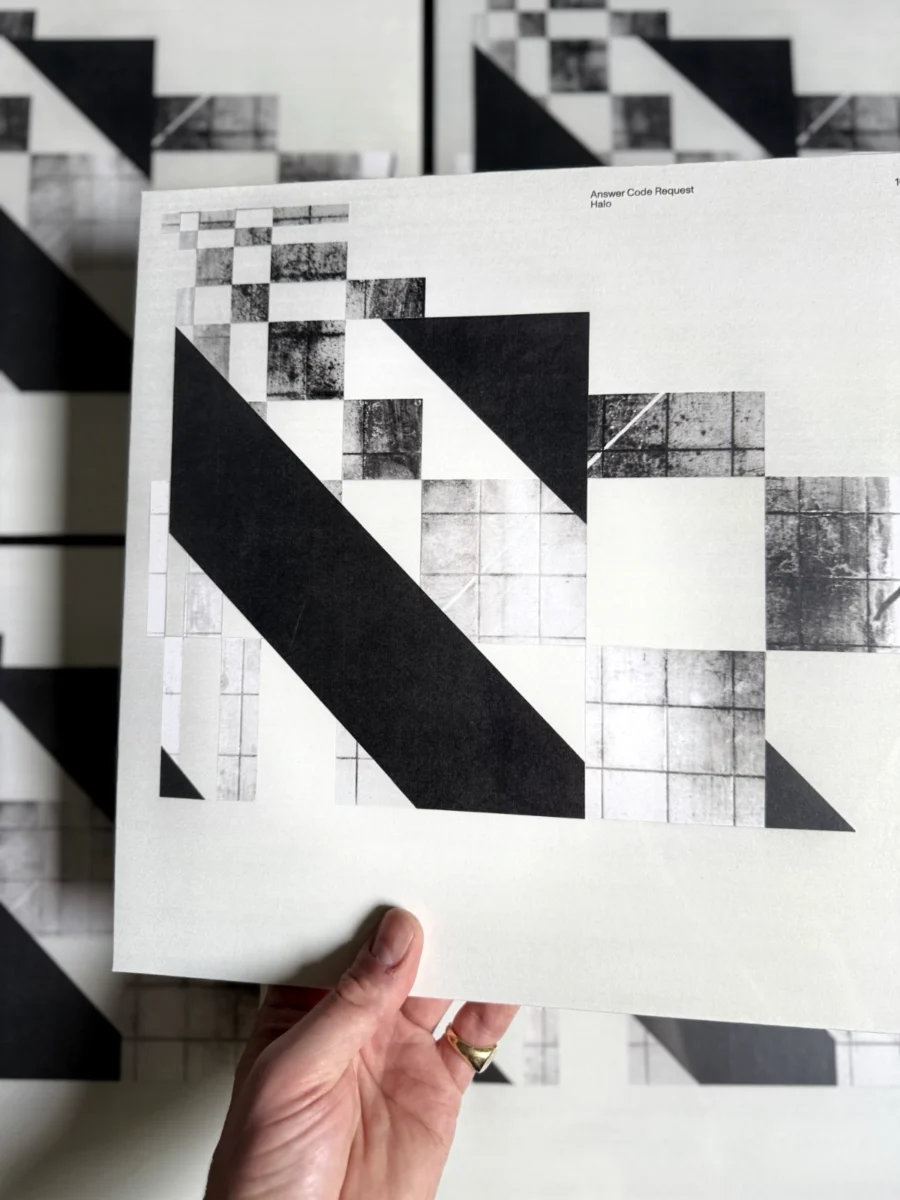
"I understand why people associate Answer Code Request with Berghain and
Ostgut Ton. Those places and that label have been a huge part of my
journey, and I'm very grateful for that. But they don't define everything
I do as an artist. My musical interests have always been broader
than one particular sound or scene."
You’ve said you wanted to “keep only what really mattered”. That seems like a pretty simple statement, but practically speaking, how do you know when a track is finished? Is it an instinctive feeling, or is there a point where you force yourself to stop refining things?
Yes, there are definitely moments when everything comes together very quickly. Sometimes a track is finished within two days because everything just flows naturally.
Other times I can spend weeks or even months working on something, constantly changing it, and it still never feels right. When that happens, it’s usually a sign that the track just isn’t working. Instead of forcing it, I’d rather leave it behind and start something new. Over the years I’ve learned that not every idea needs to become a finished release, and trusting that instinct is an important part of my creative process.
On some tracks the drum programming is noticeably shifting, always reconfiguring itself, panning across speakers etc. Is rhythm something you sketch first, or does it develop in conversation with the melodic material?
It always comes from instinct rather than a fixed method. Sometimes I start with a beat or a drum sequence, just to set a rhythmic foundation. Other times I begin with melodies, pads, or atmospheric textures and build everything around that.
There isn’t really a rule for me. It depends entirely on the moment and what I feel drawn to when I open the project. I try not to force a starting point too much whatever comes first usually sets the direction for the rest of the track.
Do you still think about where a track might eventually be played while you’re writing, or have you become less interested in that as the process deals less with the weight of expectation? Did working on this album change the way you think about what electronic music can do outside the club?
No, I don’t really think about where a track might be played while I’m working on it. I always try to make music for the album in a way that it can also be enjoyed outside of a club context. I want it to work in different environments, for a wider audience, not just in one specific setting.
That perspective hasn’t really changed over the years. It was already the same with earlier releases like Code or Gens. My focus has always been on creating a broad spectrum of music rather than being tied to a single function or space.
"I feel that this album has opened both new and old doors. In some ways,
it connects back to my previous albums and things I explored before,
but it also gives me the freedom to move into new territories. For me,
the most important thing is to stay curious and follow where the music
takes me."
Technically speaking, has your studio changed much since your earlier records? Have there been pieces of hardware, software or production techniques that opened up new directions, or was the change a philosophical one, rather than technical?
Not much has really changed. If anything, my setup has become a bit more minimal over time. But I’ve always worked mainly “in the box,” on my laptop, so technically there haven’t been any major shifts in how I produce.
I still use all the tools I need to make my music. The main difference is less about new gear or software and more about experience and knowing my workflow better now. I tend to focus more on decisions and ideas rather than constantly changing the setup itself.
About this mix then. When you’re asked to record a mix outside of a club context, does your mindset change? I would imagine you’re thinking about it differently than you would compared to a five-hour Berghain set haha?
Yes, absolutely. My approach is completely different compared to playing in a club in front of a dancing crowd. A recorded mix is usually much shorter, so you have to keep it more compact and focused. That said, this particular mix is definitely more dancefloor oriented. I still wanted it to have the energy of a club set, but in a tighter format.
Without giving too much away, what thread connects the selections you’ve chosen? Are there particular records or moods in the mix that speak to where your head is creatively at the moment?
To be honest, there isn’t really a specific thread running through it. My selections are quite spontaneous and mostly reflect what I’m feeling at the time. The mix is also closely connected to what I’ve been playing in clubs lately. Right now, I’m really enjoying groovier tracks again, and house music has always been a part of my sets, so that naturally finds its way into the mix as well.
Finally, having reached that point where you can give yourself permission to explore without worrying too much about expectations, where do you see Answer Code Request heading next? Has making this album opened doors that you don’t want to close again?
I don’t know exactly what comes next, but I feel that this album has opened both new and old doors. In some ways, it connects back to my previous albums and things I explored before, but it also gives me the freedom to move into new territories. For me, the most important thing is to stay curious and follow where the music takes me.
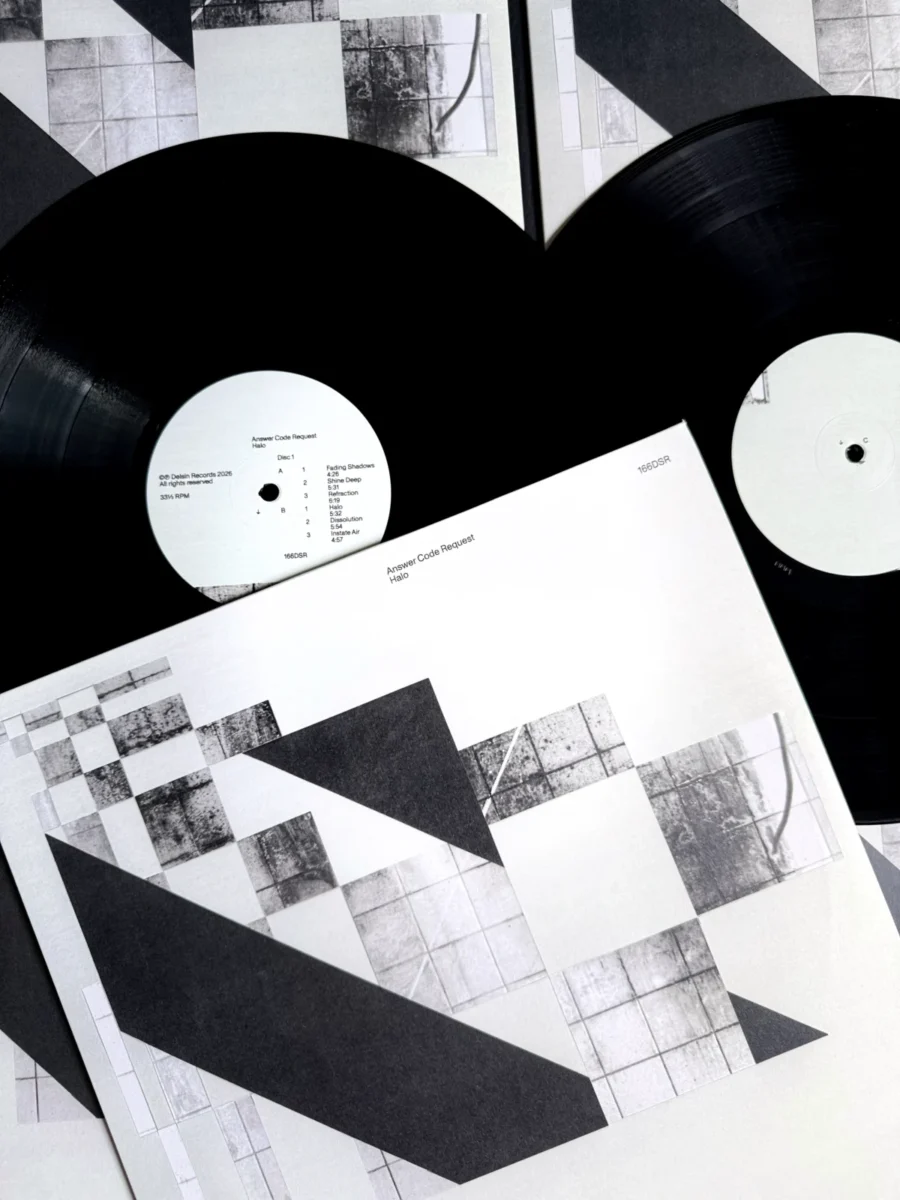
‘Halo’ is out now via Delsin. Buy a vinyl copy from Inverted Audio Record Store and digital from Bandcamp.
Photography by Katharina Schäffer