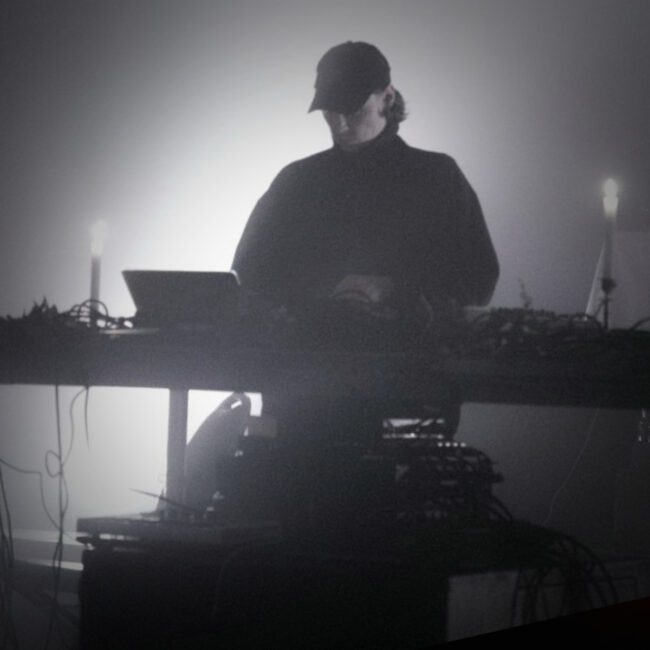
IA MIX 400 feels like a natural moment to reflect on the artists who have shaped our musical taste over the years. Few have done so as distinctly as Kirill Vasin aka Hoavi — a producer and composer we have long admired, whose work consistently challenges the boundaries of what electronic music can be.
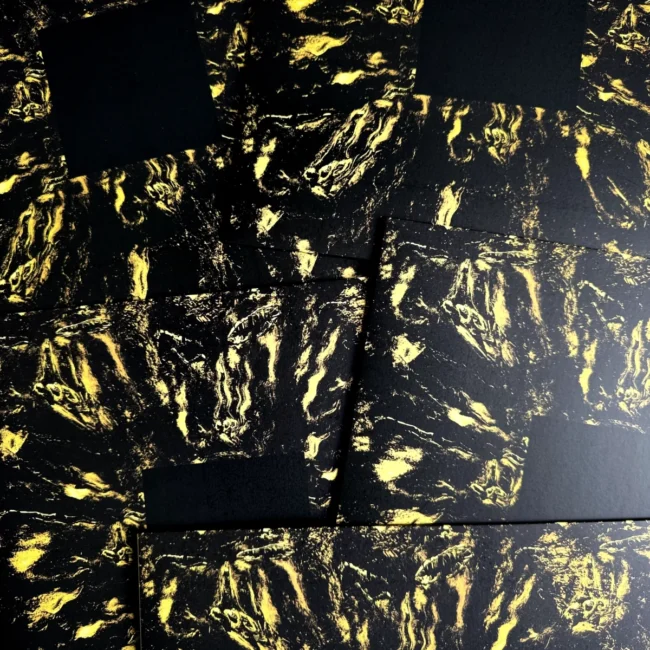
Architectonics cements Hoavi as a force to be reckoned with — not just in electronic music, but in music composition as a whole. His new album on Peak Oil champions the spirit of gamelan without ever having to announce it. Gongs and metallophones sit at the forefront throughout, sounding as though they’ve been lifted directly from a gamelan orchestra, binding the album into a single, unified statement.
This is not Hoavi’s first venture beyond the purely electronic. In 2023 he released Phases on Gost Zvuk, a six-track exploration of ultra-rhythmic experimentation that felt almost academic in its rigour. The title itself nods to Steve Reich’s phasing technique, and the connection is more than nominal.
That lineage runs directly into Architectonics. Both albums share a timbral world built from metal and industrial materials — but this is not sound collage or musique concrète. Hoavi takes those materials and constructs elaborate rhythmic architectures from them, repurposing industrial resonance as compositional form. More significantly, Architectonics engages with the gamelan concept of colotomy: interlocking rhythmic parts arranged in a terraced, hierarchical structure. The patterns that emerge are dense and deeply satisfying, an indecipherable code that rewards repeated listening.
Layered over Hoavi’s characteristic dubby low-end, Architectonics begins to feel less like an album and more like a methodology — an approach to form and timbre with an almost archispiritual quality. The album’s title may be its name, but it could just as easily describe the signature Hoavi has been building across his entire career.
Beyond the polyrhythms, there is a haunting harmonic dimension here that will be familiar from Music for Six Rooms and Invariant — the latter also released on Peak Oil. It’s an approach to harmony soaked in drama, pulling at something deeper than the intellect.
The album opens with “Wayang” — Indonesian for “puppet” or “shadow”, a reference to the traditional puppet theatre intimately connected with gamelan practice. The gamelan influence is intentional and explicit from the outset.
“Triad of Becoming” is among the most rhythmically striking pieces on the record. Built in layers of tectonic weight, it is where Hoavi most directly engages with colotomic structure, bringing his own invention to bear on the tradition. “After a Day of Silence” pushes the layering further still — a frantic ride driven by gongs, shakers, and an arsenal of textural instruments, eventually resolving into a moment of sustained, airy harmony, a dubby pulse, and the fading ring of smaller metallophones.
“Song of the Forgotten”, the album’s single, will feel most familiar to long-time listeners. Minor pads sustain across the full length of the track while a small wind ensemble takes the foreground. “Keris” — named after the ornately curved Indonesian blade — carries a similarly otherworldly, almost cursed energy, as does the following track “Blue Krait”, named after a venomous South Asian snake. “Colossus” is a standout: a masterclass in what can be achieved through percussion and production alone.
The final three pieces lean heavily on wind instruments, with the rest of the ensemble in support. “After the Cyclone” is the most emotionally arresting of them — the title and the music both speak to aftermath, to the slow gathering of pieces following catastrophe. “Contradiction” closes things out with a dubby, cinematic elasticity, bending time more radically than anything that preceded it.
Hoavi’s recent output has consistently challenged what it means to be a producer. He is a teacher of music composition, and that position informs everything — the rigour, the communal ethos, the refusal to settle for convention. His mix for Inverted Audio, made entirely from music created by him and his students, embodies exactly that spirit. As in gamelan, it is a conversation between collaborators, a tradition passed forward. Read the interview with Hoavi below, and listen to the mix.
Interview by Ryan Pivovar
"Architectonics is the artistic expression of the laws of construction and
the relationship between load and support. It is an aesthetic object that
comes through the overcoming of boundaries and analysis. It is the ordered
and complete form of a given reality through cognition."
Hello! Please tell us about this mix. How did you go about curating it? What’s on it?
The mix includes works made by my students and some of my unreleased tracks. I am very proud to have such talented students. I sincerely hope that the world will soon hear their music through their own full-length albums.
Phases and now Architectonics feels to me, either on purpose or incidentally, to be inspired by traditional, percussive music, like gamelan. Is that something you are consciously seeking out, or do you think you’ve arrived at it by chance?
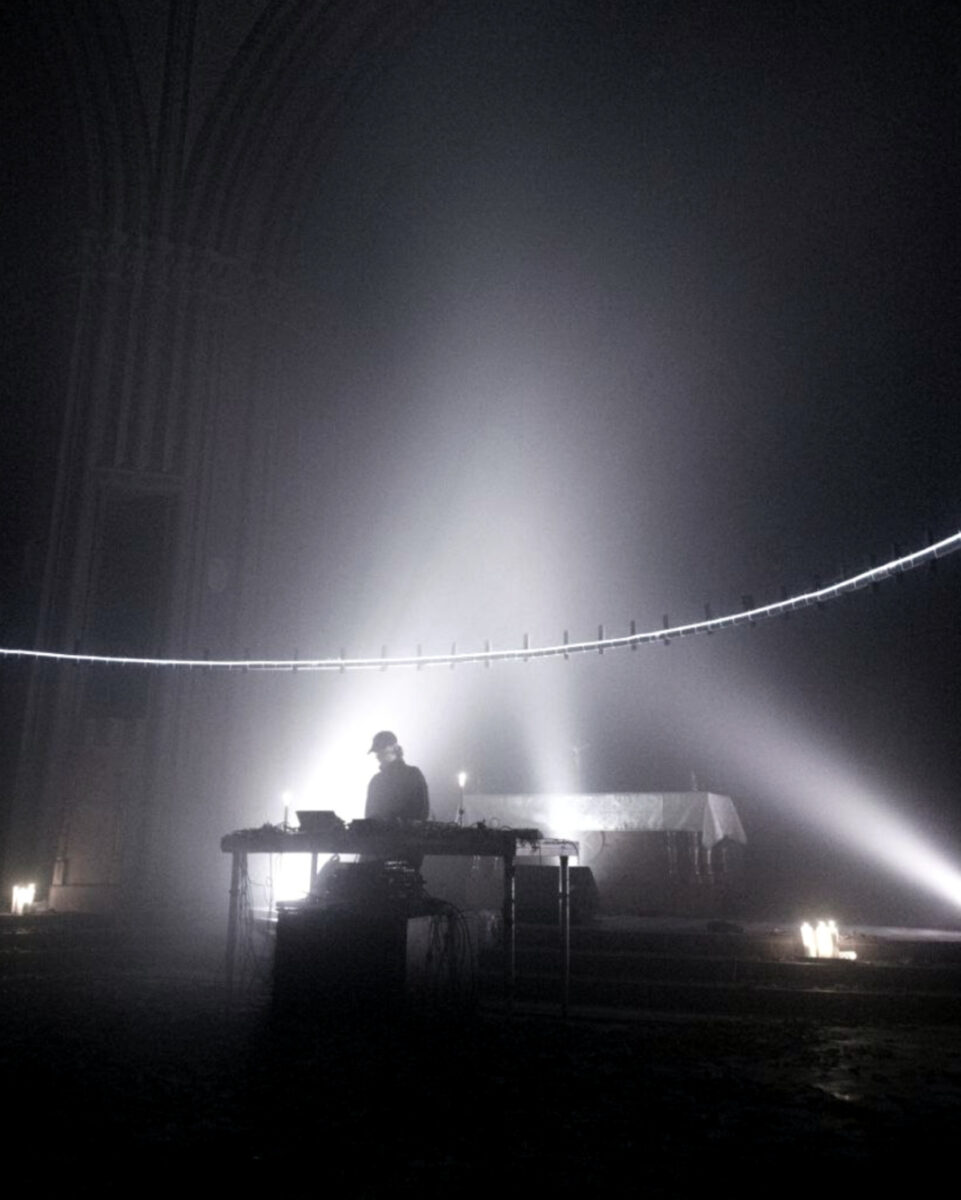
It all started with a question I asked myself: what is it about music that draws me in? Are there individual elements that work on their own, or is it always a combination of different layers? I tried to track what my brain reacts to first when listening to music and what makes me fall in love with the sound of a track. It turned out that it was almost always rhythmic structures.
Phases is my first attempt to move from a concept in my head to a complete work.
Was gamelan a point of support? Undoubtedly, as it is my favourite music.
You have a very unique way with rhythm. It sounds through-composed, or improvised. How do you think about phrasing in your music? Do you build your music in terms of “what feels right”, or is your process different?
The process of creating a rhythm varies greatly each time. It can be a simple loop, with a new layer that I play by hand on top of it. Sometimes I create rhythms using a contact microphone connected to an iPad and then transfer everything to a computer. Sometimes I record improvised pieces in Ableton’s looper so that I can manipulate the speed of the project later. In any case, there is a long process of editing the recordings afterwards.
In general, I proceed from an inner sense of beauty of rhythmic structures.
Continuing on rhythm, are there other musical artists who you really admire for their approach to rhythm?
Yes, there are quite a few, in different musical genres and eras: Mark Fell, J Dilla, Steve Reich, Photek, De Leon, Healing Force Project, Mohammad Reza Mortazavi, Bernard Purdie, Goat (jp)…I can’t list them all.
This made me somehow remember hearing that Steve Reich studied gamelan music at some point, and I had to look this up. Apparently he seriously studied gamelan music in the early ‘70s and took a lot of influence from it. His music is very rhythmically interesting, but it’s really great in many more ways. Do you have any favourite pieces of his?
My acquaintance with Steve Reich’s work began with Music for 18 Musicians, as I think it did for many people. I listened to this piece over and over again.
As for my journey to gamelan, at least that’s the logical chain my brain has constructed now, but it can be a cognitive distortion. So here’s the thing: during the period when I discovered Steve Reich’s music and studied his works, I was also listening to the music of Lubomir Melnyk, Colin Stetson and others. I tried to trace the central thread connecting these musicians. Delving deeper into my search, I discovered the music of the island of Java.
I thought I had heard goat (jp) before, but I have not. I went and checked out their album Joy In Fear. It blew me away! I had to buy it. How did you find out about this band? Do you have a favourite release or piece of theirs?
A friend of mine told me about this band about a year ago. I was also in awe of their music. I agree with your choice. I love this album too.
"I tried to track what my brain reacts to first when listening to music
and what makes me fall in love with the sound of a track. It turned out
that it was almost always rhythmic structures."
What art, music or otherwise, has inspired you lately?
I am skeptical about the concept of inspiration. I like many things. But I don’t count on them in my music writing process. I think you either write music or you find excuses within yourself for not writing it.
More than a lot of other artists, I feel that each of your releases occupies a new sonic space than the previous one did. How difficult is it for you to “find” the sound of a new album? Do you feel like you need a certain amount of time to pass in between releases for a new sound to develop?
The idea to write a percussion album had been around for a long time. I just had to improve my level of understanding through a process of trial and error. That’s basically why there was such a long gap between my latest releases.
Something that I really love about this album are the polyrhythms that show up, like on “Triad of Becoming”. The layering can get quite dense. Does it take a long time to arrive at this place? Do you feel like you ever go overboard with it and have to scale back a bit?
There is quite a long process of editing and rewriting pieces while I’m working on them. But there are moments even after that process that I simply don’t like everything about it and I start all over again.
Each time you put something out, I’m genuinely excited and curious to find out what this new one is going to sound like. Is there a place you’re trying to arrive at in your musical journey, or do you feel more like a wanderer?
I don’t know, I haven’t thought about it from this angle. While I work on an idea, I start by asking myself questions, then I try to search for the answer and form a concept.
Tell me about the name Architectonics. I have my own idea of this name and how it fits with what you’ve made here, but how do you see this name and its relationship to the music?
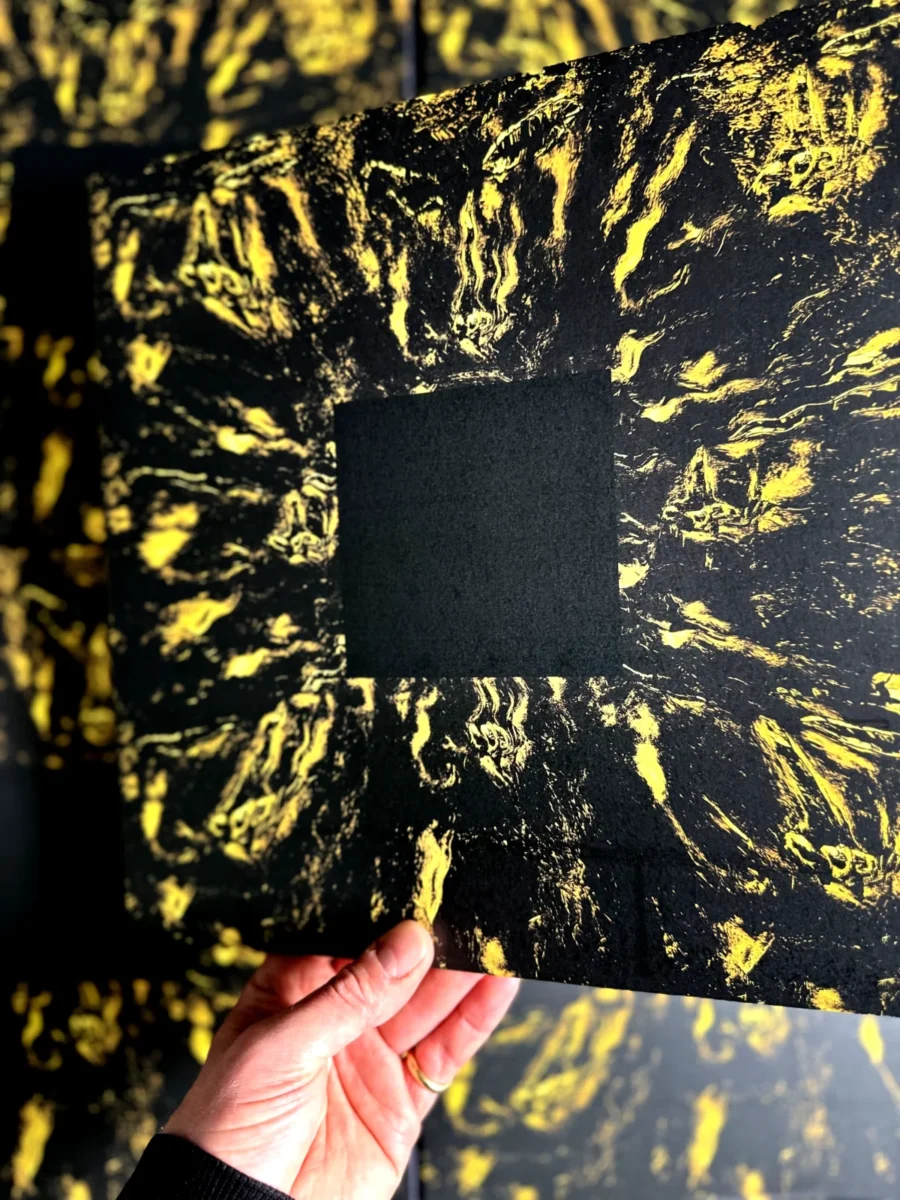
Architectonics is the artistic expression of the laws of construction and the relationship between load and support. It is an aesthetic object that comes through the overcoming of boundaries and analysis. It is the ordered and complete form of a given reality through cognition.
You made two versions of this album. Do you still have the other version? If so, will it ever be released? Why the two versions?
The first attempt was unsuccessful, so I put the album on hold. About a year later, I started writing the album again with renewed energy and knowledge. After I finished, I put the album aside so that my brain could soberly evaluate the result. In the end, I was still not satisfied with it, but there were some good ideas that I started to develop. I don’t think I’ll release any other versions of the album.
How much time was spent sampling sounds as opposed to the actual composing of the pieces? Did these processes overlap, or did you record samples first, and then begin building after that?
I can’t even say approximately, it was spread out over time. I often tap out rhythms with my fingers on different surfaces wherever I am. It’s a habit I’ve had since childhood. If I like the sound, I just record it on my phone. That’s how I built up my personal library of strange sounds. But not everything in the album consists of samples. I also used physical modeling synthesizers, as well as an iPad with its apps.
"I am skeptical about the concept of inspiration. I like many things.
But I don’t count on them in my music writing process. I think you either
write music or you find excuses within yourself for not writing it."
This album is very cohesive. Were there pieces that you worked on throughout this process that didn’t quite fit, or do you end up repurposing and reworking those ideas until they fit?
Oh yes, there were many sketches that didn’t fit the concept. Sometimes I reworked them, sometimes I just started all over again.
As focused as this album is, do you feel like you had any big learnings, or things that you feel like you got better at through the process?
Considering the large number of attempts to write tracks for the album, I realised that I had definitely developed patience.
Do you teach music composition, or music production, or some combination of both? What have you learned from teaching music?
Yes, I teach composition and other aspects of production. While teaching music, I have learned to be even more patient. Seriously, though, I have always been an introvert, but teaching has taught me to communicate with people with ease.
I feel like lots of artists have a “filter” that stops them from putting out everything they make. Some artists might have a habit of putting out everything. Others might only put out a small fraction of what they make. Do you put out most of the music you make, or is a lot of your music private? Do you ever go back to old music and think, “why didn’t I put this out?”
In this respect, I am probably a lucky person, as I have released everything I wanted to.
Are there many unreleased tracks on my hard drive? There are some, but I will try to release most of them one way or another. Everything in its own time.
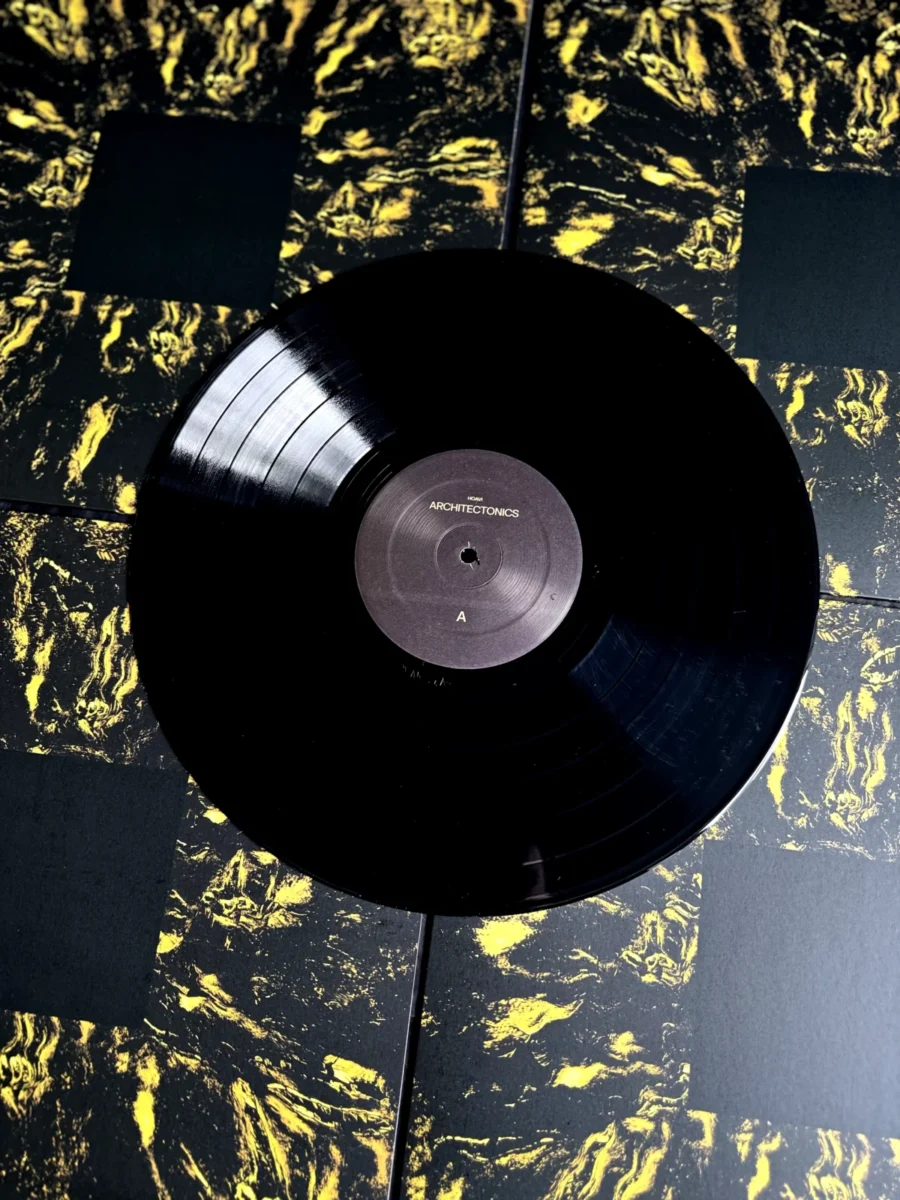
Architectonics is out now via Peak Oil. Buy a vinyl copy from Inverted Audio Record Store and digital from Bandcamp.
- SOUNDCLOUD
- MIXCLOUD
- APPLE PODCASTS
TRACKLIST
1. M.Cycle – Untitled [Unreleased]
2. Adonocolor- wipecut [Unreleased]
3. Neeroq- Untitled [Unreleased]
4. Hoavi- Untitled [Unreleased]
5. Tripinzen-Nutest [Unreleased]
6. Hoavi- Untitled [Unreleased]
7. Artiks- Untitled [Unreleased]
8. Regint-Lof [Unreleased]
9. Siniy Cvet – Obryad Ereone [Unreleased]
10. Cotton Coal – Untitled [Unreleased]
11. Hoavi- Untitled [Unreleased]
12. Siniy Cvet- Nothing [Unreleased]
13. Cotton Coal – Untitled [Unreleased]
14. Daguenfant – Crossed Syringes [Unreleased]
15. M.Cycle-Peel2 [Unreleased]
16. Neeroq- Untitled [Unreleased]
17. Hoavi- Untitled [Unreleased]
18. Neeroq- Opal [Unreleased]