For more than two decades, Nathan Fake has carved out a distinctive space within UK electronic music – one defined by soaring melodies, tactile synthesis and a sense of emotional openness that bridges the dancefloor and home listening. Emerging in the early 2000s through Border Community, the label founded by James Holden, Fake quickly became synonymous with a sound that felt both euphoric and deeply human. His debut album “Drowning In A Sea Of Love” remains a cornerstone of that era: a record whose luminous melodies and hazy atmospheres continue to resonate across generations of electronic music fans.
Two decades on, Fake returns with his seventh album Evaporator, released via the Paris-based record label InFiné. Where some of his recent work has explored darker, more nocturnal textures, Evaporator feels expansive and open – a record that leans into daylight rather than after-hours intensity. Across its runtime, Fake explores a wide emotional and sonic palette: from the uplifting chords of ‘Aiwa’ to the trance-inflected propulsion of ‘Hypercube’ and the widescreen ambience of ‘Sunlight on Saturn’.
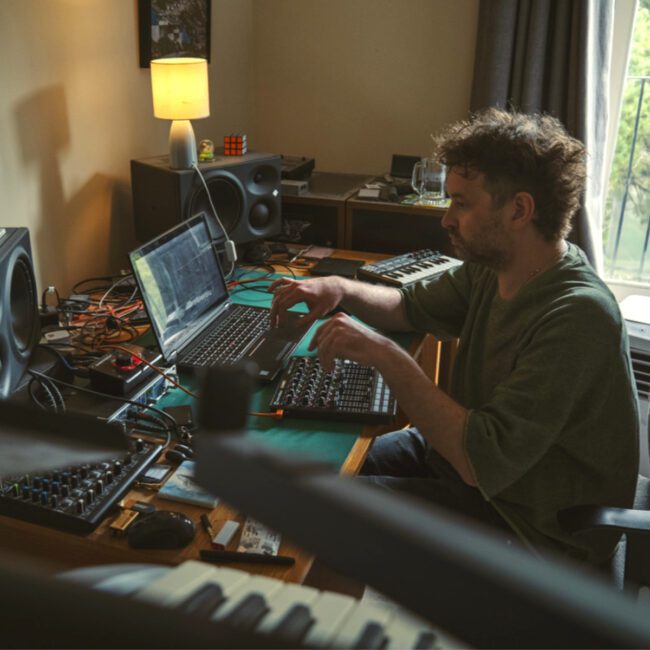
Despite the passage of time, much of Fake’s process remains rooted in familiar tools and instincts. His long-standing studio setup – centred around Cubase and a well-worn IBM ThinkPad – continues to underpin a workflow that prioritises intuition over constant technological reinvention. The result is an album that feels both contemporary and quietly timeless, shaped by decades of experience yet guided by the same melodic sensibility that first defined his work.
In this interview, Fake reflects on the making of Evaporator, the enduring legacy of Border Community, collaborations with longtime peers including Dextro and Clark, and the creative habits that continue to sustain his music more than twenty years into his career.
Interview by Tom Durston
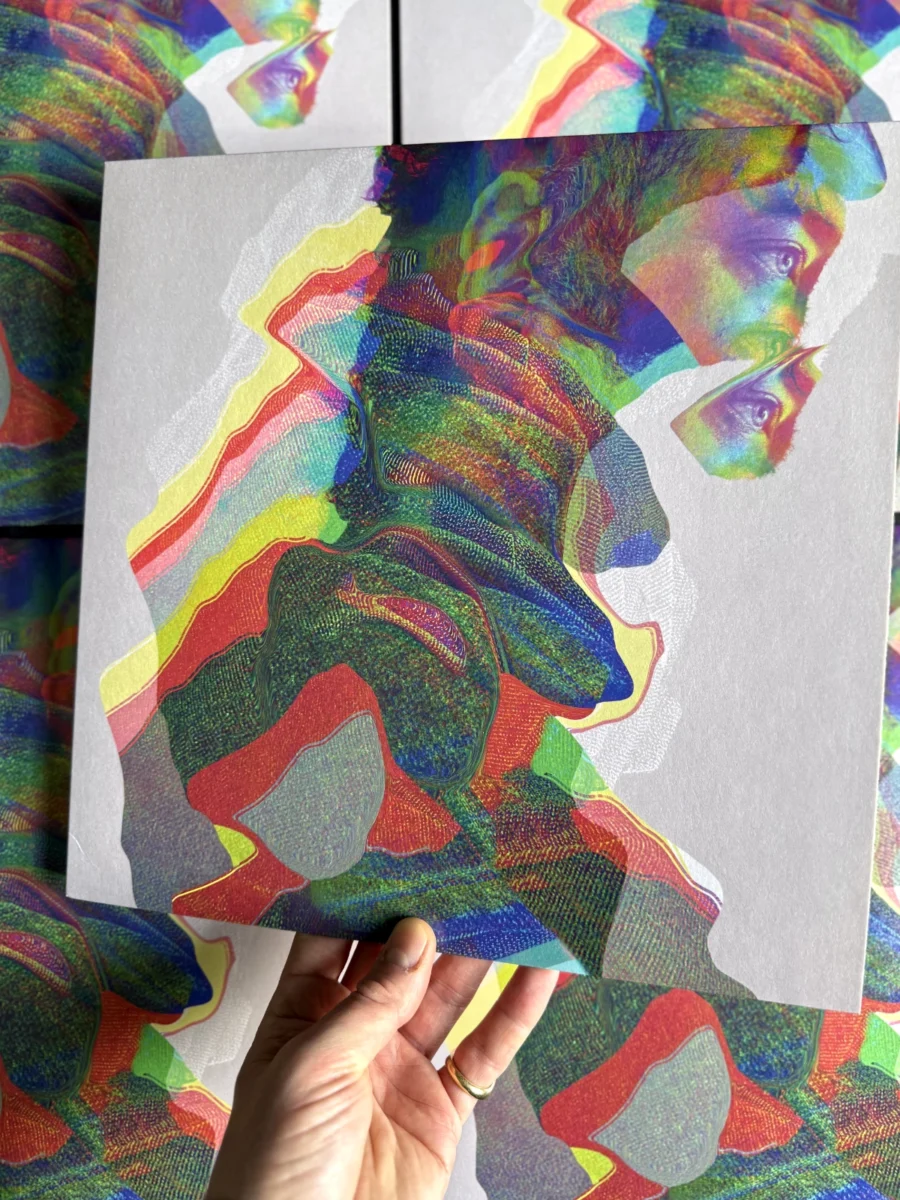
"I think Evaporator is a bit darker and more serious, as Drowning In A
Sea of Love is full of big major chord stuff and Evaporator isn't like
that at all."
Hello Nathan, thank you for taking the time to speak with us, and congratulations on the release of Evaporator. Where are you right now, and what has this year looked like for you so far?
Thanks! I’m at home in Norfolk right now, just came back from a weekend of gigs in Italy. This year has just been seeing the album finally get released and doing a few gigs here and there.
Listening to Evaporator, I was struck by how it echoes the spirit of Drowning In A Sea Of Love – particularly in its melodic warmth and sense of air. Was there any conscious desire to reconnect with that era of your sound?
It’s funny, quite a few people have said that it reminds them of Drowning In A Sea Of Love, but I’m not hearing that at all, to be honest. My debut album is quite cute and twee, and I think Evaporator is a bit darker and more serious, as Drowning is full of big major chord stuff and Evaporator isn’t like that at all, I think.
That debut remains such a defining record for many listeners. Would you ever consider a repress or special anniversary edition?
I’d definitely be up for that. That’d mostly be down to Border Community though.
When beginning this album, were you trying to carve out a new sonic chapter, or refine and deepen the musical language you’ve developed over the years? Did you start with a clear concept, or did the atmosphere reveal itself gradually?
I actually started out wanting to make a fully ambient album, as I wanted to do something I hadn’t done before, but the tracks sort of naturally ended up being a bit more fleshed out, which I’m happy about really. Ambient music is quite niche, I think, in terms of ways you can listen to it, but this album feels a lot more versatile than that.
Can you talk us through the practical side of making Evaporator — where it was written, the setup you were using, and any new or old tools that played a defining role?
I mean it’s pretty much the same as all the previous records, hah! Made at home, using my usual setup of outdated shite. I did use this little Yamaha synth, which I hadn’t used on anything before, the CS Reface.
This marks your debut on French label InFiné. What kind of creative freedom did the label give you with this record?
The album was pretty much already made by the time InFiné and I made contact, so I’m just really grateful they were into it and seem to be pushing it pretty well.
Border Community felt like a label that defined a particular moment in UK electronic music (2003–2014). What, for you, was the epitome of that period?
I guess the whole time, to be honest. Obviously the early period is very special for me, as that was my total introduction to the world of releasing music and doing gigs etc., and James Holden and Gemma (Border Community) basically managed me through that whole period.
Are you still in contact with artists from that era – James Holden, Luke Abbott, Wesley Matsell, Leafcutter John – and does that shared history continue to shape you creatively?
Yes, I’m friends with all those guys, but I’ve never met Leafcutter John. His record came out in the more recent phase of the label. I love his music though. You forgot to mention Scott aka Avus, whose music I’ve always totally loved, and I think he’s definitely one of the key artists in the early BC years!
"Music has always been the main thing I do. I spend a lot of time making
stuff that won't ever get released etc. as it's too rough, but those
things can end up being proper tracks so it's important to just mess around
if you're a musician."
We recently hosted The MFA at Inverted Audio Record Store for the reissue of The Difference It Makes, featuring your remix. What do you remember about making that remix, and how has your friendship with The MFA evolved over time?
It’s funny because I met Ali and Rhys first before I met James, as we met over this internet message board – those were pre-social media days! I met James and Gemma through them though, so it’s thanks to them that the proper connection was made. Also that was before they’d set up BC too. I’ve not seen Ali and Rhys for years, but we keep in touch online.
On ‘Baltasound’, Dextro brings a powerful rhythmic presence. How did that collaboration come about, and what did it add to the track that you might not have discovered alone?
Ewan actually did the main chord sequence. I did the drums and the extra melodic stuff on top. I’ve known Ewan for a long time from his Real EP in 2003 (I think), but we recently became better friends when I played in Newcastle (where he lives) with him and we became really good pals after that, and the idea of collaborating just came pretty naturally.
Working with Clark again on ‘Orbiting Meadows’, he brings that distinct melancholic piano touch. What does that creative exchange unlock for you?
I mean Chris is at the very top of his game with melodies and chords and textures and all that, and it’s a massive privilege to be able to work with him again. He’s a good friend also, but I’m still totally in awe of his music and his mad skills, and he’s so modest about it. He’s a legend haha.
‘Aiwa’ opens the album with those unmistakable chords and uplifting energy. Did you always sense it would set the tone for the record?
Aiwa went through several versions before I made the final one. It was originally this ridiculous ravey track but had the same chords to add some balance, but it was way too boisterous for the album and was also super long and a bit tiring to listen to. I just made it as a random live jam thing but re-used the chords as I thought they were nice. I think as I finished the track I knew it’d be track one though.
‘Hypercube’ carries a trance-inflected emotional pull reminiscent of earlier work like The Sky Was Pink. Do you consciously revisit that harmonic territory, or does it simply live naturally in your writing?
That track was also written as a bit of a laugh initially too, as the main synth line is like a piss-take trance melody, but I grew to actually really like it and it sort of took on this new life of something quite epic, so yeah it ended up being what it is. It could’ve become this total banger, but I ended up using very little drums in the end and I think that’s what makes the track notable. It’s fun playing live though – I usually add more drums then.
‘The Ice House’ – is there a literal reference behind the title, perhaps to The Ice House at Holkham Hall in Norfolk, or is it more abstract?
I live near a street called Ice House Lane. That’s all that is really haha.
‘Sunlight on Saturn’ feels expansive and dramatic – almost like a Norfolk sky at dusk. Does landscape imagery consciously influence your compositions?
Not particularly. I’ve always loved writing big chord sequences, and it’s the same as Hypercube, where it could’ve been this big club track or something but ended up being something more ambient, which to me makes it more special.
You’re still using your trusty IBM ThinkPad and Cubase setup. After all these years, what keeps you loyal to that workflow?
I just know Cubase and Cool Edit inside out and it just feels like they’re my main instruments, and I haven’t been comfortable using anything else. It’s impractical given the nature of computers and operating systems, but it’s how I work and it brings me lots of joy haha.
Beyond music, what occupies your time? And which artists or labels are exciting you at the moment? How do you go about discovering new music today?
To be honest music has always been the main thing I do. I spend a lot of time making stuff that won’t ever get released etc. as it’s too rough, but those things can end up being proper tracks so it’s important to just mess around if you’re a musician, I think.
Artists and labels… it’s embarrassing but I’m so out of touch right now, I couldn’t tell you any names at the moment! I’m in my 40s now and I’ve noticed that at this age you have this whole lifetime of music to revisit, so I’m massively enjoying that now.
Some stuff ages really well and it’s a very particular feeling which would be incomprehensible to someone in their 20s or whatever.
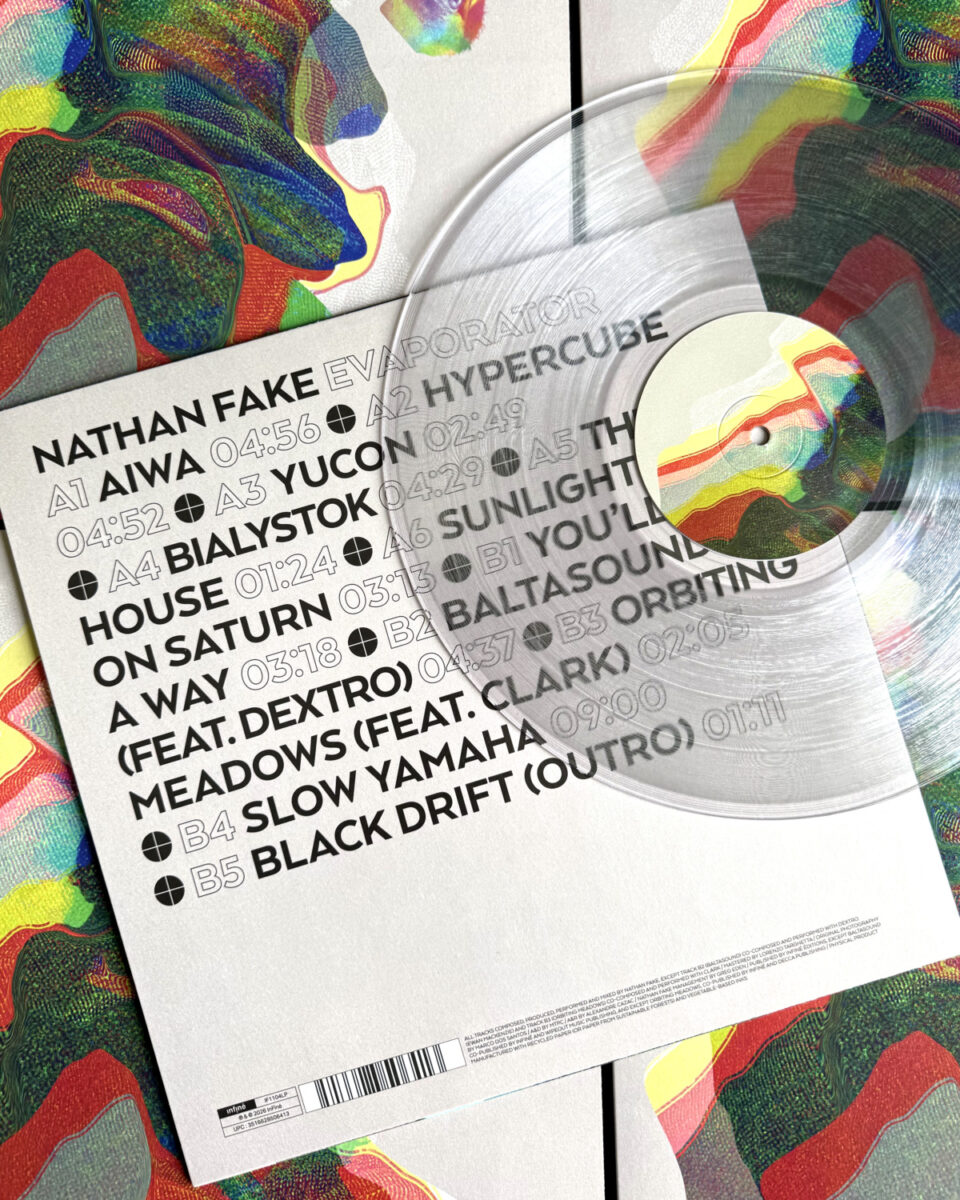
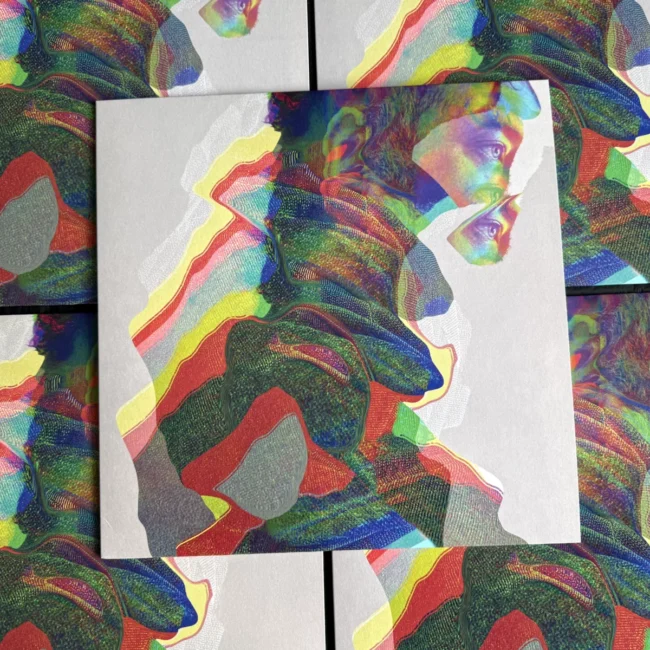
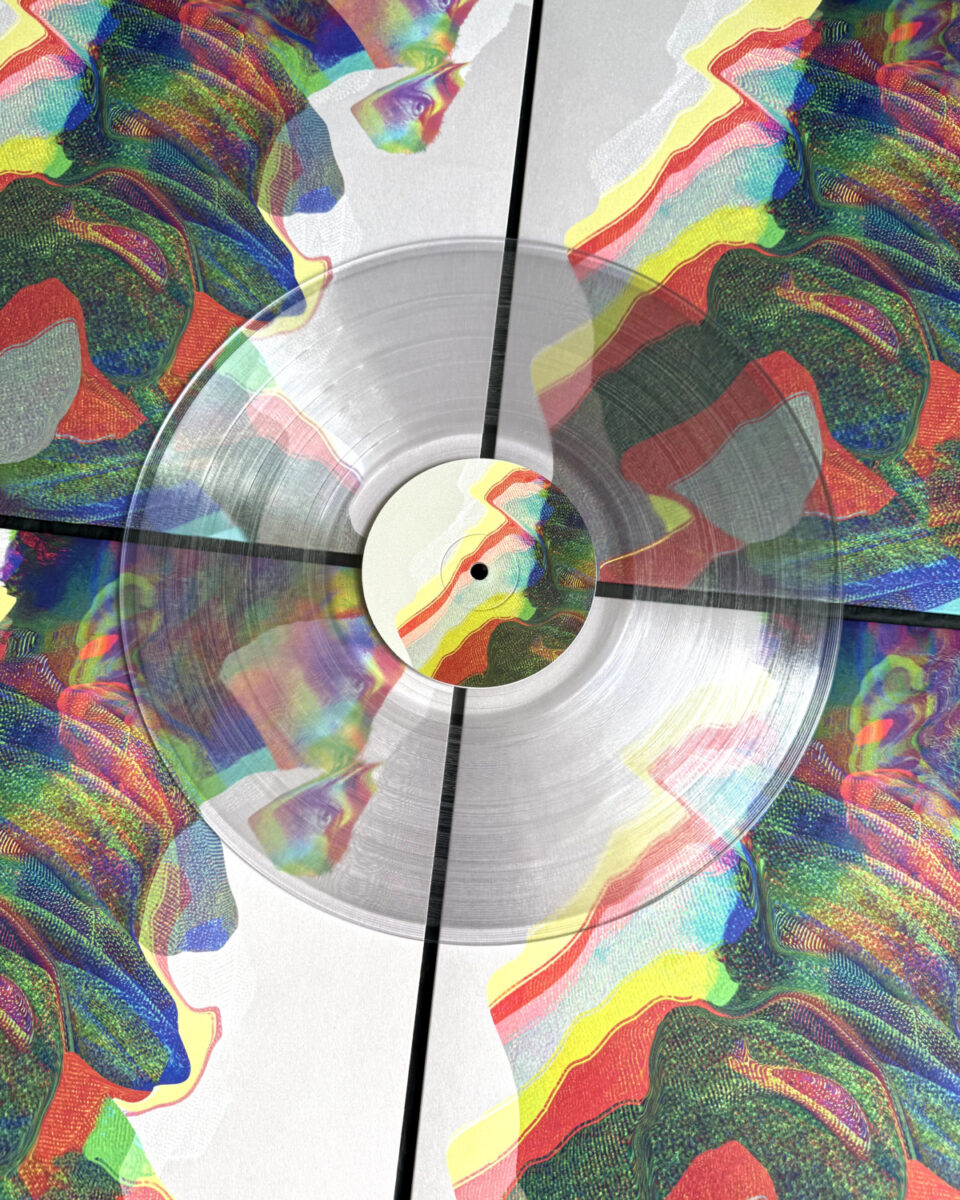
Evaporator is out now via InFiné. Buy a vinyl copy from Inverted Audio Record Store.
Photo by Marco Dos Santos
TRACKLIST
1. Aiwa
2. Hypercube
3. Yucon
4. Bialystok
5. The Ice House
6. Sunlight On Saturn
7. You’ll Find a Way
8. Baltasound Feat. Dextro
9. Orbiting Meadows Feat. Clark
10. Slow Yamaha
11. Black Drift (Outro)