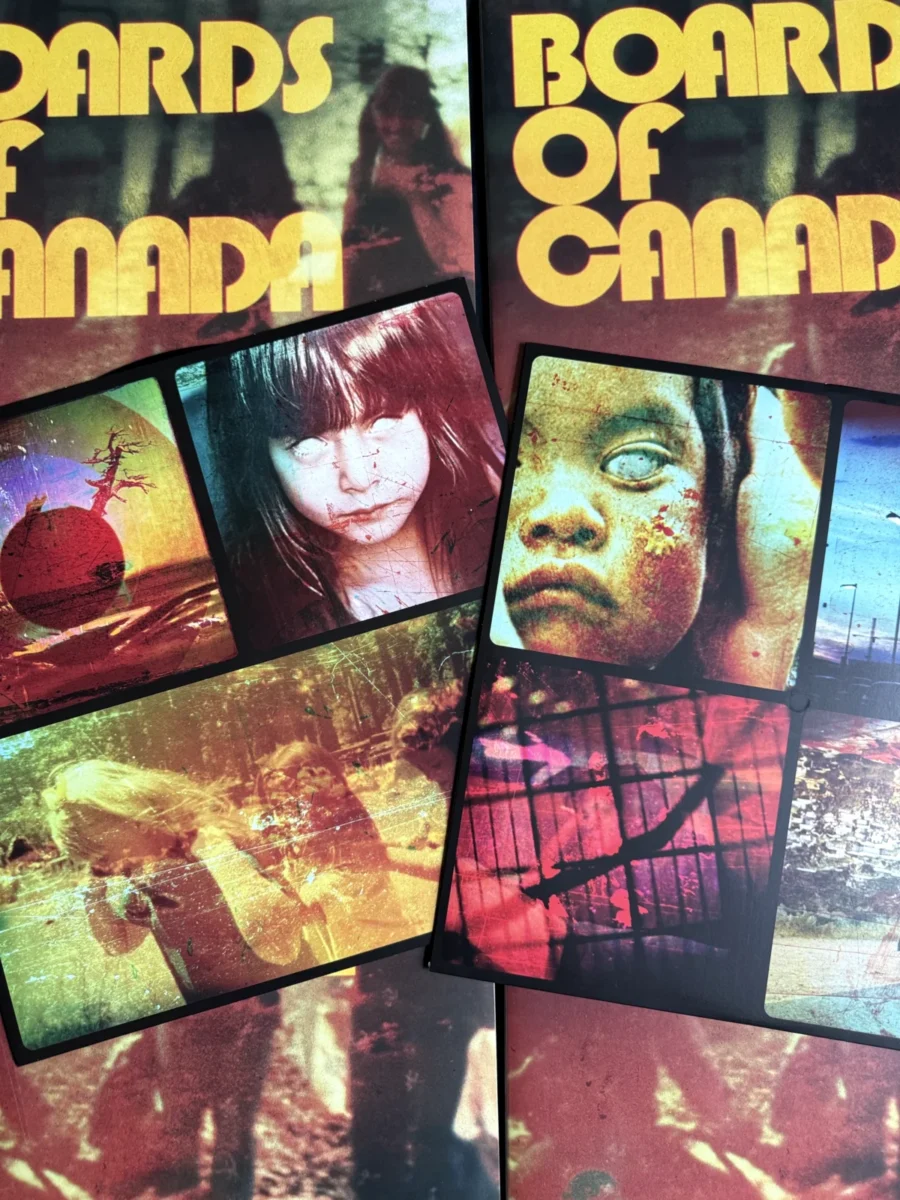
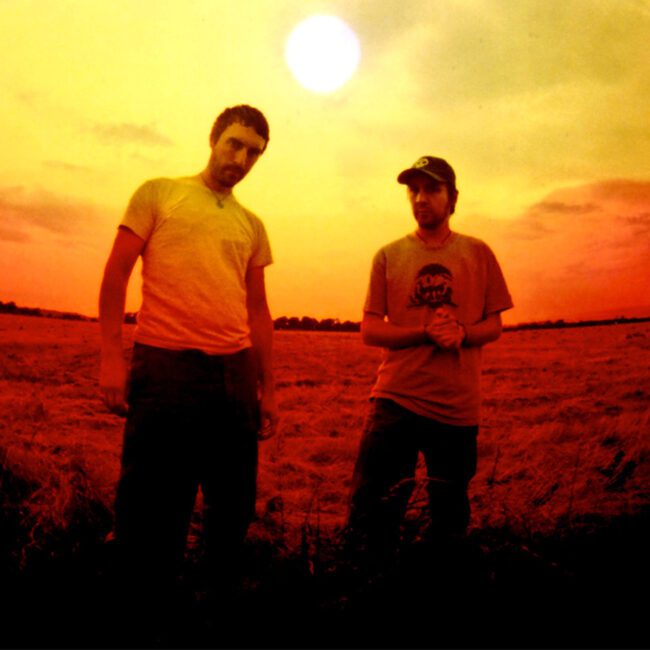
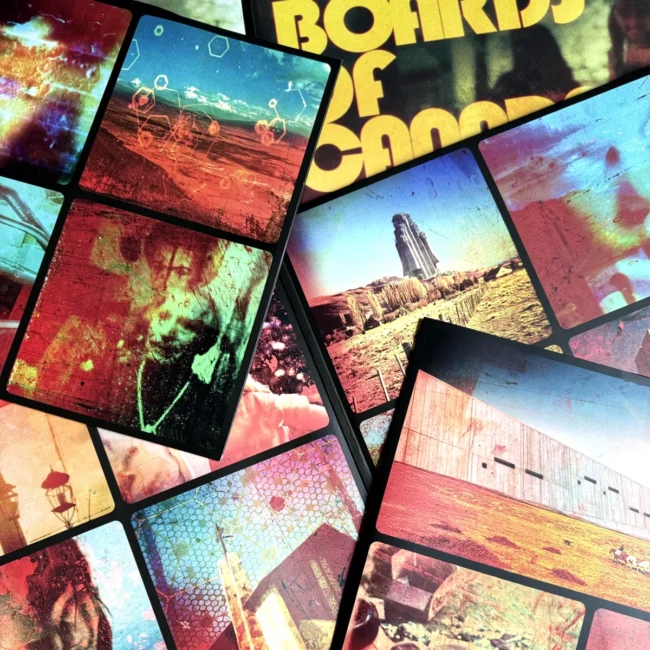
Now that Inferno, the heavily anticipated fifth studio album by Michael Sandison and Marcus Eoin, has been out in the world for a few weeks, the results are in. Some are praising it as Boards of Canada’s most well-produced record yet. Others have panned it as overly lengthy and disappointing. Despite any divisiveness in response, Inferno, with its religious symbolism and unapologetic spotlight on vocal samples, feels like it’s about something, more so than their previous efforts.
In search of a meaning, we dive into the unsettling world of Inferno, looking at the religious connections between this album and their past work. We interviewed Fredd-E, the curator of bocpages, wherein we talked about what the album means to fans. As it is with the numerology and symbology of the occult, a message seems to sit just underneath the surface, and if we look closely enough, there may be a devil hidden in the details.

Rob Young interviewed Boards of Canada for The Wire in 2005:
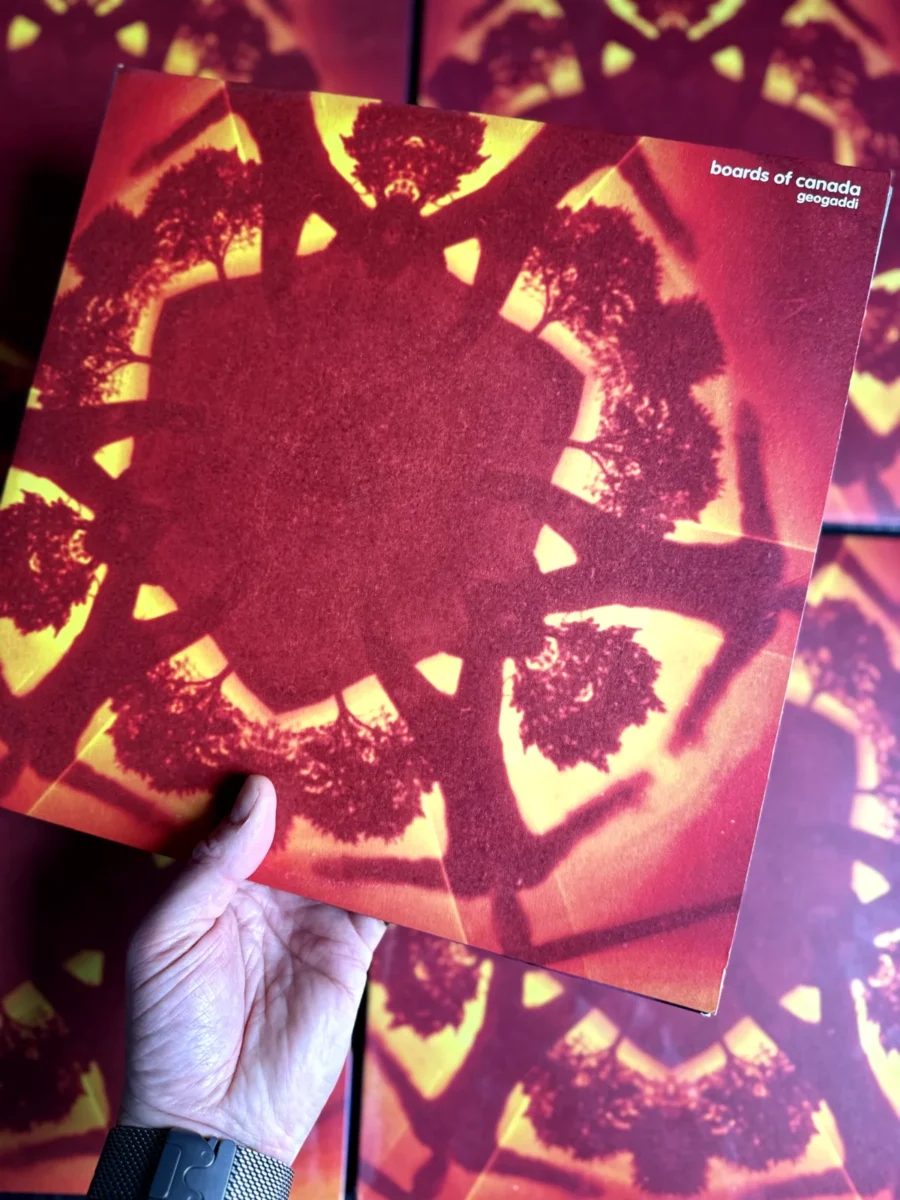
“Geogaddi…was decked with hexagonal, kaleidoscopic prisms that became something of a calling card. ‘I guess you could get a better idea of what these things symbolise by reading Aldous Huxley’s The Doors Of Perception,’ says Eoin when I ask him about the significance of those shapes.”
The Doors Of Perception is a personal account that Aldous Huxley wrote on his experience taking mescaline. In the short essay, he has a spiritual, even religious experience with brief moments of terror while he stared at lawn chairs in the sunlight, witnessing a new kind of existence that circumvented the guardrails of everyday reality. Through these experiences, he talks about man’s efforts to encapsulate concepts of reality using “symbol-systems”, and that these symbols, when interpreted while on drugs, become malleable and even unsatisfactory in capturing ideas. Still, the symbols are bridges into whole worlds of meaning.
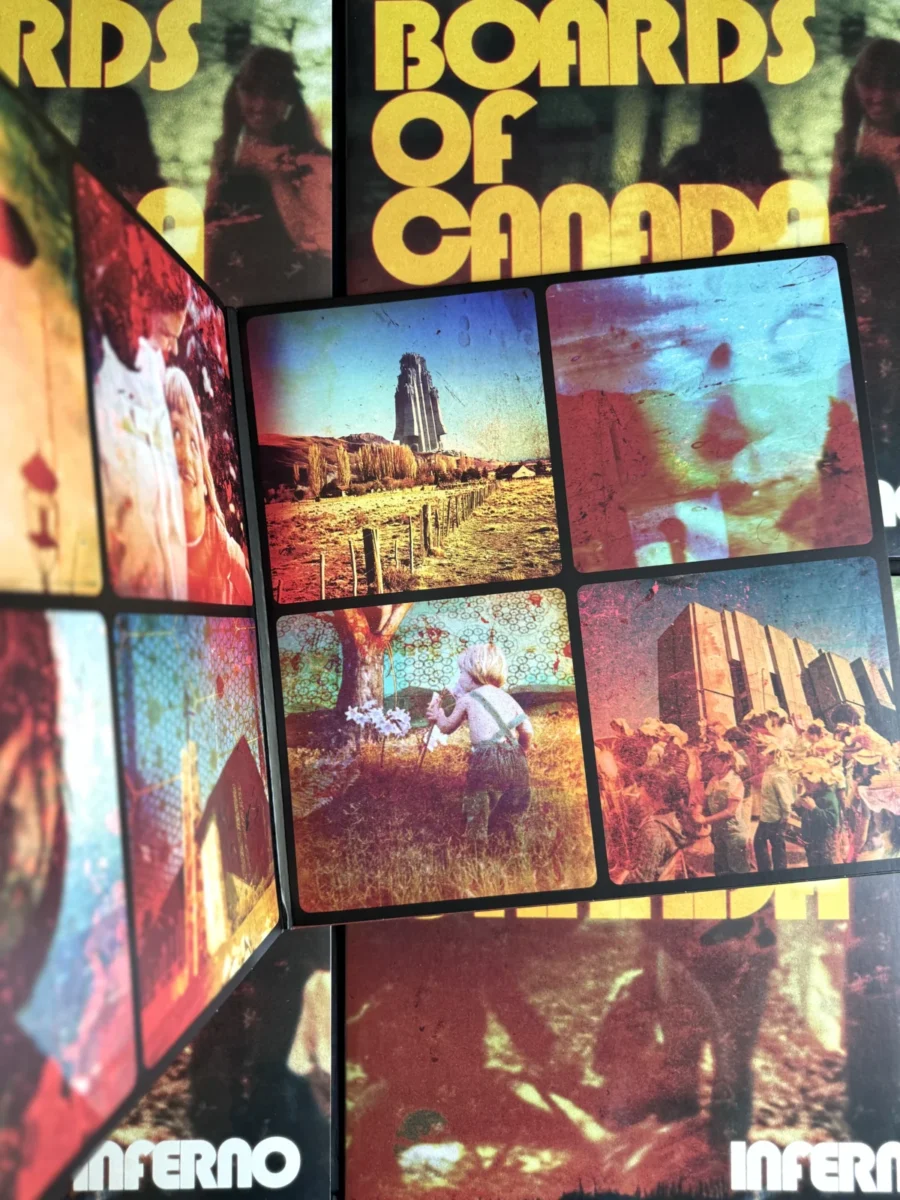
Huxley’s thoughts shed some light on Marcus Eoin and Mike Sandison’s approach to symbols in music, and in going through the 12” booklet that accompanies the deluxe edition vinyl of Inferno, there is no shortage of symbolism in the imagery. Such is the case across their whole body of work, but Inferno seems to double down on these symbols. The hexagons have been a prominent fixture throughout their releases. The Christian and religious symbolism, on the other hand, has only sporadically percolated in the background. On Inferno, though, these religious symbols seem to be front and center.
There’s a clear through-line between Inferno and In a Beautiful Place Out in the Country. Until this year, that EP from 2000 peered into religion and the occult perhaps more than any of BoC’s other releases. On In a Beautiful Place, the duo sample a woman named Amo Bishop Roden. She talks about living “with a religious community in a beautiful place out in the country”.
Roden was the wife of one of the leaders of the Branch Davidians, a religious cult that would become famous for their grim demise involving a weeks-long shootout with the FBI and the eventual destruction of their compound in Waco, Texas, killing those who were inside the building. The leader of the Branch Davidians, David Koresh, and his cult members that remained with him in the compound all died by inferno.
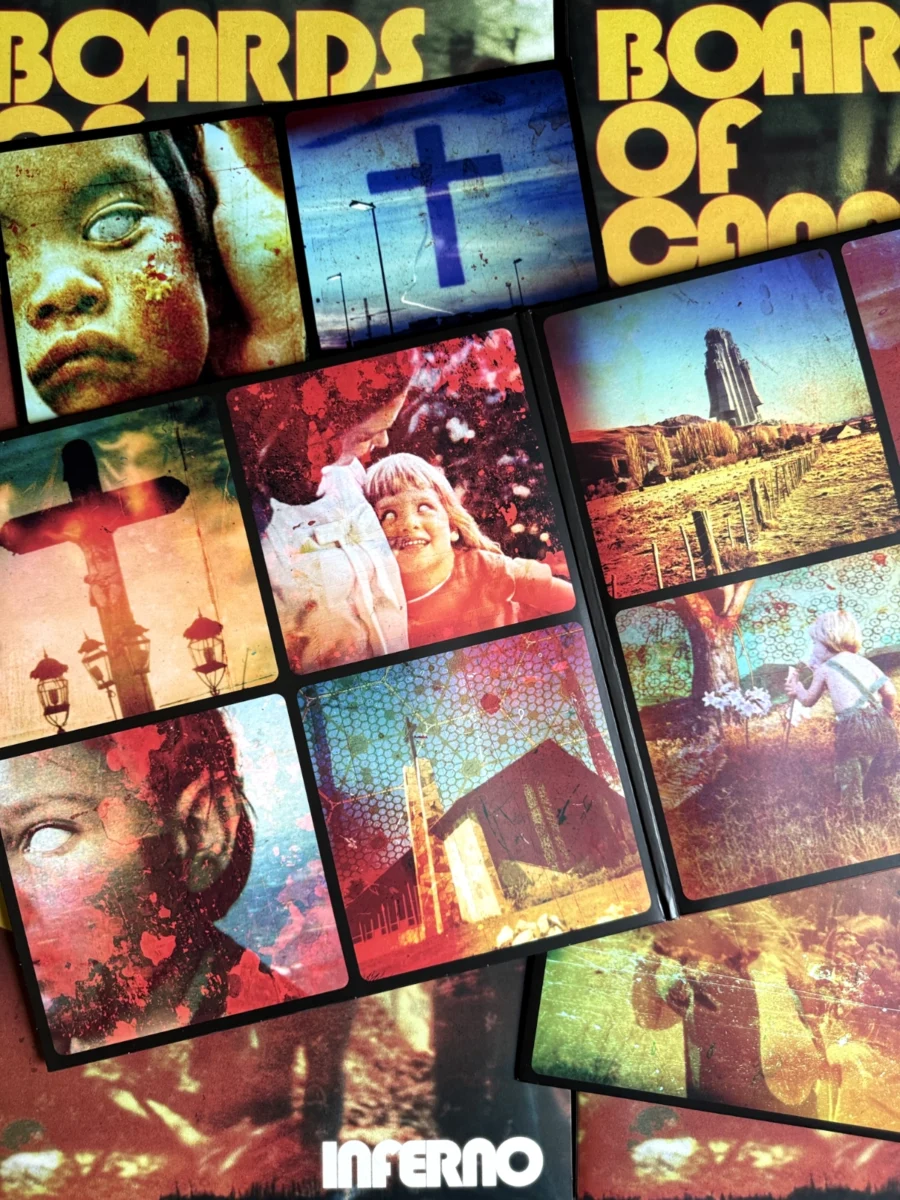
Even before the album was released, there was speculation on Reddit and elsewhere that this new album was about David Koresh, the Branch Davidians, and the Waco shootout, especially given BoC’s prior sampling history. Aside from Roden, the words “David Koresh” can be found reversed on the track “1969” from Geogaddi, and they’ve briefly discussed the Branch Davidians in older interviews. But, despite all the elaborate fan theories, there’s really no evidence that Inferno is about anything in particular. Much like how David Lynch avoided discussing the meaning of his work, we may never know what Inferno is about, if it even is about anything at all, and perhaps that’s what BoC wants. In a way, this is the inherent power of symbols. We can extrapolate our own personal meaning from them, and Inferno’s meaning may shape-shift depending on who beholds it.
Let’s indulge one such interpretation. If you’re not too familiar with the events, you might quickly write off the tale of David Koresh and the Branch Davidians as a story of a crazy cult fronted by a pseudo-prophet who had multiple wives, some of which may have been underage, and there’s truth in all that. But the alleged good guys in the siege, the FBI and local law enforcement, have been heavily criticised for their approach across the 51-day standoff.
In perhaps one of the saga’s most provocative moments, law enforcement attempted to sleep deprive the community of men, women, and dozens of children by using loudspeakers to blast the sound of screaming rabbits being slaughtered. Religious experts critical of the approach argued that, for the Branch Davidians, this all may very well have encouraged the belief that the end times, the apocalypse, was truly imminent. In the days after the compound had burned to the ground, a sniper decked out in commando fatigues took a proud photo amongst the piles of rubble and human ash. Mission accomplished.
A kind of bizarre parallel can be seen on both sides. In a way, it’s a story about the power of belief, and about human control. On one side, a religious belief system centered around a modern-day, would-be messiah led a community of families to what they believed to be their own martyrdom. On the other side, the law enforcement controlled the news and the narrative, and the officers believed that taking this community down, even through the implements of terror, was the right thing to do. Our belief systems that we abide by, day in and out, are both powerful and dangerous. It is the symbols, the crucifixes, the police badges, the symbols that create the boundaries of our society, that remind us of our beliefs, beliefs that can empower or enslave us.
And while there’s no evidence for some grand, hidden narrative behind Inferno, it still manages to embody this eerie juxtaposition, one in which there is a spiritual, religious hopefulness and righteousness underpinned by BoC’s most unsettling music to date. Even without lyrical accompaniment, “Deep Time” epitomises this juxtaposition. It starts off eerily depraved as if it were the intro music to a would-be snuff film, but it slowly morphs into a kind of spiritual anthem for worship.
Tracks like “Age of Capricorn” matter-of-factly carry the message of Christian guilt and sin. Here, the music doesn’t contradict the words, and it seems to only further reinforce what is being said. Yet many more moments on this album have an intensely haunting quality. It certainly feels like we are witness to a story with two points of view: one of belief, and one of trouble.
From a more musical point of view, the album leans on one of BoC’s classic stereotypes: that of the “intro track”. Like the intro to “Gemini” on Tomorrow’s Harvest, or “Into the Rainbow Vein” from The Campfire Headphase, or “Ready Let’s Go” from Geogaddi, or, er, you get the idea. On Inferno, “Introit”, a synth miniature, drops us into their world once again. And it wouldn’t be a BoC album if there wasn’t an element of nostalgia.
One of the unique sonic tropes of this album is the 80s/90s TV thriller vibe that’s built off the drums and bass synths on many of the tracks, like “Arena Americanada”, which feels like you’re watching an old made-for-TV documentary. “Naraka” uses the same instrumental combination to paint the picture of something sinister happening on screen. As well, “Hydrogen Helium Lithium Leviathan” uses this pairing to soundtrack a kind of “still out there somewhere” TV vibe, like we’re trying to connect the dots surrounding an unsolved mystery.
“You Retreat in Time and Space” is the clearest bridge between this album and the harmonies and melodies of earlier BoC. While it opens with the same church-like reverence heard on other parts of Inferno, it eventually breaks into a chord passage with familiar, fluttering synth lines sitting on top. It’s a moment of respite amidst what may be BoC’s most serious album to date.
Each time the album comes to a close, that unanswered question comes back: What is it all about? What does it all mean? An album this intense and dark, rife with symbolism and audio imagery, begs to be understood, even if it paradoxically has no literal, deeper meaning.
And after all these years, it is perhaps this specific kind of witchcraft that BoC have refined over the years, the kind that leaves us all sitting and wondering, imagining, trying to understand, long after the album has finished. And in that familiar place in the mind’s eye, we are taken somewhere and sometime else: a personal retreat in time and space.
INTERVIEW WITH FREDD-E // BOCPAGES
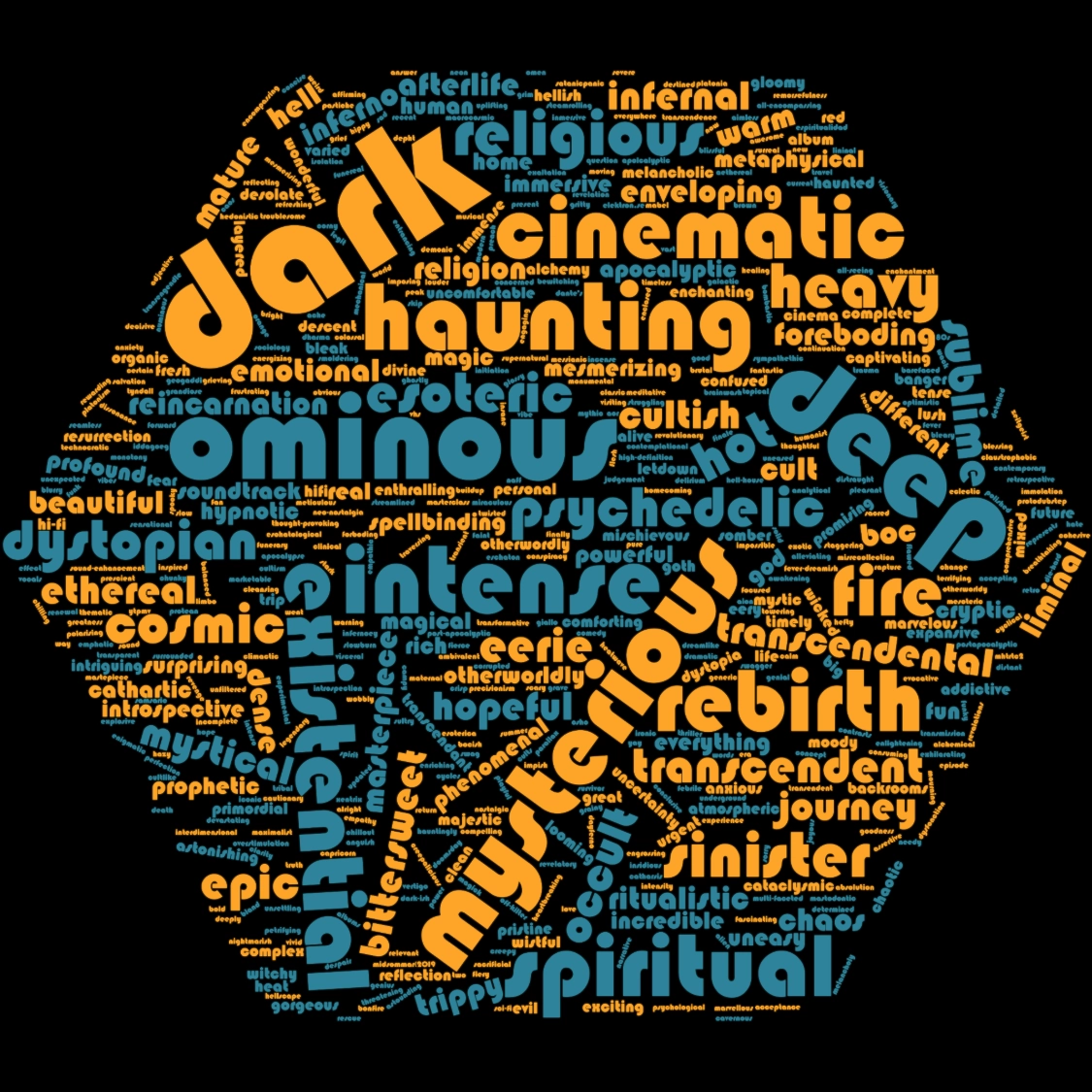
While the mysterious VHS tapes surfaced online in the lead-up to Inferno‘s release, we spoke to Fredd-E, who runs bocpages. He recently conducted a survey of roughly a thousand fans on their experience with the new album, asking respondents to describe it in a single word. From those responses, a “wordcloud” (shaped like a hexagon, no less) was constructed. Among the most common words: “dark”, “ominous”, “religious”, “spiritual”, “haunting”. Below is our conversation with Fredd-E, in which we spoke prior to the release of Inferno about BoC’s body of work, and about some of the most interesting fan-made material out there.
Hi Fredd-E, do you have a favourite Boards of Canada release? Why is it your favourite? Do you have any distinct memories listening to it? Does it remind you of a time or a place?
At the moment I find both Geogaddi and Tomorrow’s Harvest very evenly matched. But today, I’m selecting Geogaddi again. Why? For me, Geogaddi really is the complete package. There isn’t a single track on this album that I skip. It’s also exactly the right length (66:06 minutes). A devilish detail, isn’t it? The artwork is exceptionally beautiful and the postcards are brilliant, too. By chance, I also managed to snap up a kaleidoscope in 2006. It’s a lovely added bonus here in my living room, so Geogaddi always reminds me of home.
Do you have a favourite track? Why? Do you have any distinct memories listening to it? Does it remind you of a time or a place?
This is honestly harder than picking a favourite release. Over the years, it’s become clear that I have a fixed top three, but the order does tend to change from time to time. At the moment, it’s as follows:
Why these choices?
“Kid For Today” has a particularly beautiful section towards the end (from 5:06 to 5:12) that occurs only once in the entire track. I simply cannot get enough of it.
In the innovative and apparently highly polarising “Jacquard Causeway”, Boards of Canada introduce a very poignant little melody from 2:44 onwards that moves me every single time.
Last but certainly not least, “Everything You Do Is A Balloon” is a classic with a long, calm, and moody intro, followed by a great beat with incredibly catchy melodies. But what really resonates with me here is the title and a possible meaning behind it. A fan of my IG page once suggested: actions are permanent; once you let them go, you can only watch the result, much like letting go of a balloon.
What are some of your favourite fan-made BoC media (mixes, music videos, etc)?
I host a page on the Wiki dedicated to fan-made creations. These include analyses, covers, remixes, mashups, mixes… I’ve picked out three that have really stuck with me.
Are there any other artists, musicians or otherwise, who you connect with on a similar level to Boards of Canada?
Definitely loscil (Scott Morgan)! An ambient audio-visual project from Canada. In my top 3 most-listened-to artists, Boards of Canada is at number 1, closely followed by loscil and then Autechre. Although loscil’s sound is, strictly speaking, more minimalist than that of Boards of Canada, I feel exactly the same emotional resonance with his music.
What connects them for me is the tangible texture. Whereas BoC seeks out that nostalgic, analogue warmth of old tapes, loscil creates vast, almost physical landscapes that feel like water or mist. Both artists have mastered the art of “controlled imperfection”.
In both, I hear a kind of melancholic timelessness; it is music that does not try to stand out, but which can colour an entire space or state of mind. For me, they are two sides of the same coin: BoC is the memory of the past, loscil is the stillness of the present.
Inferno is out now via Warp Records. Buy a vinyl copy from Inverted Audio Record Store.
TRACKLIST
1. Introit
2. Prophecy At 1420 MHz
3. Hydrogen Helium Lithium Leviathan
4. Age Of Capricorn
5. Father And Son
6. Somewhere Right Now In The Future
7. Naraka
8. Acts Of Magic
9. Memory Death
10. The Word Becomes Flesh
11. Into The Magic Land
12. Blood In The Labyrinth
13. Deep Time
14. All Reason Departs
15. Arena Americanada
16. The Process
17. You Retreat In Time And Space
18. I Saw Through Platonia