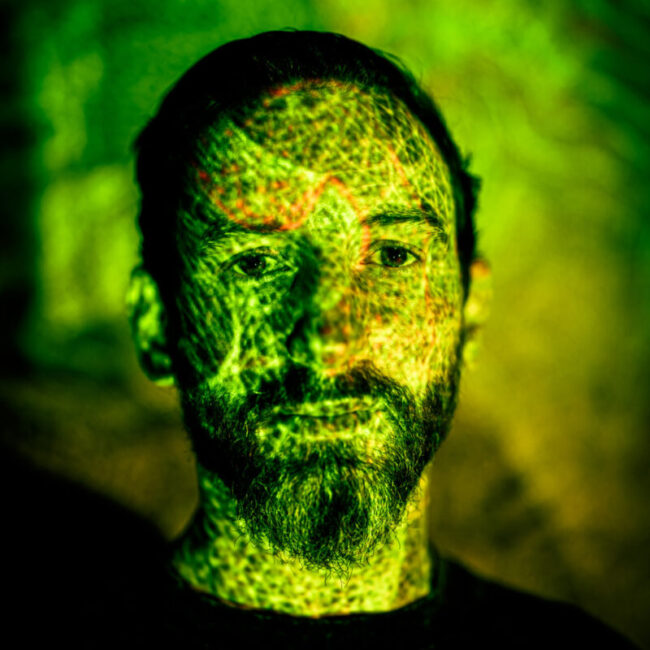
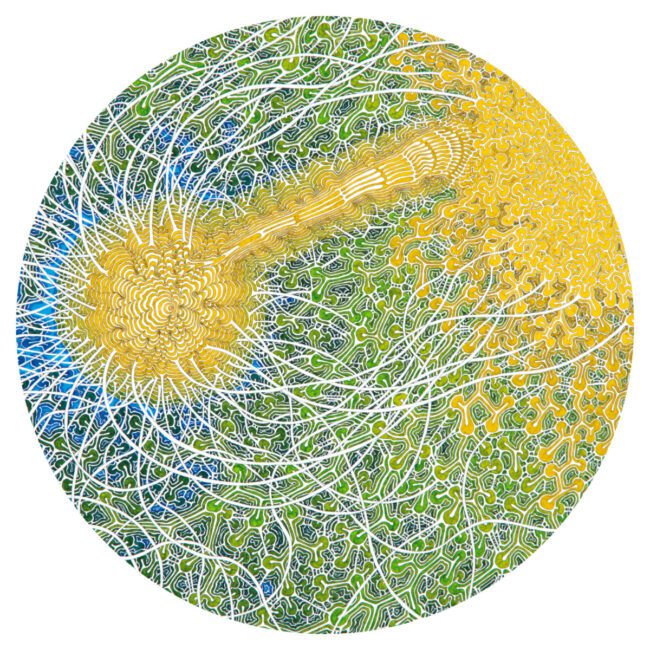
When it comes to Max Cooper, the music itself is generally the very tip of the creative iceberg. Very rarely is a track ever just that, without a meaningful story to tell, idea to explore, or collaboration to experiment with. On his seventh full length LP, Feeling Is Structure, Cooper continues in this vein, and the resultant album feels potentially like his most coherent and complete since 2019’s Yearning For The Infinite.
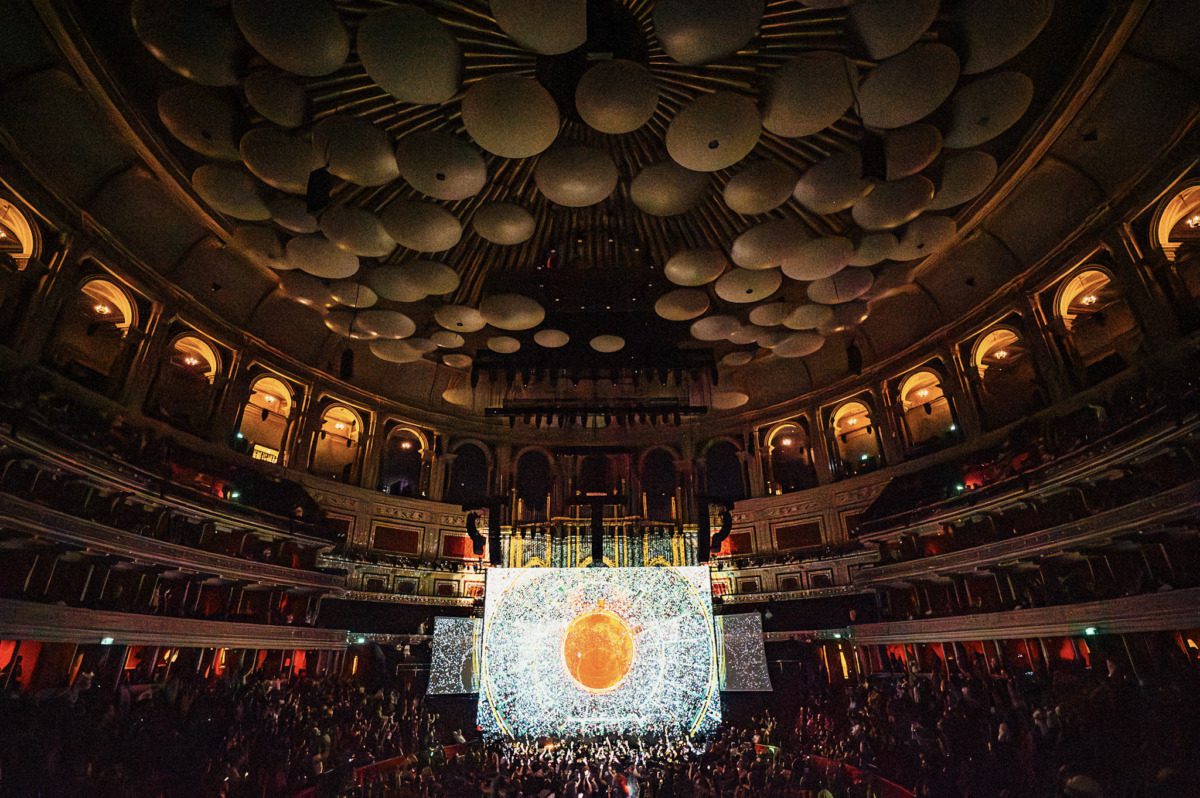
The project began as a commission to develop a performance in the Royal Albert Hall, which took place on 7th April. Grappling with the challenges of filling this enormous and historic space with one of his spectacular AV live shows, which typically incorporate immersive visual displays, the idea of building structures of light and sound in the cavernous hall sowed the seeds of an underlying concept that could provide the theoretical grounding for a new album.
The concept can be (briefly) summed up by describing the way in which humans map feeling onto the structures that constitute the universe, and vice versa. Feeling Is Structure is the crystallisation of an incredible level of rigorous, detailed thought and creativity, which is explained in-depth in the below interview. For the sake of length and to limit the risk of repeating what Max puts far more eloquently than I would, I will restrict this review to what the album is like in a ‘mere’ musical sense.
In other words, how does the album make me feel? Because, as Cooper himself points out, there are lots of “ideas that go into it, but most people listen to a piece of music and it makes them feel something”.
The record opens with Pattern Index, and in typical Max Cooper fashion, with that seething mass of chattering synths, mechanical bees awakening as the sun warms them in a yellow dawn. We settle into a bleeping, beeping kind of soundscape, before a rush of hats and snares come rattling in. All these intertwining little elements are then undercut with a meaty 4/4 kick and hat and some metallic synth work, tension building.
That tension finds its release in a warm, bassy chord progression, before there’s some slightly more lush pad work thrown in, giving the track a sense of rising weightlessness. As an opening statement, it sets the tone excellently. A maximalist piece with so many meticulously sequenced and manipulated elements, it sounds chaotic but finds itself fitting a recognisable structure, the effect of which is to constantly build towards a dramatic crescendo. Then everything is quickly stripped back into just a few chattering synths.
This leads onto Becoming, where the kick steps back into the shadows. This helps provide a sense of huge, magisterial space along with almost trancey arps and all that reverb. Tape hiss and echoing snares, it’s almost a sad, slow trance track, the vague euphoric memory of some sort of 90s rave, the lasers burning out as they arrive in the present moment. A slow turner and burner, elements are given lots of room to breathe as the track evolves.
The Shape Of Memory opens with some big, soft synth chords that trail off into the commencement of the next, before the return of those incredibly intricate percussion and metallic synth sounds. These warping, twisted kind of percs and distorted synths almost melt into each other, leaving the listening mind grasping at the thin air where one element ends and the other begins. A little looping arp filters in and out, there are heavy, fuzzy stabs of synth, a whole smorgasbord of textures all underpinned by that unrelenting chord progression.
The next track offers the first real ‘ambient’ work, but with some signature Max Cooper drama. Splintered Air Between Us opens with creeping, seething, faintly sparking and crackling synths along with whispers of the melody from Becoming. It emerges through layers of mist and fog that thickens as part of all that pad and synth work, as well a growly sort of low end which lends a subterranean, dreadnought kind of feel.
Essentially, it’s a very beautiful, basically ambient work which feels yearning, grand, intricate – building into an epic wall of noise, a huge crescendo where layer upon layer of synths scream in harmony into the void. There’s even a wub of dubsteppy low end thrown in for some more texture and weight – huge burning sounds that incinerate their fuel and fade into ashes.
After this trip to the cold outer edges of the universe, Obsessive Compulsive Order drops the listener right back into the humid, sweat drenched warmth of some south-London basement. A sort of breakbeat opening utilises lots of throaty synth work, racing breaks and dubstep influences along with incredibly bright mids and chopped up vocals. There’s a more gentle, steady pad that stops the vehicle from spinning out of control, then we arrive at a break constituting of more of those screaming synths and a little plaintive vocal. Then there’s a cut. A beat, and a racing DnB section which hurls itself headlong at warp drive speeds to the end of the track.
Bass Mosaic returns us to the land of chug with a skipping, moodily swinging kind of rhythm, but there’s still a nod to the genres of the last track with those shotgun claps and razor sharp bass swings. It’s almost just a mucky little house number, if it wasn’t for those manic synths and percs swooping in and out of the mix. And that bass and clap break. Times two.
This relative steadiness is met headlong by This Is A Bridge (with Sorcery), where we get the usual warpy synth work and a heavy, industrial 4/4 right at the front of the mix. Melody becomes a bit of a distant memory, obliterated by kick and distortion, pounding into twisting metal and screeching transistors. Then, just after the three minute mark everything just gets chucked into an absolute headspin.
After a (very) brief hiatus the kick returns with an absolute wall of bass and unhinged elements all vying for space in your head. Despite the overstimulation and the assault of sound here, there’s also, ironically, something of a chord progression here. So despite the obvious attack on the senses there is also a nice shot of emotion injected into the track. To draw to a close we get the crazy racing and writhing synths and percs over some drawn out pads, and take a breath.
Four Tones Reflected fills that moment of calm with a reworking of Four Tone Reflections, originally released on his 2017 mini album Chromos. That beautiful, simple harmony over a steady 4/4 is slightly sped up and the track is compressed from its original 12 minutes into a still satisfying 7. All misty-eyed euphoria and sweaty arms round shoulders. Lovely stuff.
There’s more of that sensation in Ebb And Flow, which also leans into those lush, almost trance-like synth melodies Cooper has made himself ubiquitous with on tracks like Perpetual Motion and Resynthesis. This track almost feels minimal in contrast to the rest of the album, the soft pads and melody doing most of the heavy lifting, some hisses, pops and clicks providing a little bite in the closing minute of the track.
The album closes with Chrysalis, and, like its namesake, the soundscape here is a cosy, warm, ambient end. A bit of melodic synth work to open, low, straining, gentle waves of sound washing into a dripping red sunset. A quiet yet majestic way to round off the trip.
The universe is chaotic by nature. But sometimes, out of that chaos and randomness a semblance of semi-randomness, pattern or structure will inevitably arise. It’s those structures that constitute our very existence, our consciousness and our perception of the universe around us. As a network of structures ourselves and as a part of a whole mass of wider ones, how we identify these patterns and order the chaos of the universe is what gives our very existence meaning. The feelings that we experience in imbuing this randomness with order, with extracting something from nothing (or everything), is what Max Cooper distills into sound on Feeling Is Structure.
The album is not only an intellectual exercise but a physical manifestation of the theory it explores, as complexity is turned into sensation, algorithm into emotion, architecture into pressure, light, bass, release. It’s a lofty ambition, but it’s achieved as a result of sheer thoughtfulness, hard graft and collaborative work. As a cultural artifact, let alone a music album or a live show, Feeling Is Structure is something to behold.
Interview by Will Patterson
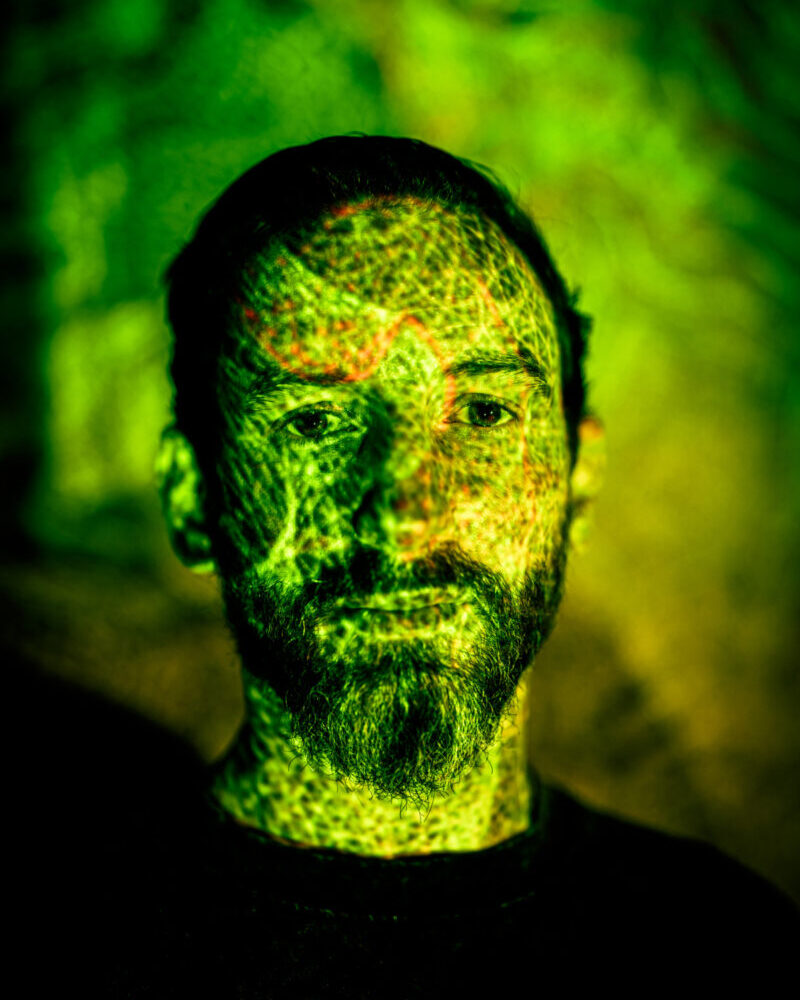
"All my projects are really about who we are, what we are, what this is
all about - existing inside this meat machine and dealing with that
and sharing in it."
Thanks for taking the time to speak to us, Max. Can you start by giving us an overview of the Royal Albert Hall project? Just an idea of how it came about, how it became an album, and what the show looks like for people who haven’t seen you perform before?
Where the show came from in the beginning was because the promoters we work with in London, Broadwick, asked if I was interested in performing at the Royal Albert Hall. I said, of course. Then they came back with a date, and then it was like, okay, the pressure was on to figure out what to do.
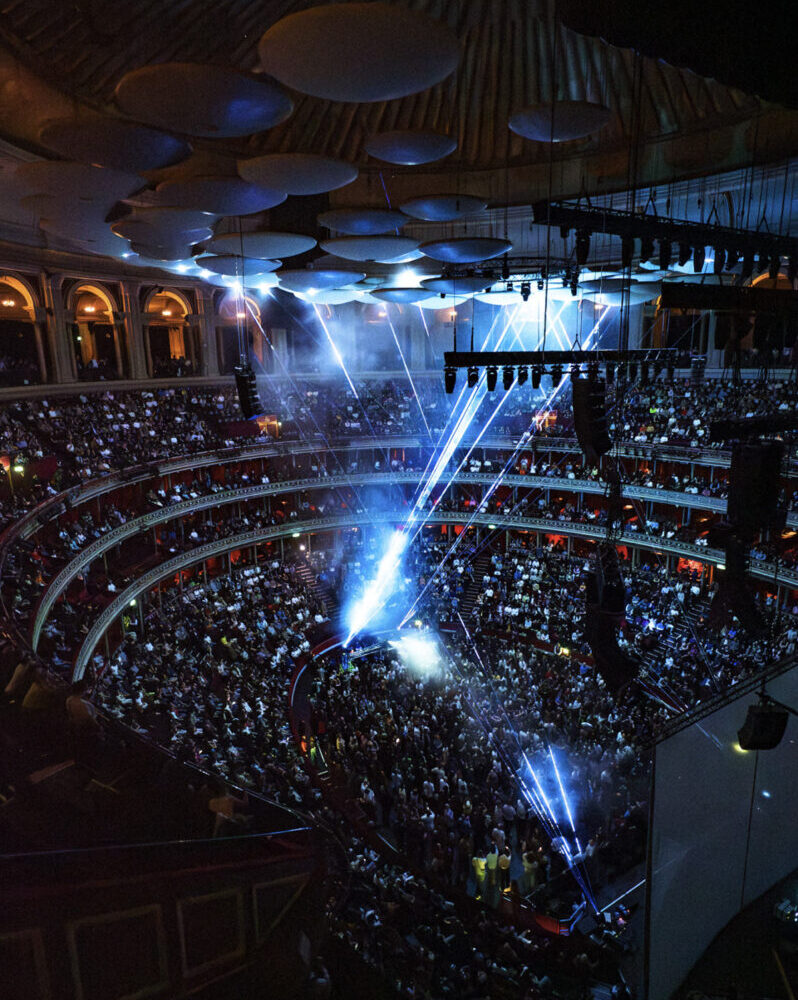
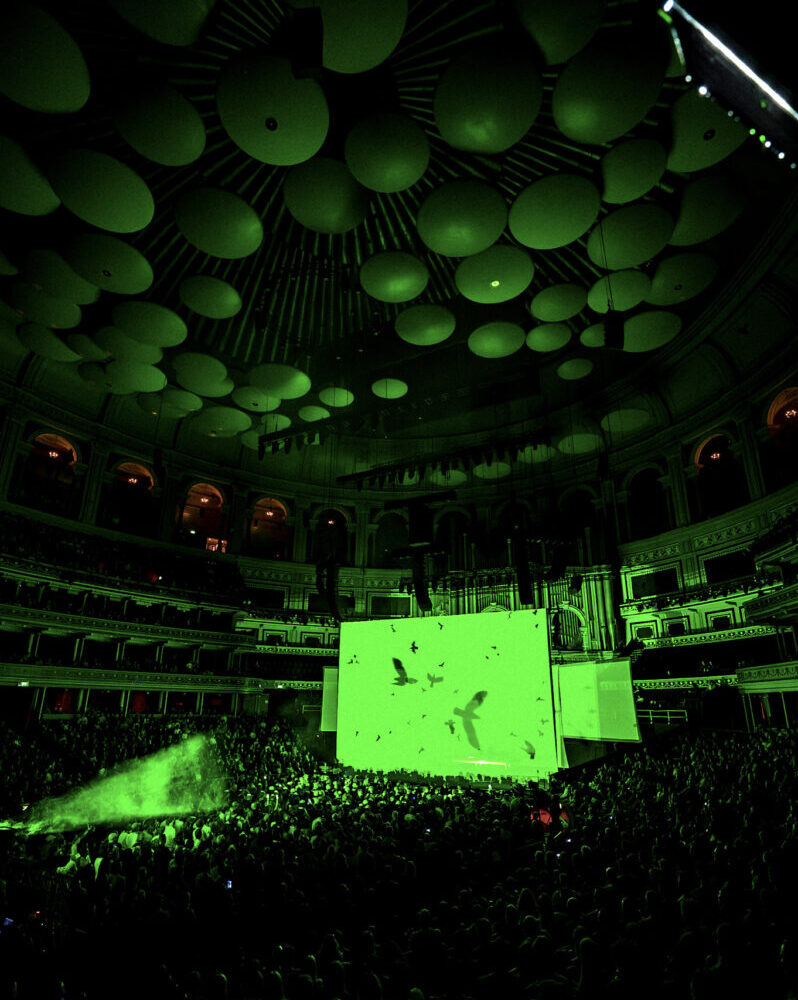
I went to visit the space and spent some time there, just trying to take it in. It’s such a massive space, but it’s not just the scale. There’s the historical side, the grandeur. It’s probably one of the grandest spaces in the world for putting on music. I didn’t want to just put an existing show into that space. I wanted to use the space itself as the canvas. So I started thinking about positions, lights, lasers, semi-transparent layers, and how to build structures inside it.
That seeded the album. I started thinking: if I’m building structures and architectures inside the Royal Albert Hall, how do they feel? Music is predominantly feeling-driven. There are lots of ideas that go into it, but most people listen to a piece of music and it makes them feel something. That’s the core of music, to some extent. So that was the early connection between these physical structures that I was building for the space and the feelings that connected to those.
So the project became about how physical structures carry feeling. Minimalist architecture, brutalist architecture, cities, houses, lived environments – they all have particular feelings because of how we construct them and the meanings and memories we associate with them.
The same is true of visual art, body language, and music. Music is completely abstract – patterns in air particles, in density – but that’s not how we experience it. We just feel something. We have this rich capacity to imbue physical structures with meaning and feeling.
Then I was also interested in the flip side of it which was the biological side. Part of the show uses an MRI scan of my brain, and there are simulated neural networks by Jazer Giles. If you take a snapshot of the biological structure that gives rise to us, that’s another kind of structure, like the neural correlates of consciousness for example, which maps to a state of mind.
So we map our feelings onto external structures, but we also map them onto internal structures. It goes both ways. That formed the content of the show and the album and there were so many different chapter ideas, like for example looking for shapes in the built environment, or looking for the shape of memory, the sort of aesthetics of memory is another connected idea.
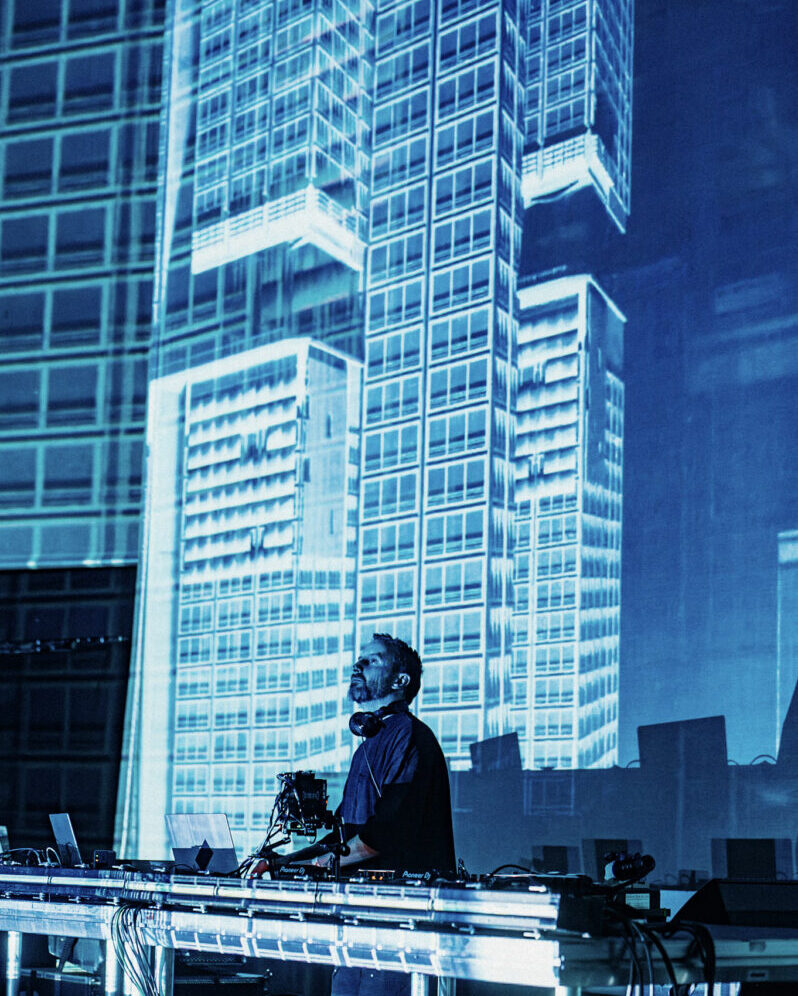
"The project became about how physical structures carry feeling. Minimalist
architecture, brutalist architecture, cities, houses, lived environments -
they all have particular feelings because of how we construct them and the
meanings and memories we associate with them."
The whole show turned into this sort of connection of humanity and our thoughts and feelings and our connections to all these different types of structures and our capacity to create meaning, which I have been writing about, and there’ll be a lot of written and spoken ideas around the album. That’s all part of the presentation of the album which will come in the coming weeks.
I called it Feeling Is Structure because I wanted to take a sort of anti-dualist stance as well. A lot of Western thinking, particularly connected to Christianity, is dualist: body and spirit, mind and body, as if they’re separate things. But the idea here is that feelings and meanings are the structures too. Especially with internal biological structures, they’re really two ways of looking at the same thing.
What does the show actually look like in the space? Obviously you have a mountain of gear on stage with you, how is it manifested visually and how much of it are you controlling live?
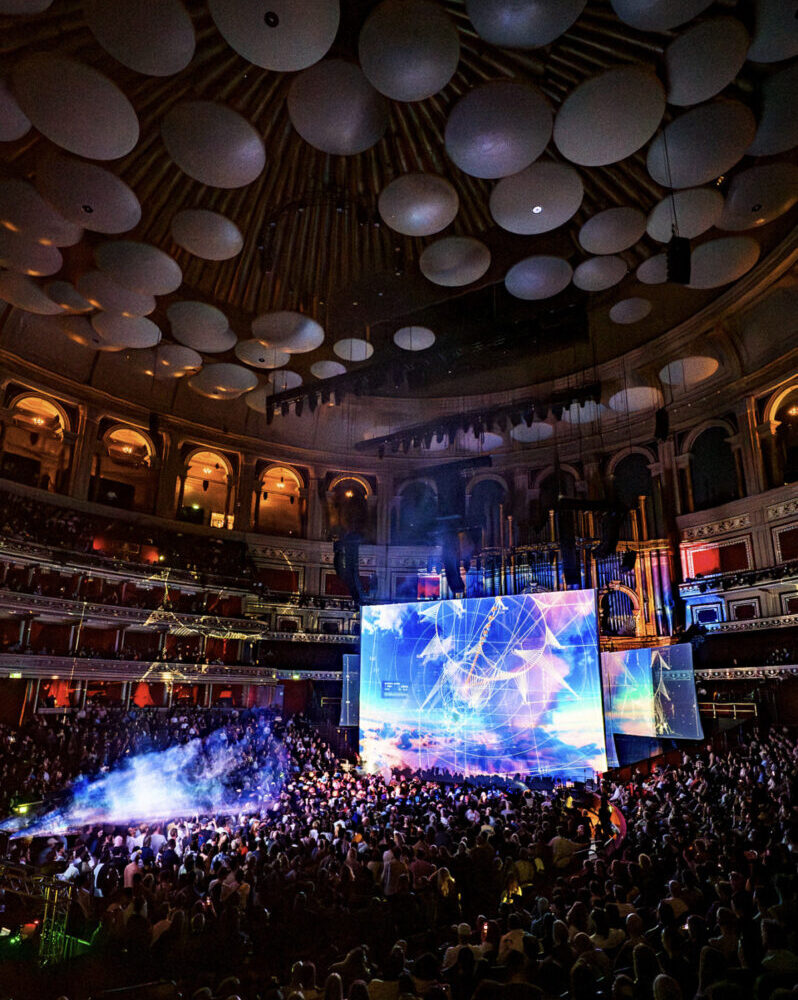
I control everything. I have all the visuals in front of me: one machine with visuals, one with audio. I have real-time control over both the visuals and the music.
The only things I don’t have full control over are the lasers and lights, but I still trigger when I want them to come on and off. I send sync triggers from Ableton, so I’m still controlling the timing.
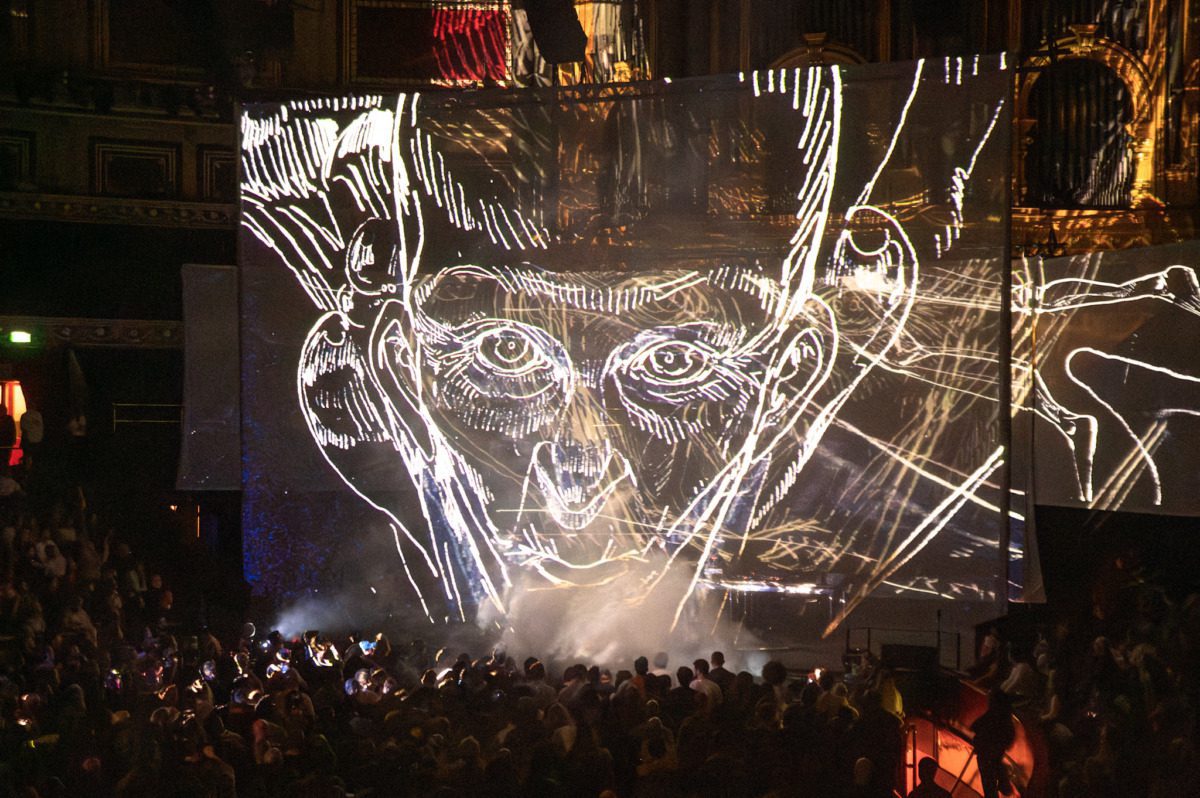
In terms of the visuals, I’m the only person controlling them during the show. But the creation of the visual content involves a huge number of collaborations. I have a credits page with around 100 people I’ve worked with on visuals. On my YouTube page, every video has the artist I collaborated with credited.
Those artists supply me with visual material, then I built a system in Ableton and Resolume so I can play around with a kind of VJ/DJ live hybrid system. Audio clips trigger video clips. Filter cut-offs in Ableton connect to visual parameters in Resolume. I have a drum pad where different drum sounds also trigger visual effects. I have a granular synth that can manipulate the visuals too.
So even though I’m working with video and audio clips, every show is different. A key thing is that apart from the Royal Albert Hall show itself, I don’t have a predefined set list. For the Albert Hall, because it was the first one and we were working with a laser team, they needed some sense of what I was planning. But all the shows since that are much more improvised.
I much prefer being able to react to the audience and play what feels right. So since then the shows have been much more improvised and that’s my usual format. All the clips are all set up in arrangement view so that I can play anything I’ve worked on. I have access to around 500 pieces of music and 200 visual projects, and I can combine them in different ways, throw visuals to different screens or surfaces, and build something unique. That’s what keeps it fun, having the flexibility of a DJ set, reacting to the space and the people.
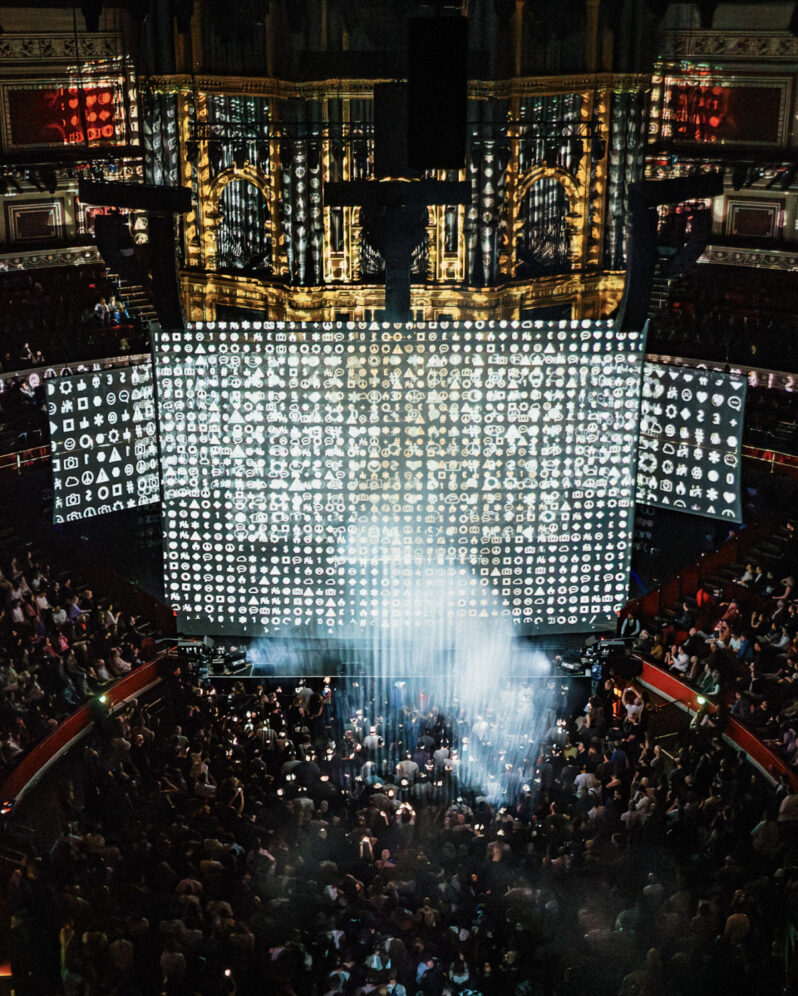
"I have access to around 500 pieces of music and 200 visual projects,
and I can combine them in different ways, throw visuals to different
screens or surfaces, and build something unique. That’s what keeps it
fun, having the flexibility of a DJ set, reacting to the space and the people."
What’s that like, performing that kind of show in a seated auditorium or concert-hall environment, compared to a sweaty club?
The Albert Hall show actually had a standing audience too, so it wasn’t entirely seated. I played quite a lot of techno, some drum and bass, and it got pretty intense at points.
But I recently played in Olomouc in the Czech Republic, in a church, and that was entirely seated. For that, I played a lot more ambient music. That’s why I build the shows the way I do. One week I might turn up in Berlin at 6 AM in a sweaty techno club, and another week I might be in an art museum or a church with everyone sitting down. I need to play very differently in those environments. That’s why I build the show in that way, to not have any predefined timelines, and to have access to everything so that I can react to each space and type of audience.
I make techno and drum and bass, but I also make a lot of ambient music and post-classical music. I love all those things and don’t want to restrict myself. If I’m feeling a certain way I like to try and kind of spew that out in musical form. I generally find the best music comes when I’m honest about my state of mind at the time. If it needs to be ambient, then I should do that. Genre restrictions would drive me mad.
I used to have to do that more when I was working with techno labels, and it drove me mad. That’s why I started my own label, so I could have creative freedom.
What were the technical challenges of staging this at the Royal Albert Hall specifically?
It was a lot, it was hard. For a start some of the audience sits behind you in the choir stalls, so it’s a 360-degree format. It had to work from all sides.
It’s also a huge space with many layers going up into the rafters. You have people viewing from very tight, high angles, people down on the floor looking up, and almost a sphere of different viewing positions. Designing a show for that is challenging.
"I generally find the best music comes when I’m honest about my state
of mind at the time. If it needs to be ambient, then I should do that.
Genre restrictions would drive me mad."
Then there’s the fact it’s such a historic space. They’re understandably protective of what you can do there. So there was a huge amount of work from my team at LittleBig, and from Architecture Social Club, who I collaborated with particularly on lasers, lights and the overall architectural design of the show.
There was probably a year and a half of work leading up to it: figuring out where things could go, how everything would work, sightlines, sound, all of it. It was a monster of a job, to be honest.
So with the album you have this underlying, core idea and theory that you’re exploring. When it comes to each individual track however, what’s the process of moving from idea, to feeling, to music, to visuals? Do you have a standardised process?
No, not really. There isn’t one standard process. There are lots of different ways in.
One early idea came from when I was thinking about the [Royal Albert Hall] space, for example, drawing beams of light and building this sort of chrysalis structure. l was imagining this re-metamorphosis type process of this biological scaffolding and things reorganising in a semi chaotic, semi ordered way inside the space, and turning the inside of the Albert Hall into this internal viewpoint of a chrysalis.
I worked with Andy Lomas, who does digital life simulations, and he created this beautiful emergent cell-reorganisation simulation. And then the music followed similar principles. I had a basic harmonic scaffolding, but around that I used semi-random techniques for different synth sounds, in different positions and organisations. It’s somewhat chaotic, but held together by an overall form.
Another one was Obsessive Compulsive Order. That was a very different kind of structure. I’d got really into classic UK bass synthesis techniques and I was getting really obsessed with them. I think I recorded maybe 25 hours of these jams, no sound happening twice, all these different bass sounds. Then I became obsessed with structuring them. I couldn’t leave it alone. I’m still fiddling with it now, and it just became this real obsessive structuring process.
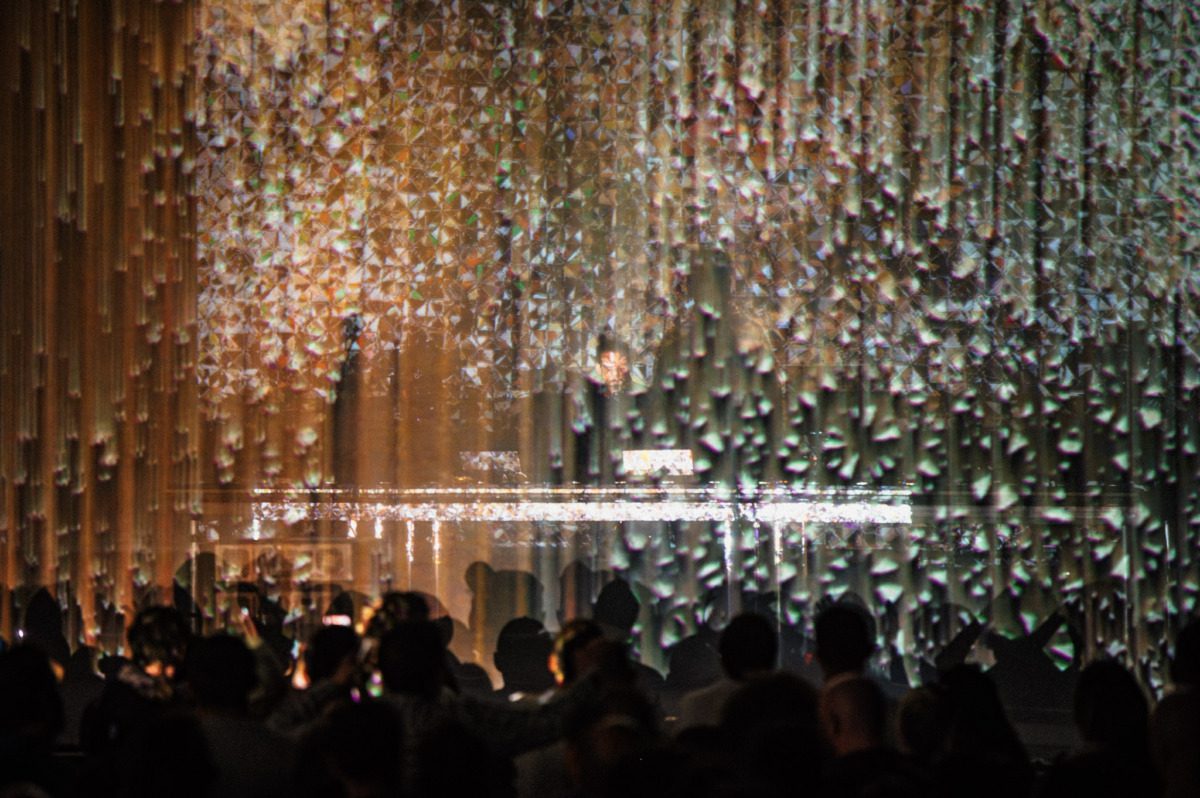
So I wanted to make a track about that. I spoke to Ksawery Komputery, a longtime collaborator and Polish artist, because he’s also an obsessive, and I knew he’d get really into the same things. We took the Ableton session and he built an HTML system – an audio and MIDI-reactive system – which mapped all that obsessive work into the visuals, so you can see all the structures in the visuals.
Then the fun thing was we added all these notes and tags: friends’ names, reminders, “Do I need to send that person a note?”, “Do I need to eat dinner now?” — referencing the barrage we all live in amongst now, with emails, WhatsApps, social messages and to-do lists.
"I’d got really into classic UK bass synthesis techniques and I was
getting really obsessed with them. I think I recorded maybe 25 hours of
these jams, no sound happening twice, all these different bass sounds.
Then I became obsessed with structuring them. I couldn’t leave it alone."
It’s all very connected to these obsessive mindsets that we have. So we referenced those ideas visually, and had all of those, those tags and notes coming up, all mixed up with all of the audio wave forms and all my labels and the arrangement of the whole sort of Ableton theatre.
It became this playful way of showing an obsessive ordering process, which was very much the mindset I was in while making the project.
So the sparks can come from anywhere, really?
Yes, but with this project the overall idea was that I was looking for structuring techniques. What structures map feelings onto them? What structures am I working with, and why do they carry feeling? How can I represent that visually and spatially?
Sometimes those structures were physical structures in the space. Sometimes they were mental structuring processes that I could map into the space.
Four Tones Reflected was actually an older piece that fit the project. It used a system called a Fugue Machine, built by Alexander Randon. It was a harmonic structuring system, I put four tones into the system, and three or four playheads played through those tones at different rates. When they reach the end, they reflect back. The combination of those four tones reflecting creates the harmonic structure.
It’s a really beautiful emergent harmony from a simple structuring process. That’s why I brought it back into this project. It’s an example of a procedural structure mapping onto something with real human feeling in it.
"With this project the overall idea was that I was looking for structuring
techniques. What structures map feelings onto them? What structures am I
working with, and why do they carry feeling? How can I represent that
visually and spatially?"
It also very much connects to how we relate to machines, AI and simulations of ourselves. There’s a continuum of meaning and feeling connected to rigorous computational and mathematical structures that go into music. That piece is a definite example of a structuring process that still carries emotion.
Do you want to move on or are you happy for me to ramble on?
I’m more than happy for you to get carried away.
Okay so This Is A Bridge is another really interesting one. That one started about four years ago in Seoul, where I met an artist called Casey York. He had been painting pictures in response to my music. He’s interested in post-humanism and how the human body might be transformed to adapt to space travel or extreme environments.
For this project, I wanted a way of bridging between techno and drum and bass, I wanted a piece that bridged two very different genres, with very different BPMs and structures. A friend of mine, Sorcery, Merlin Ettore, a great industrial techno artist from Berlin, had made a piece of music with a structure that could do that job. So I asked if he wanted to collaborate.
That’s where the idea of the bridge came in. I went back to Casey, York, this artist in Seoul, and I was like, “Can we get dancers to hold your paintings in sequence?” So what happens is, we bridge between the world of dance and the world of your painting.
I also want to bridge between my world of music and Merlin’s world of music, which is very different. And I also want to bridge between these different genres, so the whole thing can function as a bridging structure musically within the show. So it’s called, This Is A Bridge, and the bridges function in many different ways.
It became one of my favourites and one of the most intense parts of the show with Merlin’s industrial sound, and Casey York did this really intense sort of stop frame and dance choreography combinations that came through, which he did an amazing job on. And Merlin did an amazing job. Then I added my own harmonic intensity in response to what they provided.
It became a really beautiful three-way collaboration and a big bridging process. Again, it had a structural ethos behind it, but from a totally different perspective. Every piece has a story like this behind it, in terms of how feelings and structures have driven forward the process on in terms of the visual and the musical design.
"Every piece has a story... behind it, in terms of how feelings and
structures have driven forward the process on in terms of the visual
and the musical design."
In terms of the production process, do I remember this correctly, when I say that for One Hundred Billion Sparks, you took yourself off to North Wales for the album production?
Yeah, I isolated myself for a month. Didn’t speak to anyone, no email, no social media. Total, total isolation for a month. Yeah, that was quite an interesting process.
Was there anything different about your creative habits on this album compared with previous projects?
The main difference was the starting point of the space. Standing in the Royal Albert Hall, looking around, and thinking: “Oh fuck. What am I going to do with this place?” It was also exciting and inspirational, but that was the real difference.
My previous album, On Being came from asking people: “What do you want to express that you feel you can’t in everyday life?” I received thousands of really honest responses – ridiculous things, scary things, sad things, happy things. It was about the whole remit of human emotion from a first-person, audience and community perspective. It was about mental health, the psyche, the collective psyche.
This project tackles connected questions, because all my projects are really about who we are, what we are, what this is all about – existing inside this meat machine and dealing with that and sharing in it. That’s really the connecting point between all of my projects and my music itself. The feeling of my music, the focus on harmonic structures, is the connecting factor between all my music of different genres, referencing this very humanised commentary on just being who we are. So there is a connection there. But the starting point was very different.
Musically, Feeling Is Structure is very electronic. There are lots of procedural ideas, so it has a more algorithmic feel – more traditional electronic structuring ideas. On Being had more improvisation, more acoustic elements, and fewer rigorous structures. You can hear that difference in where the ideas came from.
A couple of the tracks feel like a bit of a return in the album, obviously Four Tones Reflected is a reworking of an older track and we spoke about the drum and bass elements in Obsessive Compulsive Order. Does that represent a return to a sound you came from, DJing in Nottingham with that sound?
Yeah, I mean originally, Belfast was where I started going to clubs, Northern Ireland in the ’90s, with trance, techno and all of that. Then I arrived in Nottingham in 1999 and started going to drum and bass parties, buying drum and bass records, as well as trance, techno, breakbeat and everything else.
"Musically, Feeling Is Structure is very electronic. There are lots of
procedural ideas, so it has a more algorithmic feel - more traditional
electronic structuring ideas."
Drum and bass has always been there. People are often surprised, and I’m always surprised that they’re surprised. I’ve been doing it for a long time. There have been drum and bass tracks on a lot of my records, and they’ve been in my sets forever. I think the techno and house tracks have just been more popular or more visible on streaming services.
And as you’ve become known for big audiovisual performances in auditoriums and concert halls, how important is it to maintain that connection with the rave or club space?
It’s still really important. The Albert Hall show ended up pretty heavy at points – some techno, some drum and bass, more intense than I think some people expected.
That comes from where I’m at, and where society is at. The music is always an expression of what’s going on: the intensity, aggression and trouble, as well as the beautiful things.
I was raised with club music. I grew up in Northern Ireland in the ’80s and ’90s during the Troubles. My parents were Australian immigrants, so I didn’t really have the same reference points or family history. People would ask if I was Catholic or Protestant, which side I was on, there was this quite aggressive sectarianism in society, and I was stuck in the middle, confused and somewhat scared by it.
When I discovered clubs, it was the first time I experienced people from both sides coming together in a positive way. That made a massive impact on me. Techno, trance and club culture in the 90s and 00s were really formative for me. So that will stay with me forever, I’m not going to lose that.
So despite doing lots of classical concert halls, I’m going on this huge tour of these beautiful classical concert halls in a couple of weeks, but I come from that club background. It’s just that I’m also really interested in forms of electronic music that are more ambient or are suited to those sorts of environments.
I’ve done Philip Glass reworks and post-classical crossover projects, so it makes sense for me to play those venues too. It means I can play the full remit of my music, rather than only making people dance.
"Techno, trance and club culture in the 90s and 00s were really formative
for me. So that will stay with me forever, I’m not going to lose that."
But dance music is still core to my interests. There’s so much artistry in electronic music. I love the idea of presenting that artistry in a purified form, where it doesn’t necessarily have to make people dance, but can still reference all the genres we grew up with in clubs and festivals.
So having spoken about the intersection of technology, theory, visual art and music that your projects sit at, with that in mind, has the rise of AI affected your creative process or changed your outlook?
For me, the interesting question is: how can we use it to make meaningful, powerful art projects that we simply couldn’t do before?
I’m not really interested in using it to do what we can already do ourselves. I’m interested in what new doors it opens.A few years ago, for the On Being project, I was interested in what we can express that we can’t put into words. I went to Wittgenstein, because he wrote about the limitations of language and the problems of philosophy relating to those limitations. But his texts are pretty incomprehensible unless you’re an academic who spends their lives studying these things.
So I thought: how can I make an art project out of this thing I don’t have the time or ability to properly understand? We fed the text into AI and got it to make visual representations. And they were mad, the project was called “Exotic Contents”. It created these crazy, abstract, objective-hopping, bizarre visuals, but they were also meaningful and beautiful. That felt like a legitimate use of AI, because it was doing something we couldn’t otherwise do.
At the moment, I’m excited by vibe coding. Dillon Bastan, a great LA-based coder who makes brilliant creative devices, has built something called ChatDSP, where you can vibe-code Ableton plugins in real time. When I’m writing music, I often wish I had a very specialist little device to do one repetitive or annoying job. In the past, I’d either have to learn to code for years or commission someone. Now I can try ideas quickly and see if they’re useful.
There are obviously downsides – the “big tune button”, where despite all my life’s work and training, maybe one day you press a button and it makes something better than anything I could do. But that’s not interesting to me, because the fun part is making the thing. I love making music, why would I want to remove the fun part and only do all the bits of the job that I don’t want to do?
There’s also the fact that when I make a piece of music or a visual project collaboration, I can’t just put it into words, write down what I want. The reality is that a lot of the good ideas come from the process of trying to make the thing, and all the mistakes you make along the way.
"As we build simulations and find that more and more things we thought
were uniquely human can be simulated by artificial neural networks and
language models, we reveal more about the systems we rely on to be human."
A lot of the best ideas come from the process: the mistakes, the wrong turns, the realisation that what you thought you wanted isn’t quite right. Art relies on that hill-climbing process. You don’t get that with simple prompting.
If you really want to do something new, a lot of that comes from the process of trying to make something. So yes, it’s a threat to jobs, but I still think there’s space for human creativity. As artists, the question becomes: what can’t the big tune button do? That might push art and music into more interesting realms.
The thing I’m really interested in with it, even more so than anything I’ve mentioned already, are the implications AI has for understanding what we are. As we build simulations and find that more and more things we thought were uniquely human can be simulated by artificial neural networks and language models, we reveal more about the systems we rely on to be human.
The hard problem of consciousness has been a conundrum for millennia. Now AI gives us new ways to approach those old questions. Beyond the practical uses, that philosophical implication is really exciting to me.
‘Feeling Is Structure’ is out now via Mesh. Buy a vinyl copy from Inverted Audio Record Store.
TRACKLIST
1. Pattern Index
2. Becoming
3. The Shape Of Memory
4. Splintered Air Between Us
5. Obsessive Compulsive Order
6. Bass Mosaic
7. This Is A Bridge (with Sorcery)
8. Four Tones Reflected
9. Ebb And Flow
10. Chrysalis