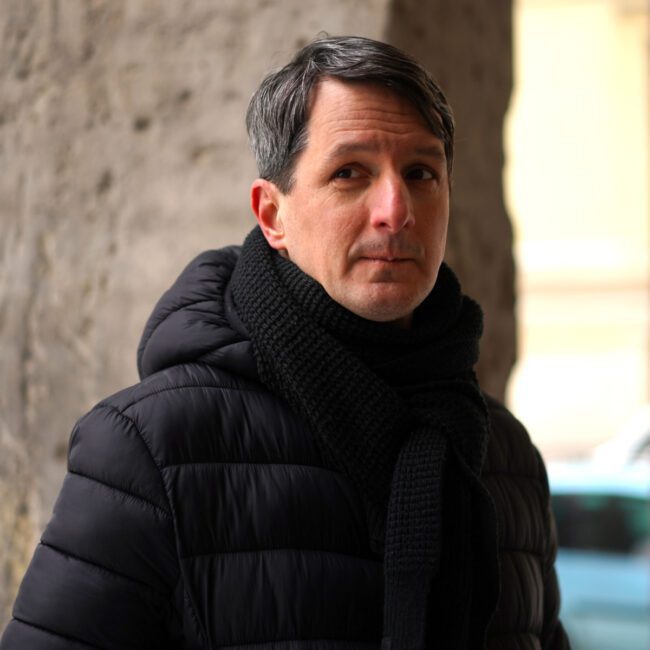
For more than two decades, Joachim Spieth has quietly carved out a singular path through electronic music. Emerging from the fertile Cologne scene around the turn of the millennium, he first appeared on the radar through a series of releases on Kompakt – including the aptly titled Abi ’99, issued shortly after he completed his Abitur. At a time when the label’s catalogue blurred the lines between micro-house, minimal techno and ambient, Spieth’s productions stood out for their subtle sense of atmosphere and texture.
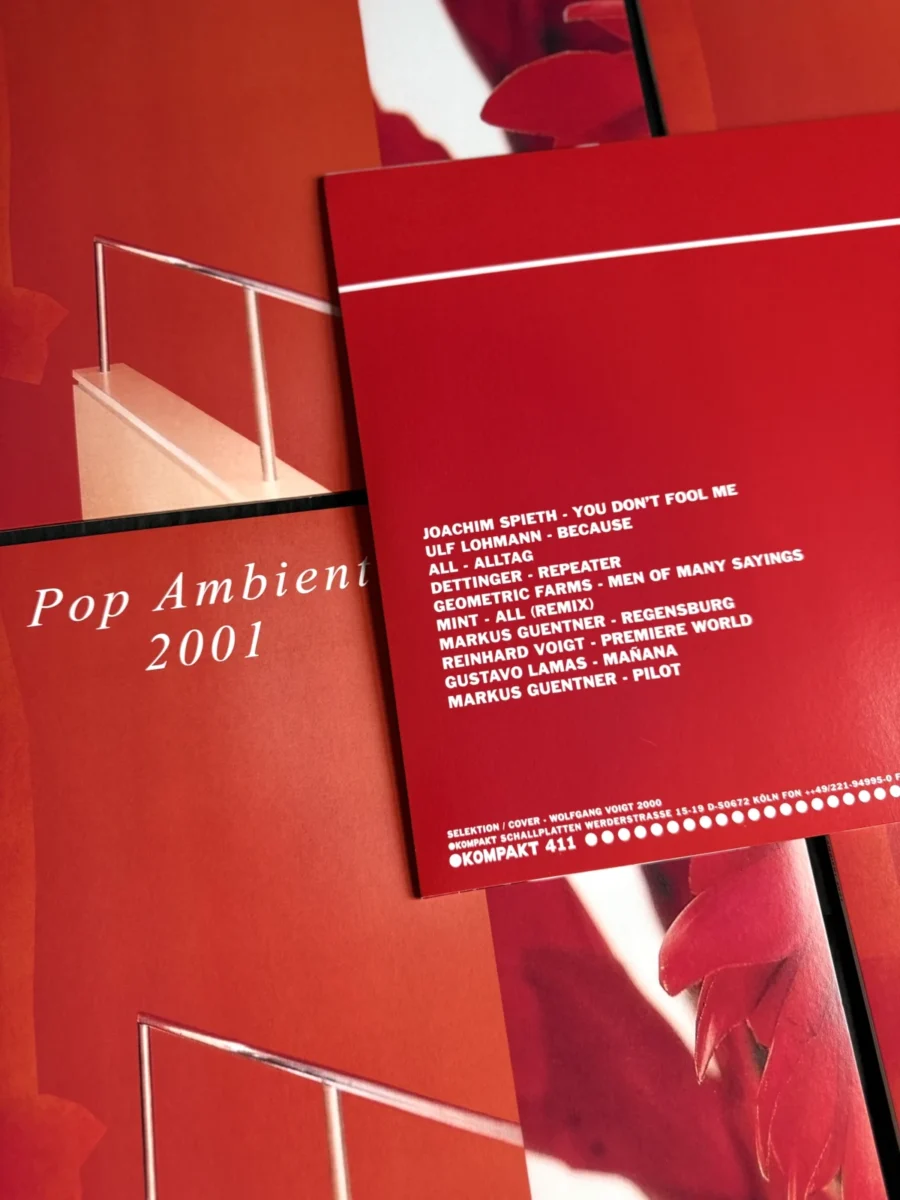
‘You Don’t Fool Me’, would go on to open the very first Pop Ambient compilation in 2001 – a now seminal series curated by Wolfgang Voigt. The piece later reached an even wider audience when it was selected for The Orb’s Back To Mine compilation in 2003 alongside music from Aphex Twin, Charles Webster and B12, cementing Spieth’s reputation as an artist capable of balancing rhythmic minimalism with expansive sonic depth.
While his early releases on Kompakt explored a fluid space between house, techno and ambient, Spieth gradually gravitated towards more immersive and atmospheric territory. In 2007 he founded his own record label, Affin, which has since evolved into a respected platform for deeply textured electronic music and a home for like-minded artists.
In this conversation, Spieth reflects on his early encounters with electronic music via Mo’ Wax and Warp, the formative role of Cologne’s Kompakt record store (fka Delirium), and the unusual circumstances behind his first release. He also discusses his long-standing collaboration with Markus Guentner, his own record label Affin and the creative philosophy behind his latest album Vestige – a work that continues his ongoing exploration of space, resonance and the expressive potential of the smallest sonic details.
Interview by Tom Durston
"I'm increasingly trying to create a certain chaotic environment, which I
then contain with controllers and tools, so that not every note is 100%
planned or conceived"
Thinking back to your early years with electronic music, do you remember the moment it first really resonated with you? What were you listening to at the time?
I came from instrumental hip-hop; back then, the term “trip-hop” was all the rage, which increasingly interested me. And there was the London-based Mo Wax label by James Lavelle.
Mo Wax played a big role in my getting into electronic music. Because with the Headz compilation in 1994, it wasn’t a big step to Autechre (for example), who had “Lowride” on that compilation… and I found that fascinating.
It might not have been the first time I’d come into contact with this music, but it solidified my opinion that incredibly interesting things were happening, which then led me to Warp and not much later to a Cologne-based label.
A lot also happened through a record store in Stuttgart, which had a pretty good selection of everything from dub and drum and bass to techno, hip-hop, etc. It was called Sound Shop.
Before releasing music, were you already experimenting with production or DJing? What did your earliest studio setup look like?
With both. I had a few regional DJ gigs and was part of a radio show… I think I ordered my first pair of turntables from my sister’s boyfriend at the time, and while the mixer didn’t do much, it did have a mini sampler that could generate horribly bad samples, like 5 or 10 seconds long, and I think you could play the sample back slower.
Anyway, with an electric bass, this sampler, and a Boss DR Rhythm 660, I got started in the music scene. Later, I added the MC 303 Groovebox, and with that, I sent my first demos to Delirium (later Kompakt)…music cassettes, DAT tapes…and after I bought an E-MU sampler, the first seemingly usable results came relatively quickly (the Abi *99 opener is, I think, the third track I made with the sampler.
In the late 1990s Cologne had a very distinct electronic music identity with labels like Kompakt, Profan and Studio 1 orbiting around the same circle of people. From your perspective as someone close to the scene, what made Cologne feel different from other electronic music centres at the time?
Cologne was somewhat more pop-oriented, but honestly, I can’t really draw a clear line between the two, because we mostly ordered from Delirium, whereas we didn’t order from Hard Wax in Berlin as often. Aside from the music, I had no connection to Frankfurt. I would go to school with Studio 1 playing on my Discman, but I wasn’t everywhere, unlike later on…I was pretty much a local.
What I remember is that there were so many different creative cells active in various cities – it felt like there were more than there are today – it was an exciting time, even if you spent a lot of time away from the main places. Profan blew my mind back then, it was just incredibly exciting. Kompakt didn’t even exist back then, that came later, and somehow I was part of it from the very beginning, even if only as an artist who could contribute an EP or a compilation track here and there.
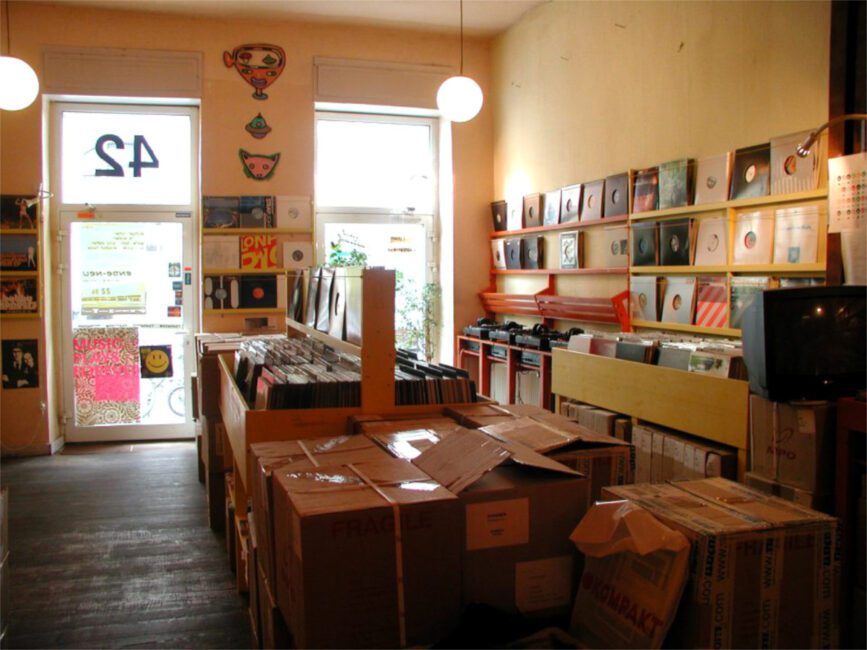
Before releasing music on Kompakt, you were a regular customer at Delirium (Kompakt’s former record store in Cologne). What do you remember about the atmosphere in the shop during those years?
The initial contact was made via phone calls. Michael Mayer would play records for me over the phone, and then I’d place an order. When I became more musically active and was considered for a 12″ record, I was asked to go to Cologne to “introduce myself,” which was fun and exciting.
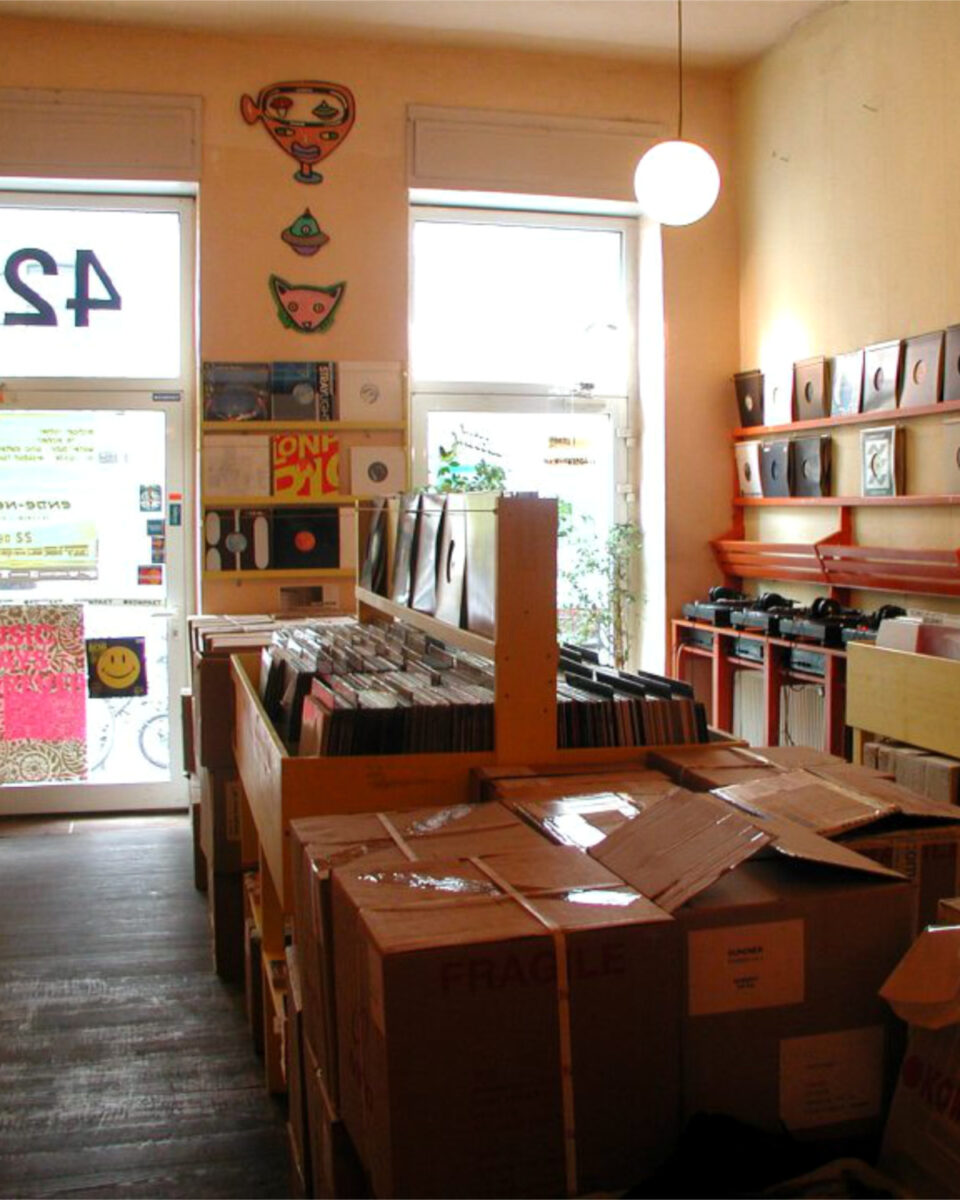
The shop was small and bustling (Brabanter Strasse 42). I felt a bit strange back then, because that’s where all the great music came from, and I, as an 18-year-old who certainly wasn’t quite up-to-date with the times, had to take a deep breath. It’s a shame that wasn’t filmed back then. I think the way things were done back then is in no way comparable to how things are done today. A nice memory of times that have fundamentally changed.
"Profan blew my mind back then, it was just incredibly exciting. Kompakt
didn't even exist back then, that came later, and somehow I was part of it
from the very beginning, even if only as an artist who could contribute
an EP or a compilation track here and there."
In those days Delirium functioned almost like an informal A&R hub where producers would bring demos directly to the counter. Do you remember that culture of sharing music in person?
For me it was the post office…Markus Guentner (he told me this once) actually handed his demo CD in at the counter… yes, things were very different back then.
The store quickly became a meeting point for producers, DJs and listeners. How did your relationship with Jürgen Paape, Michael Mayer and Wolfgang Voigt – and the wider Kompakt circle – begin to develop?
As mentioned above, a lot of it involved ordering, but at first I had no idea that Delirium was run by the very people whose music I was buying… I’d picked up a copy of House Attack (a magazine from their scene) at a record store in Stuttgart, and that’s where I discovered Delirium with their mail-order service… After a while, Michael finally revealed who was who, which left me amazed.
This might all sound very naive, and I think it was. Anyway, I saw the guys for the first time at my interview in Cologne (I think I’d seen/met Michael a few times before DJing in my area). We ran into each other now and then, but they certainly didn’t have much time back then to take care of every artist, because things were really taking off, and very quickly at that.
At what point did you feel ready to share your own music with them? Was sending those first demos a nerve-wracking moment?
I was ready for that very early on…I couldn’t really judge how good it was back then, I liked what I was doing… however, I didn’t send any demos anywhere else, I wanted to do something with them one day, that was my goal.
Your first release on Kompakt, Abi ’99, has a rather unusual story behind it — it was presented to you after completing your Abitur (school leaving certificate). How did that record come about?
These pieces were written in the timeframe of maybe a year before my exam (at school)… the title came about rather by chance… Wolfgang wanted it that way, I accepted it, and later found it quite funny.
Do you remember what it felt like to see your first record appear on a label whose records you had been buying as a customer?
When the pressing arrived, that was a moment I’ll never forget… I listened to the record countless times and could hardly believe it. It took me a while to realise that I’d actually made a record. Back in the 90s, not everyone had their own label… nothing like today… and Kompakt was my dream label from the very beginning… it was more valuable than my high school diploma.
Your track You Don’t Fool Me opens the very first Pop Ambient compilation from 2001. How did that piece find its way onto the project?
Well, it seems a few channels were converging at Kompakt without the people involved knowing about each other (like Markus and I, for example)… The track was already part of my eponymous 12″ (which was already planned at that point)… and then the project just sort of came along. Which, of course, pleased me… The compilation was incredibly good and still is today. It made a real impact, no question.
I think the guys recognised back then how much potential there was among ambient artists, and with GAS already there, there was definitely some attention. So they brought together the work of different people and made it into a series. It’s a shame Pop Ambient never became a sub-label of Kompakt…because a lot of what was released under that banner is timeless and would have had even more weight as its own label.
"It's a shame Pop Ambient never became a sub-label of Kompakt...because a
lot of what was released under that banner is timeless and would have
had even more weight as its own label."
Wolfgang Voigt has always had a very strong curatorial vision across projects like Profan, GAS and Pop Ambient. What was it like working with him during those early Kompakt years?
He obviously always knew exactly what he wanted. That certainly wasn’t always easy for some aspiring artists to assert themselves. However, I trusted that he knew what he was doing, and that proved to be true.
Do you remember how Wolfgang Voigt first described the idea behind Pop Ambient when the first compilation was being put together?
As I recall, he described it back then in basically the same way as he still does today. Opening the first track on a compilation is always quite a statement.
Were you aware that your track would set the tone for the record?
To be honest, I’m not entirely sure anymore at what point I knew it would be the opener. I only remember that Wolfgang was extremely impressed with the track at the time and said it was a highlight for me, one I wouldn’t easily reach again.
At that time, many things were in flux; it was completely unpredictable how long the format would even continue. At the time, it was a very exciting compilation, and I felt honoured to provide the opening track…the series then became established. Looking back, everything seems different now than it did then.
Your early Kompakt releases — Abi ’99, You Don’t Fool Me and others — sit somewhere between micro-house, minimal techno and ambient textures. How would you describe the sound you were exploring at that point?
Back then I liked different styles of electronic music, and even then I didn’t want to commit completely to just one thing. I had more of an impression that I wanted to try different things, and that hasn’t fundamentally changed even after more than 25 years. Sure, my musical parameters have shifted, but the will to experiment was there back then, and that drive is still present in my music today.
Listening back today, do those early productions feel like a different musical identity, or can you still hear the foundations of the artist you later became?
Well, my music definitely sounds very different now, but certain approaches, like working with sampling technology, were fundamental back then and still are today. It would be awful if my music still sounded the way it did back then… development is certainly welcome.
In 2003 you released Ich on Kompakt, which many listeners now regard as something of a hidden gem in the catalogue. What do you remember about the thinking behind that record?
It was conceived in a similar way to You Don’t Fool Me. The idea was to cater to different tastes… although the predecessor was probably more successful…
Around the same time you released Under Pressure, which has a very distinctive, hypnotic energy. What inspired that track?
It came about in a few hours, without much conscious thought. While some of the older tracks took forever, this one, created with a bottle of wine and a few hours, was the antithesis of the other Spieth track…and worked surprisingly well at the time…it showed that not everything that was conceived, controlled, and planned has the greatest appeal… it was refreshing to see.
You Don’t Fool Me later appeared on The Orb’s Back To Mine compilation in 2003, which was very formative to my personal music taste. When did you first learn that The Orb had selected your track, and what did that inclusion mean to you?
I read about it online. Not exactly a shining example of Kompakt’s work, to be honest. I simply hadn’t been informed. But okay, the compilation certainly didn’t do me any harm.
"A key point to Vestige was the question of how much space a tiny sound
can occupy, how far I can manipulate and inflate points. This has to do
with effects on the one hand, and with dynamic range processing, EQ on
the other...and not much more than that."
Your early Kompakt work sits relatively close to minimal and micro-house, while your later output moves much deeper into atmospheric and immersive ambient drone territory. When did that shift begin to take shape for you?
The foundation was laid with You Don’t Fool Me… my interest in ambient sounds never faded over the years, but I only became actively involved in this area a few years later… around 2014/2015. That’s when my growing interest in deep and hypnotic techno merged with ambient again.
This led to the Evaporate 12″ on my own label Affin… and finally, in 2017, the Irradiance album, which ultimately opened the doors for me musically… because at that point, for the first time, I managed to create a coherent and complete synthesis of my preferences on a single record.
In 2007 you founded Affin, which has since become a respected platform for deeply textured electronic music. What motivated you to start your own label at that stage?
I was a bit bored with having to react to current trends and opinions from labels I’d previously worked with. I didn’t want to jump on the bandwagon of others, and then two years later do something completely different. Besides, I was working with a label at the time (Paso) where we received a lot of demos, but they didn’t make the cut as vinyl candidates for the other labels involved.
I thought some of it was too cool to just let it sit, so I founded Affin. And I’ve never regretted it since. It was definitely the right decision, and it was also good that I had already gained some experience with different labels before starting my own, so I knew some things that worked well, and some things I wanted to do differently.
Affin has developed a very distinctive sonic and visual identity over the years. How do you approach curating the label, and how has your collaboration with Markus Guentner shaped its direction?
The label has gone through several phases and collaborations, and over the years has evolved into what is now known as Affin. I had already been in regular contact with Markus for several years prior. Around 2019, or at the latest with the pandemic, everything fell into place quite naturally, and we started talking much more often, brainstorming, and slowly working on joint projects.
Since Markus owns a communication design agency, one thing led to another. My bold, fresh ideas were transformed into something realistic, translated into concrete terms. At the same time, Markus’s influence grew, and we very often agree on various levels. That’s how it all developed and solidified. It’s wonderful, and even better because everything is so easy and spontaneous.
Your latest album Vestige continues your exploration of spatial sound and subtle sonic detail. What was the starting point for the record?
A key point to Vestige was the question of how much space a tiny sound can occupy, how far I can manipulate and inflate points. This has to do with effects on the one hand, and with dynamic range processing, EQ on the other…and not much more than that.
Vestige explores the idea of how much presence can exist within a single minimal sound particle. When working in the studio, how do you approach sculpting that level of detail and space?
I experimented a lot. I buy very few new tools, but I push the ones I do use further and further. It is not a concept album or anything like that…but the idea of manipulating signals to the maximum was always there…that’s practically related to “minimalism,” but more as an idea than as a result sounding minimal.
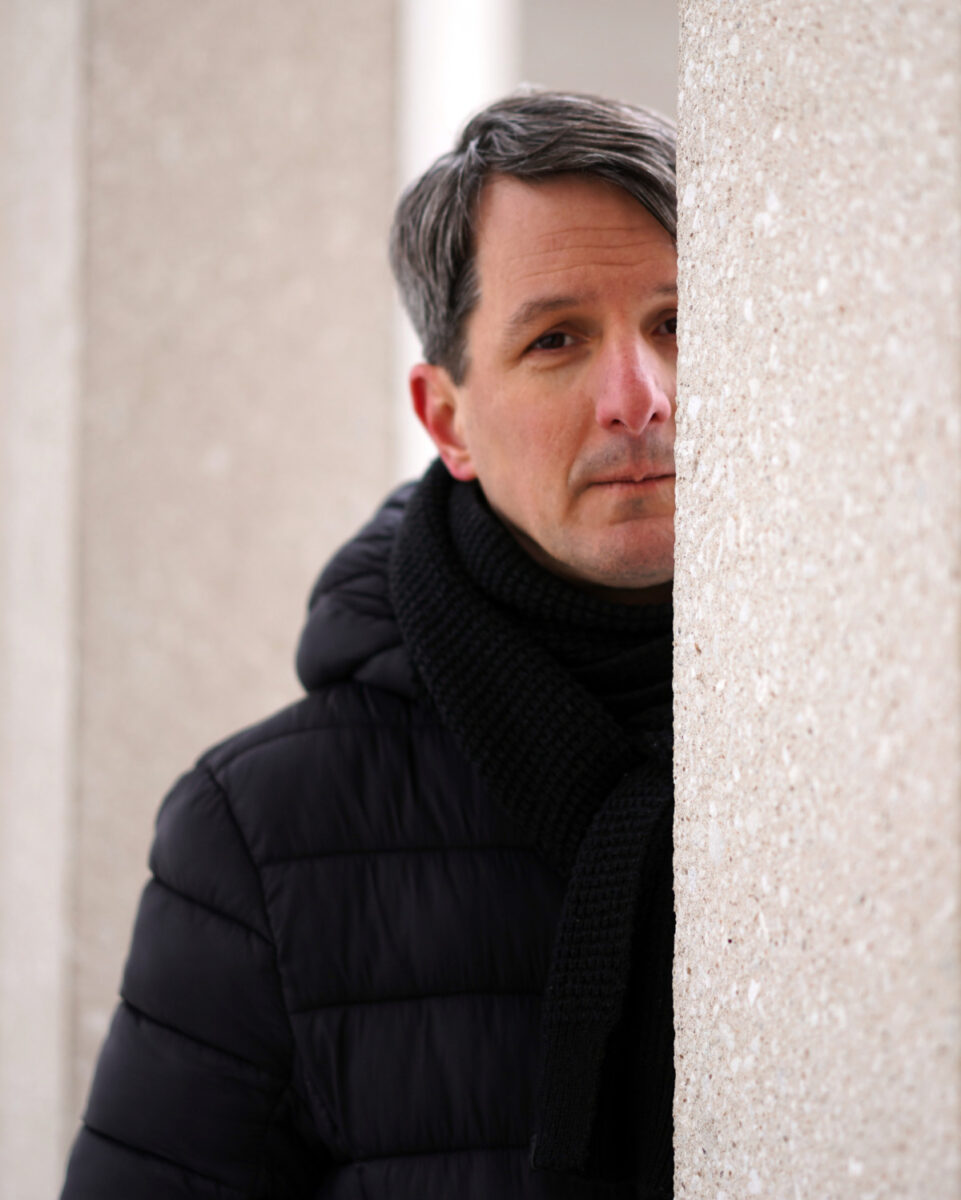
Furthermore, I’m increasingly trying to create a certain chaotic environment, which I then contain with controllers/tools, so that not every note is 100% planned/conceived, but the flow emerges that sounds right to me.
Looking back at your journey from those early days at Delirium record store to running Affin and releasing albums like Vestige, what do you feel has remained constant in your relationship with sound?
The love of music.
Vestige is out now via Affin. Order a copy from Bandcamp.
Photos by Iulia Alexandra Magheru
TRACKLIST
1. Residual
2. Sonomorph
3. Remnant
4. Trace
5. Palimpsest
6. Iterate
7. Afterimage